
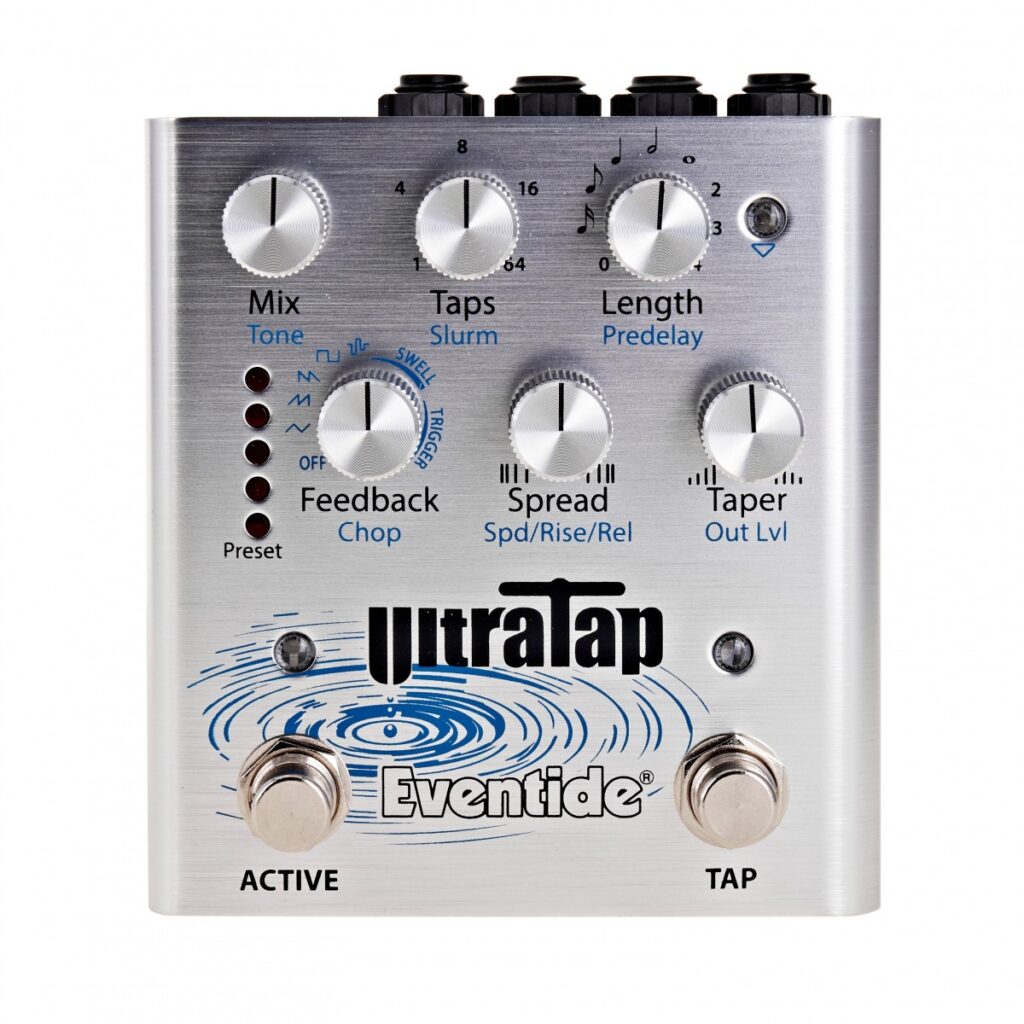
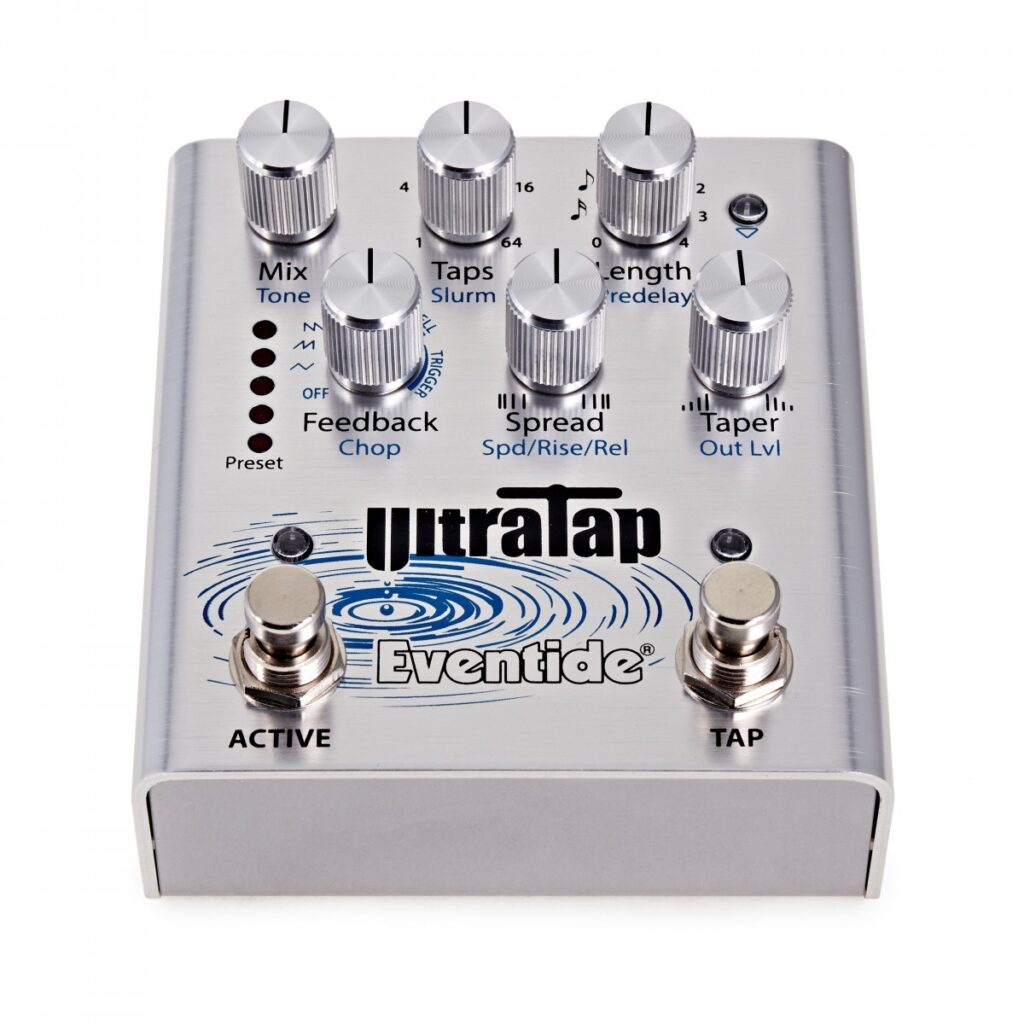
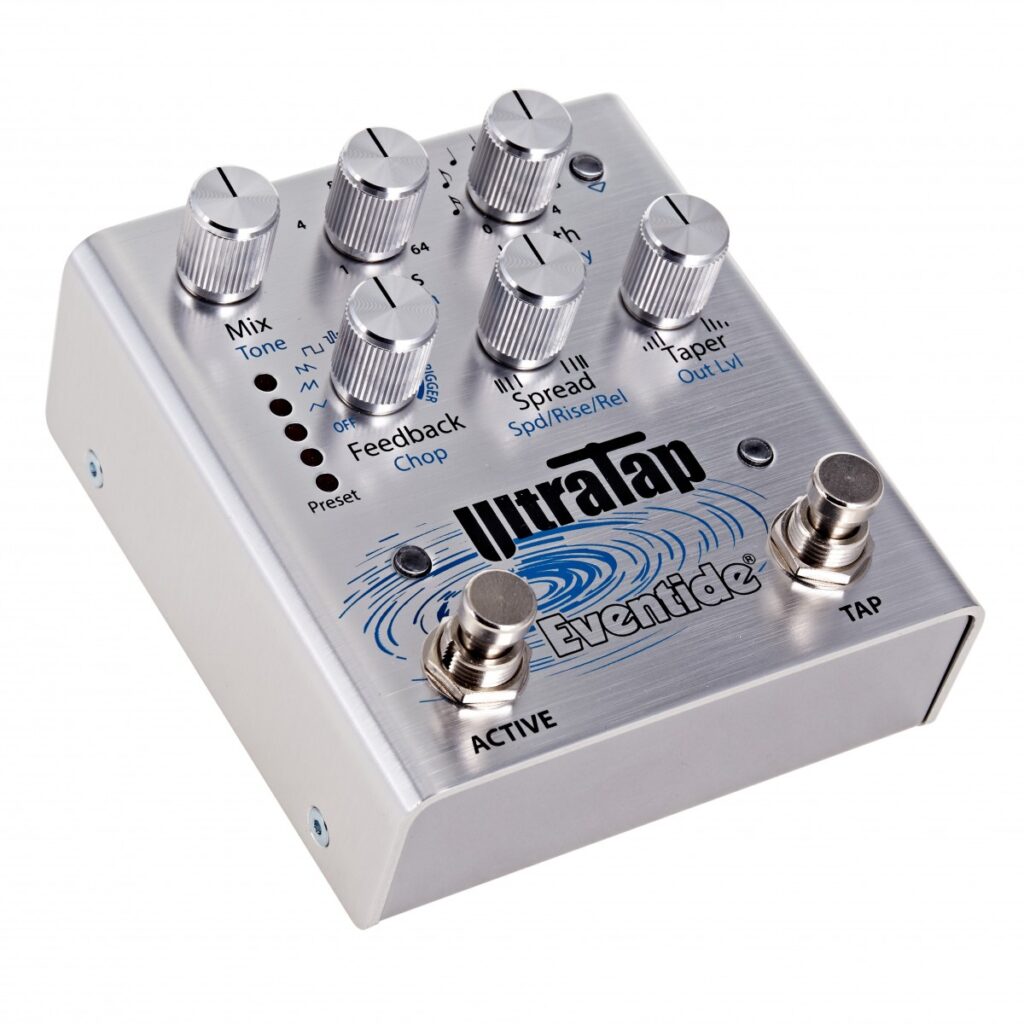
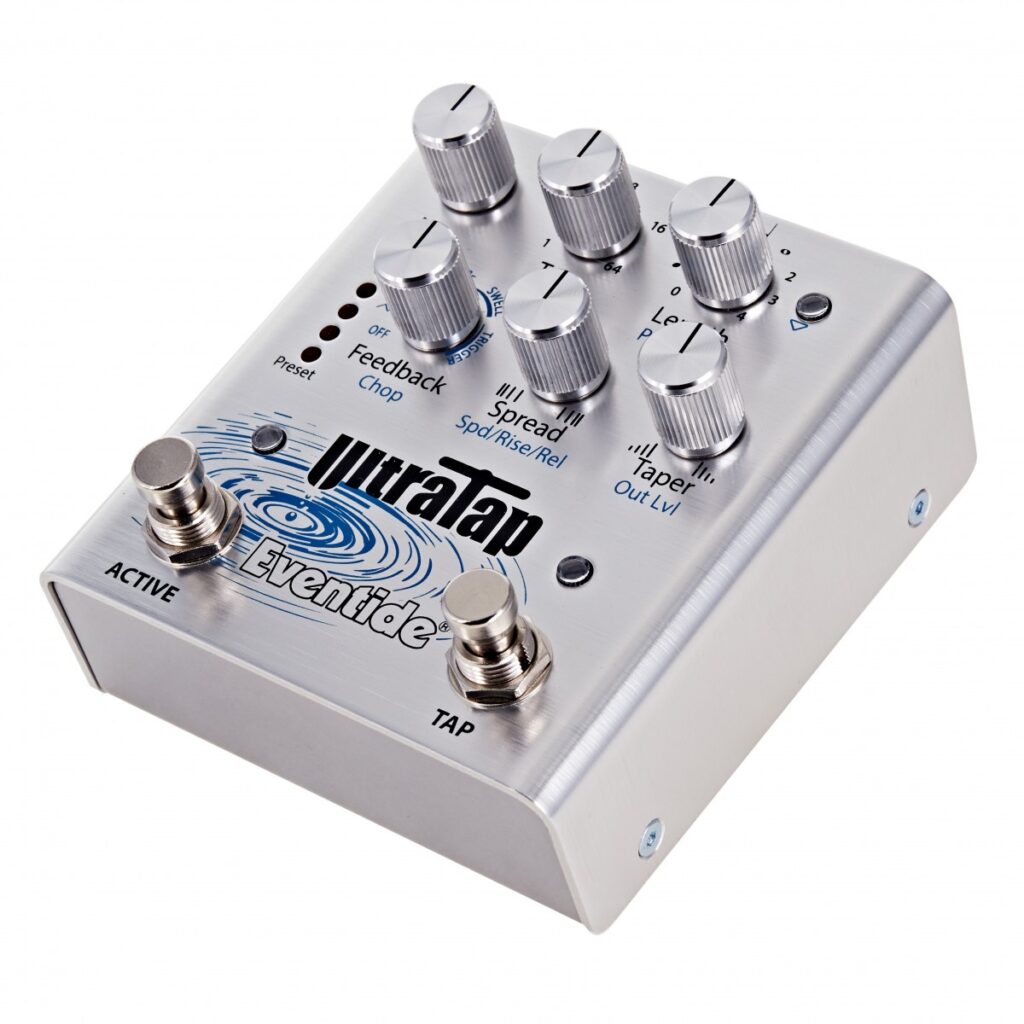
The Eventide UltraTap is a unique multi-tap delay pedal that creates rhythmic delays pad-like volume swells unique modulation and glitchy reverb all in a compact pedal format. UltraTaps controls allow you to explore new and incidental delay effects. Featuring all the expected controls such as Feedback Mix and Delay the UltraTap also has controls for Spread Slurm and Chop that open up a new world of possibilities. The UltraTap is the perfect tool to explore previously unchartered territories by creating staccato leads swelling synth-like chords and other evolving effects – everything from reversed reverbs to the sound of the Grand Canyon. Integrate the UltrapTap to your existing pedalboard and pair with other effect types like fuzz or distortion to create sounds reminiscent of analogue synthesizers.
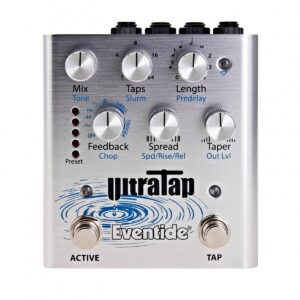
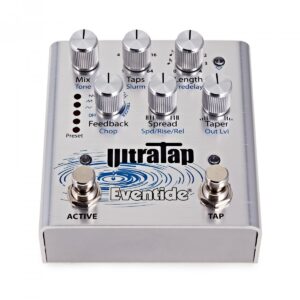
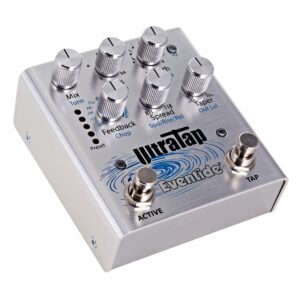
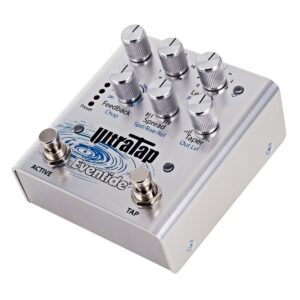
Eventide UltraTap Stompbox
This is the Eventide UltraTap Stompbox from Eventide, listed in Specialist Effects Pedals on Just Pedals. Read More below.
As an affiliate partner, we may earn a small commission when you buy through our links — at no extra cost to you.
Brand
Eventide
Eventide is a renowned American company specializing in advanced audio effects processors and plugins for musicians, engineers, and producers. Founded in 1970, Eventide gained early recognition for its groundbreaking digital effects, such as the H910 Harmonizer, which introduced pitch-shifting and time-based effects to the industry.
Over the decades, the company has continued to innovate, producing high-quality rackmount units, pedals, and software that offer complex, studio-grade effects including reverb, delay, modulation, and pitch shifting. Eventide’s products are highly regarded for their versatility, pristine sound quality, and sophisticated features, making them a staple in both live and studio environments across various genres.
Category
Specialist Effects Pedals
Specialist effects alter the signal in ways that do not sit cleanly inside one established family. They may use granular processing, frequency shifting, resonators, freeze or sustain, bit reduction, ring modulation, feedback networks or combinations of several techniques. The relevant distinction is the underlying process, its tracking or latency, and how completely the dry signal can be blended or replaced.
Tags
Analogue
The signal is shaped by continuously varying electronic circuitry rather than being converted into a digital effect algorithm. Component choice, operating voltage and circuit tolerances influence headroom, noise, clipping texture and the small variations in response between designs.
Others Just Ordered :
- Electro-Harmonix PICO DEEP FREEZE Sound Retainer / Sustainer (EHX Demo by JON SKIBIC)

- Electro-Harmonix SPRUCE GOOSE Overdrive (EHX Demo by TOM BURDA)

- Electro-Harmonix Octavix Octave Fuzz Pedal (Demo by Bill Ruppert)

- Electro-Harmonix Superego+ Synth Engine / Multi-Effect Pedal (Demo by Bill Ruppert)

- EHX Pico Series! Classic Pedals In a Micro Format!

- Electro Harmonix Pedals You Have Never Heard Of