Brand
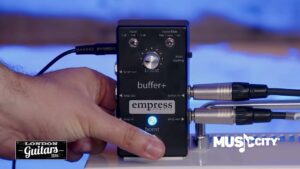
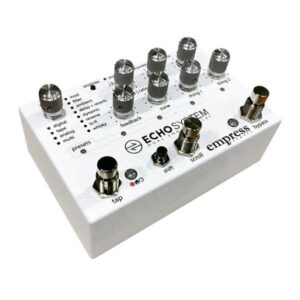
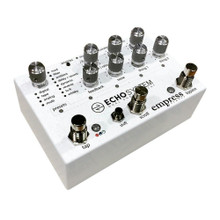
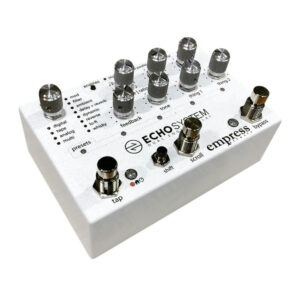
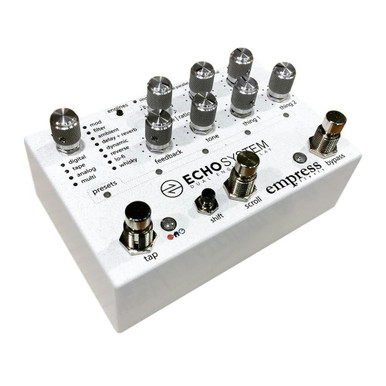
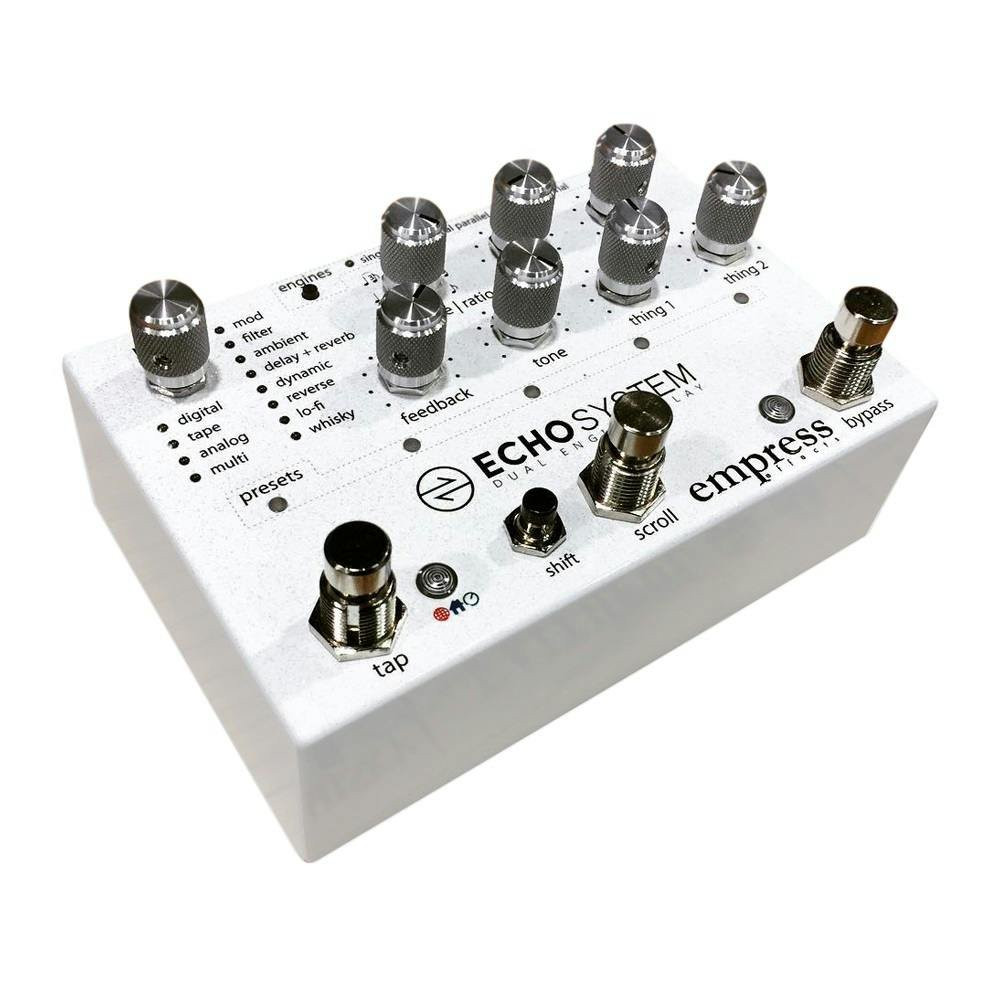
Empress Effects is a Canadian manufacturer of high-quality guitar and bass effects pedals, known for their innovative designs and exceptional sound quality. The company was founded in 2009 and quickly gained a reputation for creating pedals that combine top-tier craftsmanship with user-friendly functionality. Empress Effects is particularly well-regarded for its attention to detail, versatile features, and the ability to produce pedals that suit a wide range of musical styles.
The brand’s products include a variety of effects such as overdrive, distortion, delay, reverb, modulation, and multi-effects units. One of their standout products is the Empress Tape Delay, which is praised for its realistic vintage sound and versatile control options. The Empress Reverb is another popular offering, known for its rich, atmospheric sounds that can cater to everything from subtle room reverb to deep, expansive hall sounds. Empress Effects is celebrated for producing pedals that meet the needs of both professional musicians and hobbyists, often incorporating advanced features like MIDI control and preset storage, making their products suitable for both live performances and studio work.
Category
Delay records the incoming signal for a chosen interval and repeats it after the original note. Feedback returns repeats to the delay line, while tone, filtering, modulation and saturation determine whether echoes remain clear, darken progressively, wobble like tape or degrade like analogue bucket-brigade circuits. Delay time and rhythmic subdivisions govern the spacing and musical pattern of the repeats.
Tags
The signal is shaped by continuously varying electronic circuitry rather than being converted into a digital effect algorithm. Component choice, operating voltage and circuit tolerances influence headroom, noise, clipping texture and the small variations in response between designs.
Converts the signal or control process into numerical data for algorithmic processing. Digital designs can provide precise timing, long memory, complex routing and repeatable presets; sample rate, conversion, internal resolution and latency influence fidelity and response.
Accepts a variable control signal from an external expression pedal. It assigns foot movement to a parameter such as delay time, pitch, mix or modulation depth; connector wiring, polarity, resistance range and assignability must match the controlling pedal.
Sends, receives or responds to Musical Instrument Digital Interface messages rather than carrying the instrument audio itself. Program changes recall presets, continuous controllers move parameters, and MIDI clock or transport messages synchronise timing between devices.
Processes, creates or passes two audio channels. True stereo preserves separate left and right inputs, while mono-to-stereo effects generate spatial differences internally; routing, phase behaviour and whether trails remain stereo determine the resulting image. Some outputs sum to mono when only one socket is connected, which can change level or modulation depth.