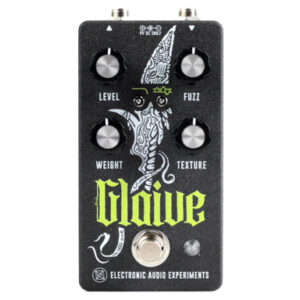
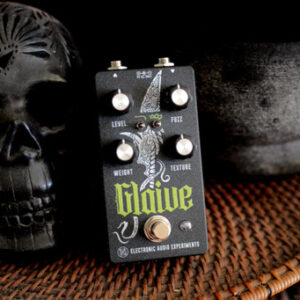

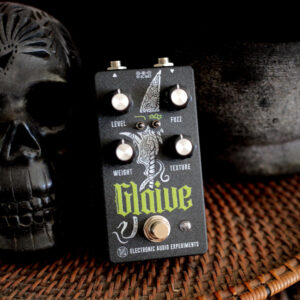
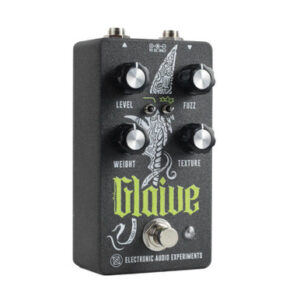
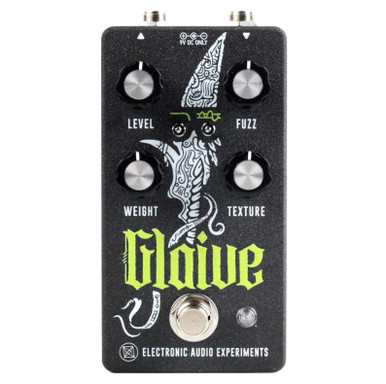
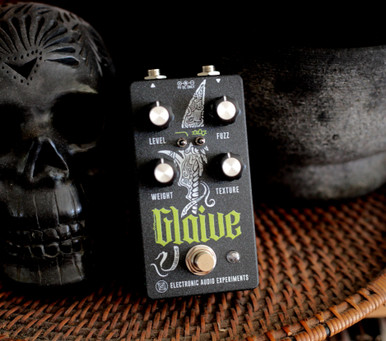
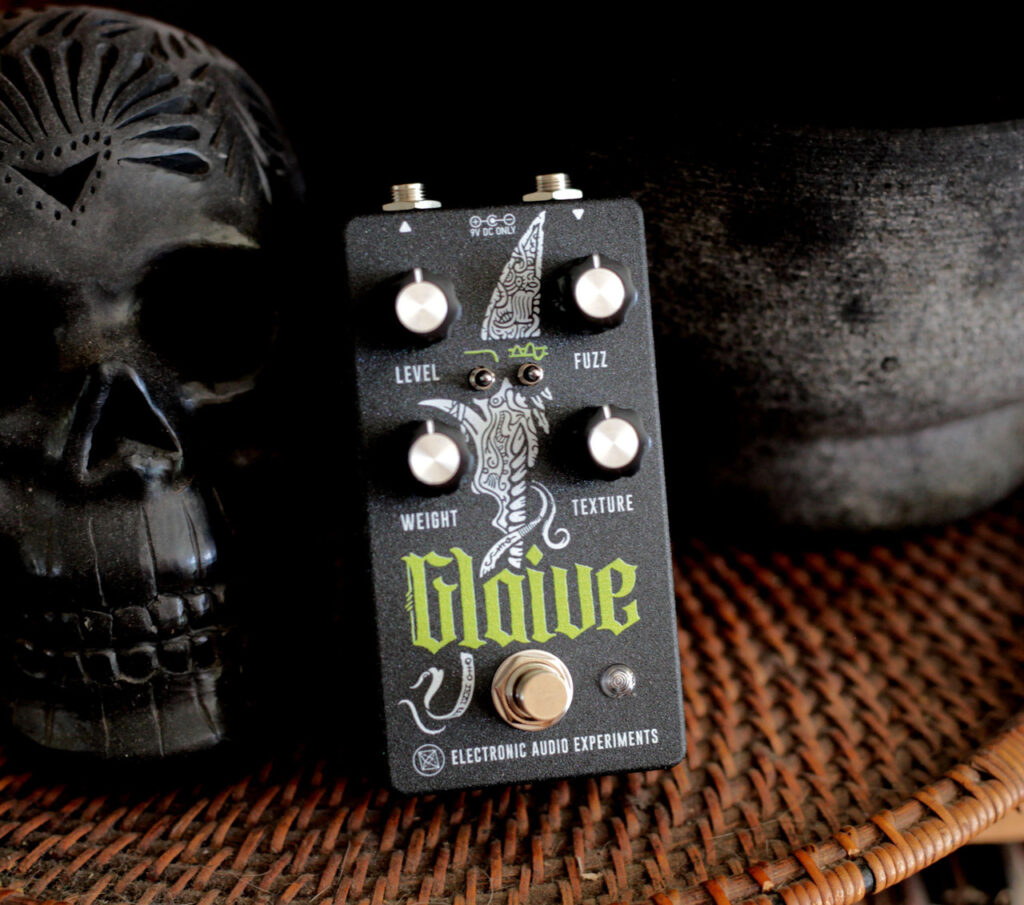
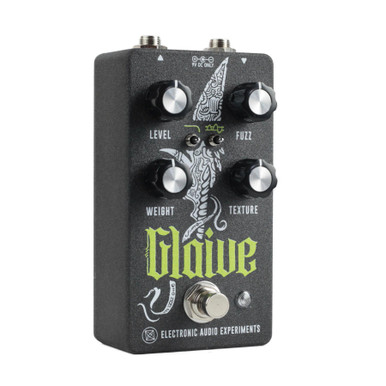
The Electronic Audio Experiments Glaive is the most dangerous gain device in our lineup. This discordant yet deceptively versatile op amp fuzz is capable of over +80dB of gain. The Weight knob adjusts a lightly resonant high pass filter at the input, for tones ranging from tight, ripped- speaker grind to bass-rich sludge. Texture blends in a full-wave rectified analogue signal, producing an octave up that gets fed into the fuzz input. Use it for subtle scrambling, or to generate piercing intermodulation products and sub-bass artefacts with a synthesiser-like attack. The LPF toggle can focus harsh overtones or unleash a full-spectrum cut through any mix. Finally, the Squelch toggle enables a brute-force, highly effective bias gate that can temper even the most fanatical gain levels and impart a crumbly, ripping quality to the note decay.
The whole package is rounded out with a robust, high-headroom 24V internal power supply and quiet buffered bypass with intelligent momentary/latching functionality. Indeed, despite its belligerent nature, the Glaive possesses a deadly finesse.
Controls:
- Level: Output volume level.
- Fuzz: Controls the signal flow into the primary gain stage. Increase to add gain, up to an irresponsible +80dB.
- Weight: Changes the cutoff of a high-pass filter at the input to alter the attack and thickness of the fuzz. Decrease for a tight attack, increase for crushing bass frequencies.
- Texture: Turn clockwise to blend in an analogue octave up at the input of the fuzz circuit. Low settings add subtly broken harmonics, high settings add a strong 2nd harmonic with extended overtones and sub-bass artefacts.
- LPF (left toggle): 3-position tone switch. Centre = no high cut, down = moderate high cut, up = strong high cut.
- Squelch (right toggle): 3-position controlling bias/gate behaviour. Centre = off, down = mild gating, up = strong gating.
- Footswitch: Activates the effect with intelligent momentary/latching behaviour.
Specifications
- Bypass switching: Silent electronic switching with a high-headroom op amp buffer
- Input impedance @ 1Khz: 1MΩ
- Output impedance @ 1Khz: <1KΩ
- Power: 9VDC, 2.1mm centre negative barrel. The current draw is 70mA.
We recommend a regulated, isolated power supply rated for 100 mA minimum. The DC input is protected against reverse polarity and over-voltage up to 20V. Our pedals do not accept batteries.