
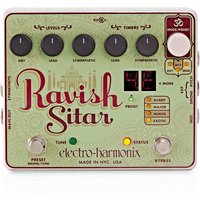
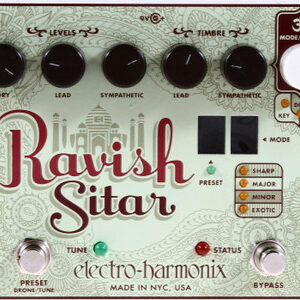
From Blancmange to the Beatles. The sound of the Sitar and Indian music has had a profound influence on popular British music and culture. Now thanks to the Electro Harmonix Ravish Sitar Emulator youll be able to take your tone to another level at the push of a single button! The Sitar is an incredibly hard instrument to learn. It is renowned for taking years of commitment and dedication to truly master. Electro Harmonix have made this incredibly easy for you. By using polyphonic tracking youll be able to recreate the sound of this traditional instrument effortlessly. If that isnt enough to convince you. Youll be pleased to know that this pedal isnt a one-trick-pony. Youll be able to transform your guitar to the sound of strings drones and even mimic a 12 string guitar. Theres also a handy freeze function! What are you waiting for? Take your tone on holiday today!
Electro Harmonix Ravish Sitar Emulator
This is a New Electro Harmonix Ravish Sitar Emulator from Electro Harmonix its found in our Specialist Effects Pedals on the Just Pedals menu. Read More below.
As an affiliate partner, we may earn a small commission when you buy through our links — at no extra cost to you.
Related videos

Brand
Electro Harmonix
Founded by Mike Matthews in New York City in 1968, Electro-Harmonix became known for inventive effects that brought new sounds within reach of guitarists. Its first product was the LPB-1 Linear Power Booster; the company’s long-running catalogue ranges from fuzz and overdrive to delay, modulation, octave and experimental processing. JustPedals listings include the Small Clone chorus, Small Stone phaser, Memory Boy delay, POG 2 octave generator and Micro Q-Tron envelope filter. Check the exact version and power requirements when comparing EHX models, since familiar names often span different generations and formats.
Category
Specialist Effects Pedals
Specialist effects alter the signal in ways that do not sit cleanly inside one established family. They may use granular processing, frequency shifting, resonators, freeze or sustain, bit reduction, ring modulation, feedback networks or combinations of several techniques. The relevant distinction is the underlying process, its tracking or latency, and how completely the dry signal can be blended or replaced.
Others Just Ordered :
- I Love A Happy Accident… – Animals Pedal

- Animals Pedal Vintage Van Driving is Very Fun Overdrive
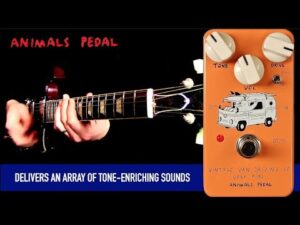
- Animals Pedal Sunday Afternoon Is Infinity Bender

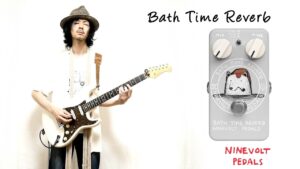
- Ninevolt Pedals | Bath Time Reverb (Animals Pedal)
- This Fuzz Pedal Makes No Sense… But It Sounds Incredible

- ANIME Pedals | Animals Pedal Custom Illustrated Series