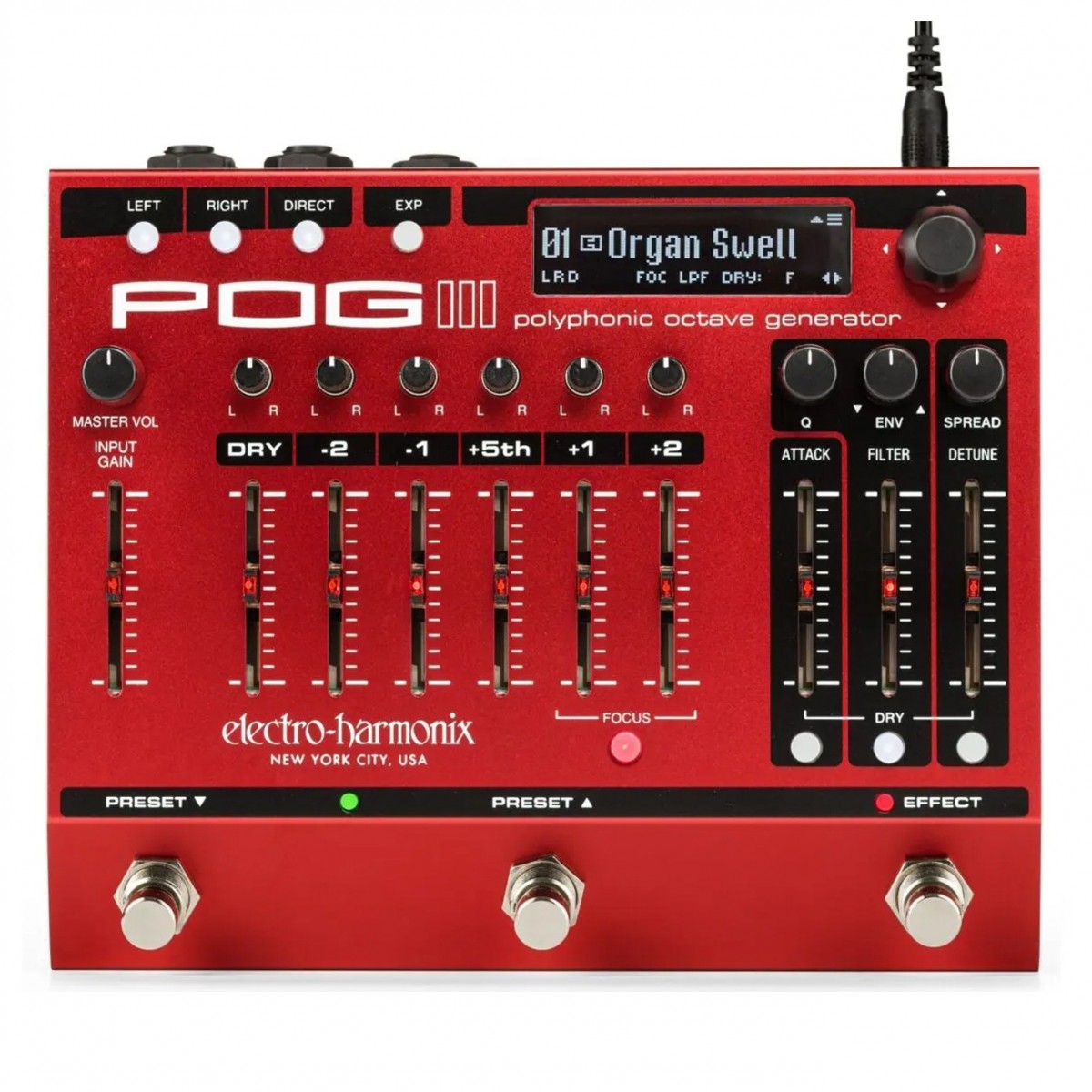
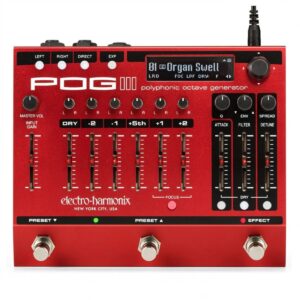
This tasty Filter number is delivered to your pedal board. A tasty Filter and Octave that stands out amongst other Wah & Filter Pedals on the menu. Electro-Harmonix make great Wah & Filter Pedals, so If you like Filter and Octave, then a Electro Harmonix POG3 Polyphonic Octave Generator is the perfect Filter to order in. The Electro Harmonix POG3 Polyphonic Octave Generator is a versatile effects pedal designed to inspire musicians with its advanced tone-shaping capabilities. With six individual voices including DRY two octaves down one octave down a fifth up and up to two octaves up the POG3 allows for rich harmonies and intricate soundscapes. Its lightning-fast tracking ensures flawless polyphony across four octaves enabling seamless transitions between notes and chords. Enhanced features such as the multi-mode filter adjustable Q and dynamic envelope controls offer precise tonal sculpting while the expanded detune section with spread adds depth and character to your sound. Control over the POG3 is both intuitive and flexible thanks to its expression and MIDI capabilities that enable real-time manipulation of parameters. The pedals high-visibility OLED display and NAVCODER knob simplify preset management allowing easy access to 100 onboard presets. The dedicated pan controls and stereo outputs enhance the stereo field creating enveloping effects for live performances and studio work. With a USB-C port for seamless connectivity to the EHXport app you can manage and edit presets effortlessly on your computer making the POG3 a powerful tool for musicians seeking innovative and dynamic sound possibilities.
Electro Harmonix POG3 Polyphonic Octave Generator
JustPedals serve up a tasty Filter. A solid Filter and Octave that stands out amongst other Wah & Filter Pedals on the JustPedals menu. Electro-Harmonix make great Wah & Filter Pedals, so If you like Filter and Octave, then a Electro Harmonix POG3 Polyphonic Octave Generator is the perfect Filter to order in. Read More details Below.
As an affiliate partner, we may earn a small commission when you buy through our links — at no extra cost to you.
Related videos
Brand
Electro Harmonix
Electro-Harmonix (EHX) is a legendary manufacturer of guitar pedals and audio electronics, renowned for their distinctive sound and pioneering designs. Established in 1968 by Mike Matthews, EHX has played a significant role in shaping the landscape of effects pedals. The company’s pedals are celebrated for their innovative circuits and unique tones, earning them a dedicated following among musicians across genres. From classics like the Big Muff Pi fuzz to modern favorites like the POG octave generator, Electro-Harmonix pedals are known for their versatility and sonic character.
EHX’s product lineup spans a wide range of effects categories, including distortion, modulation, delay, and reverb, among others. Their pedals often feature intuitive controls and rugged construction, making them suitable for both stage and studio use. In addition to their iconic standalone pedals, Electro-Harmonix has also produced notable units such as the Memory Man delay/echo and the Holy Grail reverb, which have become staples in many guitarist’s rigs. With a legacy of innovation and a commitment to quality, Electro-Harmonix continues to be a leading force in the world of guitar effects, inspiring musicians to explore new sonic possibilities.
Category
Distortion Pedals
Distortion pedals create a heavier, more aggressive gain sound than most overdrive pedals, giving guitarists the sustain, bite and saturation needed for rock, punk, metal and hard-hitting lead tones. They can turn a clean amp into a high-gain platform or add an extra layer of intensity to an already driven sound.
Some distortion pedals are tight and modern, while others are raw, fizzy or vintage-inspired. Choosing the right one depends on whether you want chunky rhythm tones, singing sustain, scooped metal sounds or a classic hard-rock voice with plenty of attack.
Guitar Effects Pedals
Guitar Effects Pedals is a useful category for players looking to shape their guitar or bass sound in a more focused way. Products in this area can help with tone, control, routing, performance or creative sound design depending on the exact type of gear involved.
For anyone building a pedalboard, guitar effects pedals options can help fill a specific gap in the signal chain or open up new sounds that are difficult to achieve with an amp alone. They are worth exploring when you want a more personal, flexible and practical setup.
Octave Pedals
Octave, pitch and harmony pedals shift your guitar signal up or down to create extra notes, thicker textures and unusual musical effects. They can add a lower octave for heavier riffs, create twelve-string style shimmer, produce synth-like tones or generate harmonised lead lines.
These pedals are popular with experimental guitarists, bass players, solo performers and anyone wanting to make one instrument sound larger. Tracking quality, blend controls and polyphonic performance all affect how natural or extreme the final sound feels.
Wah & Filter Pedals
Wah pedals use a foot-controlled filter to sweep through frequencies, creating the vocal-like sound heard in funk, rock, soul, metal and psychedelic guitar playing. They can be used rhythmically, expressively or as a fixed tone-shaping filter.
A wah pedal gives the player direct physical control over the effect, making it feel highly responsive and personal. It can make lead lines sing, rhythm parts talk and heavy riffs cut through with extra attitude.
Tags
Filter
Filter pedals and related effects are commonly used by guitarists looking to shape their tone in a more focused and creative way. Different designs offer their own response, feel and tonal character depending on the style of music and the type of amplifier or guitar being used.
Many players build pedalboards gradually over time, combining different effects and utilities to create a setup that suits their own sound and workflow. Filter related gear can play an important role in both live performance and studio recording.
MIDI
MIDI-compatible pedals allow players to control presets, switching and parameters remotely using MIDI controllers and programmable pedalboard systems. This is especially useful in complex live rigs where several pedals need to change sounds instantly during a song.
Modern MIDI pedals can store presets, sync tempo-based effects and integrate with advanced switchers or digital processors. They are widely used by touring musicians, studio players and guitarists building highly controlled performance setups.
Octave
Octave pedals and related effects are commonly used by guitarists looking to shape their tone in a more focused and creative way. Different designs offer their own response, feel and tonal character depending on the style of music and the type of amplifier or guitar being used.
Many players build pedalboards gradually over time, combining different effects and utilities to create a setup that suits their own sound and workflow. Octave related gear can play an important role in both live performance and studio recording.
Stereo
Stereo guitar pedals process left and right audio channels separately, creating a wider and more spacious sound than a standard mono setup. Stereo delay, reverb and modulation effects are especially popular for ambient, cinematic and modern live rigs where depth and movement are an important part of the tone.
Running a stereo setup can dramatically change the feel of a guitar rig, particularly through two amplifiers, studio monitors or headphones. Ping-pong delays, wide choruses and immersive reverbs all benefit from stereo operation and can create a much larger soundstage.
Others Just Ordered :
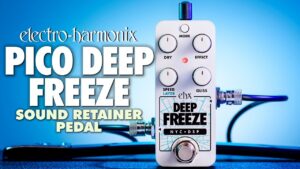
- Electro-Harmonix PICO DEEP FREEZE Sound Retainer / Sustainer (EHX Demo by JON SKIBIC)
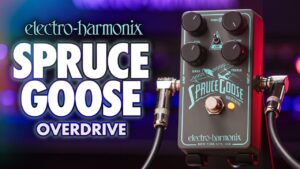
- Electro-Harmonix SPRUCE GOOSE Overdrive (EHX Demo by TOM BURDA)
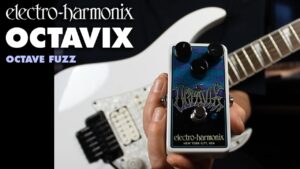
- Electro-Harmonix Octavix Octave Fuzz Pedal (Demo by Bill Ruppert)
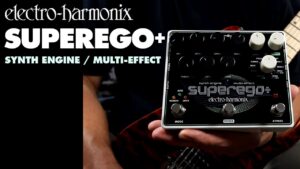
- Electro-Harmonix Superego+ Synth Engine / Multi-Effect Pedal (Demo by Bill Ruppert)
- EHX Pico Series! Classic Pedals In a Micro Format!

- Electro Harmonix Pedals You Have Never Heard Of