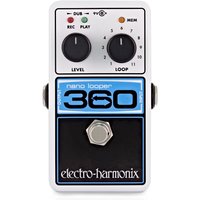
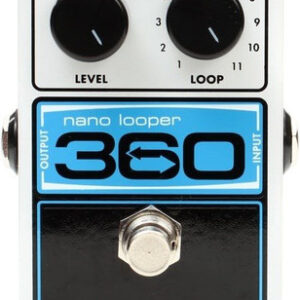
The Electro Harmonix Nano Looper 360 will open your musical world to new sonic possibilities giving you the tools to approach your music in new and unique ways. Compact but incredibly powerful this handy stompbox allows you to record and store up to eleven different loops and lets you recall them at any moment. Use it with any instrument you like vocals bass and guitar this pedal excels at it all. Using a studio-grade 24-bit digital converter your sound will always remain dynamic and nuanced.
Electro Harmonix Nano Looper 360
£110.25
This is a New Electro Harmonix Nano Looper 360 from Electro Harmonix its found in our Looper Pedals on the Just Pedals menu. Read More below.
View Just Electro Harmonix
As an affiliate partner, we may earn a small commission when you buy through our links — at no extra cost to you.
Related videos

Brand
Electro Harmonix
Founded by Mike Matthews in New York City in 1968, Electro-Harmonix became known for inventive effects that brought new sounds within reach of guitarists. Its first product was the LPB-1 Linear Power Booster; the company’s long-running catalogue ranges from fuzz and overdrive to delay, modulation, octave and experimental processing. JustPedals listings include the Small Clone chorus, Small Stone phaser, Memory Boy delay, POG 2 octave generator and Micro Q-Tron envelope filter. Check the exact version and power requirements when comparing EHX models, since familiar names often span different generations and formats.
Category
Looper Pedals
A looper records a passage and plays it back repeatedly so additional parts can be overdubbed over the cycle. Loop length, audio quality, storage and the number of independent tracks define the basic capability. Undo, quantisation, synchronisation, rhythm guides, reverse and half-speed functions determine how recordings can be corrected, transformed and aligned with other equipment.
Tags
Bass
Voiced or equipped to retain low-frequency fundamentals and the higher headroom of a bass signal. Clean blends, crossovers and bass-specific filter ranges can preserve weight and articulation while the effected portion adds harmonics, movement or ambience.
Digital
Converts the signal or control process into numerical data for algorithmic processing. Digital designs can provide precise timing, long memory, complex routing and repeatable presets; sample rate, conversion, internal resolution and latency influence fidelity and response.
Others Just Ordered :
- I Love A Happy Accident… – Animals Pedal

- Animals Pedal Vintage Van Driving is Very Fun Overdrive
- Animals Pedal Sunday Afternoon Is Infinity Bender

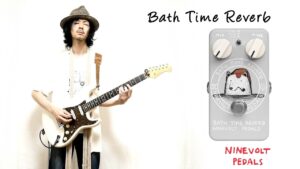
- Ninevolt Pedals | Bath Time Reverb (Animals Pedal)
- This Fuzz Pedal Makes No Sense… But It Sounds Incredible

- ANIME Pedals | Animals Pedal Custom Illustrated Series