
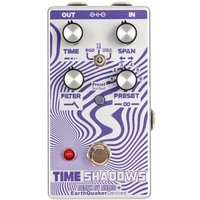
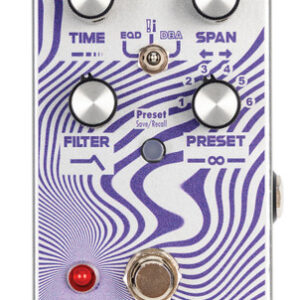
The EarthQuaker Devices Time Shadows Subharmonic Multi-Delay Resonator is a delay pedal that merges pitch-morphed fuzz dual delay and subharmonic filtering into one device. Featuring three distinct modes Time Shadows offers a range of sounds from sub-octave filter delays to pitch-shifting dual delays and shimmering multi-delays. With six programmable preset slots user-assignable expression control and easy switching between Live and Preset modes Time Shadows is perfect for musicians who want to push the boundaries of traditional delay effects. This collaboration between EarthQuaker Devices and Death By Audio is designed to inspire experimental soundscapes for any genre.
Earthquaker Devices Time Shadows Subharmonic Multi-Delay Resonator
£219.00
This is a New Earthquaker Devices Time Shadows Subharmonic Multi-Delay Resonator from EarthQuaker Devices its found in our Delay Pedals on the Just Pedals menu. Read More below.
View Just EarthQuaker Devices
As an affiliate partner, we may earn a small commission when you buy through our links — at no extra cost to you.
Related videos

Brand
EarthQuaker Devices
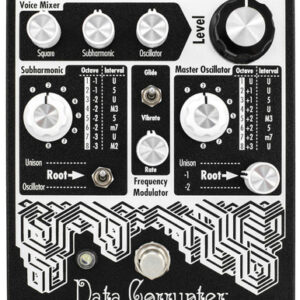
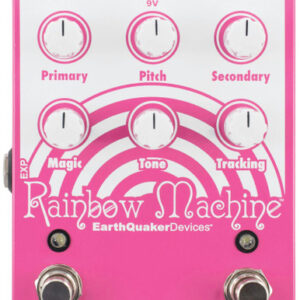
Musician Jamie Stillman founded EarthQuaker Devices in 2004 after moving from pedal repair into circuit design. The first full-production release was the Hoof fuzz in 2007. The company develops its pedals in-house in Akron, Ohio, where it hand-builds and hand-tests them and backs them with a lifetime guarantee. Current JustPedals examples show the range’s practical and exploratory sides: Ghost Echo reverb, Data Corrupter harmonizer, Avalanche Run delay and reverb, and Rainbow Machine pitch shifting. EarthQuaker’s own design philosophy pairs usable controls with sounds that can move well beyond conventional effects.
Category
Delay Pedals
Delay records the incoming signal for a chosen interval and repeats it after the original note. Feedback returns repeats to the delay line, while tone, filtering, modulation and saturation determine whether echoes remain clear, darken progressively, wobble like tape or degrade like analogue bucket-brigade circuits. Delay time and rhythmic subdivisions govern the spacing and musical pattern of the repeats.
Tags
Presets
Stores complete groups of parameter values for later recall. The number of locations, switching time, spillover behaviour and whether presets include routing, expression and MIDI assignments determine how completely one sound can change into another.
Others Just Ordered :
- I Love A Happy Accident… – Animals Pedal

- Animals Pedal Vintage Van Driving is Very Fun Overdrive
- Animals Pedal Sunday Afternoon Is Infinity Bender

- Ninevolt Pedals | Bath Time Reverb (Animals Pedal)
- This Fuzz Pedal Makes No Sense… But It Sounds Incredible

- ANIME Pedals | Animals Pedal Custom Illustrated Series