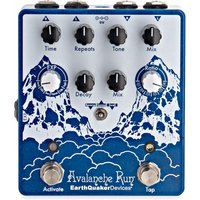
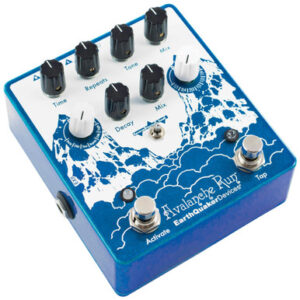
The EarthQuaker Devices Avalanche Run V2 Delay and Reverb is a stereophonic powerhouse designed for creating lush expansive soundscapes. Offering up to two seconds of delay time a cavernous plate-style reverb and a choice of normal reverse or swell modes it brings rich sonic textures to life with ease. Tap tempo with selectable subdivisions and a wide-ranging Tone control make it easy to fine-tune everything from warm tape echoes to shimmering ambient washes.An assignable expression jack puts dynamic control at your feet allowing real-time manipulation of key parameters for spontaneous creativity. Flexi-Switch technology adds seamless switching between momentary and latching operation while the all-analogue dry path and high-resolution 24-bit 96kHz digital conversion ensure pristine sound quality at every turn.
EarthQuaker Devices Avalanche Run V2 Delay & Reverb
This is a New EarthQuaker Devices Avalanche Run V2 Delay & Reverb from EarthQuaker Devices is in our Delay & Reverb Pedals category on Just Pedals. Read More below.
As an affiliate partner, we may earn a small commission when you buy through our links — at no extra cost to you.
Related videos
Brand
EarthQuaker Devices
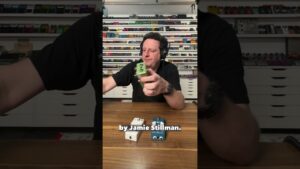
Musician Jamie Stillman founded EarthQuaker Devices in 2004 after moving from pedal repair into circuit design. The first full-production release was the Hoof fuzz in 2007. The company develops its pedals in-house in Akron, Ohio, where it hand-builds and hand-tests them and backs them with a lifetime guarantee. Current JustPedals examples show the range’s practical and exploratory sides: Ghost Echo reverb, Data Corrupter harmonizer, Avalanche Run delay and reverb, and Rainbow Machine pitch shifting. EarthQuaker’s own design philosophy pairs usable controls with sounds that can move well beyond conventional effects.
Category
Delay & Reverb Pedals
Delay and reverb are combined here because both create a sense of time and space but do so differently. Delay produces distinct repeats; reverb builds a dense field of reflections around the note. Dual-effect designs may run the sections in series or parallel, synchronise them to tempo and allow separate routing, so the interaction can range from a short room with a single echo to long, evolving ambient trails.
Tags
Analogue
The signal is shaped by continuously varying electronic circuitry rather than being converted into a digital effect algorithm. Component choice, operating voltage and circuit tolerances influence headroom, noise, clipping texture and the small variations in response between designs.
Digital
Converts the signal or control process into numerical data for algorithmic processing. Digital designs can provide precise timing, long memory, complex routing and repeatable presets; sample rate, conversion, internal resolution and latency influence fidelity and response.
Expression Input
Accepts a variable control signal from an external expression pedal. It assigns foot movement to a parameter such as delay time, pitch, mix or modulation depth; connector wiring, polarity, resistance range and assignability must match the controlling pedal.
Tap Tempo
Measures repeated foot taps and converts their interval into an effect rate or delay time. Subdivisions translate that pulse into dotted, triplet or other rhythmic values, while averaging and range limits influence how quickly and accurately the tempo settles.
Others Just Ordered :
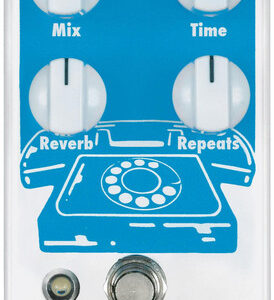
- I Love A Happy Accident… – Animals Pedal

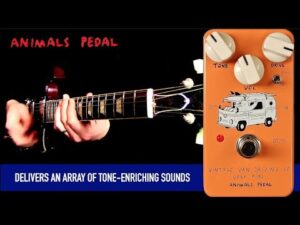
- Animals Pedal Vintage Van Driving is Very Fun Overdrive
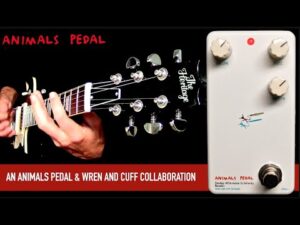
- Animals Pedal Sunday Afternoon Is Infinity Bender
- Ninevolt Pedals | Bath Time Reverb (Animals Pedal)
- This Fuzz Pedal Makes No Sense… But It Sounds Incredible

- ANIME Pedals | Animals Pedal Custom Illustrated Series