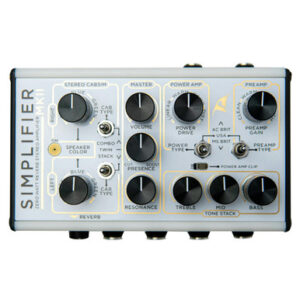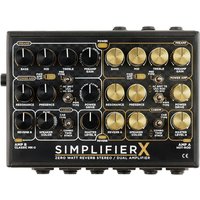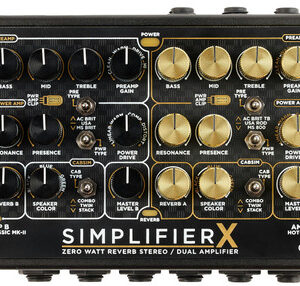
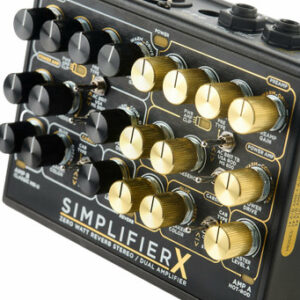
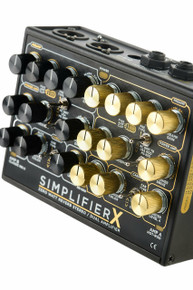

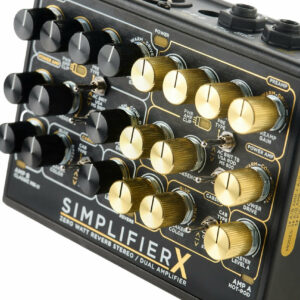
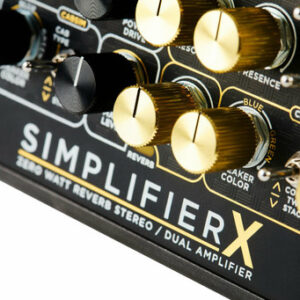
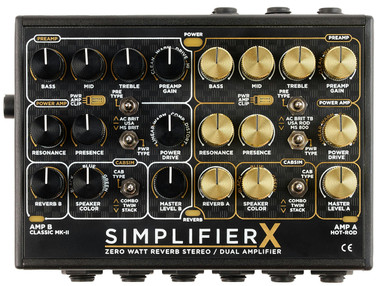
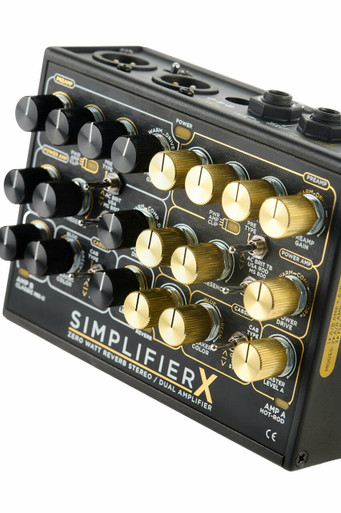
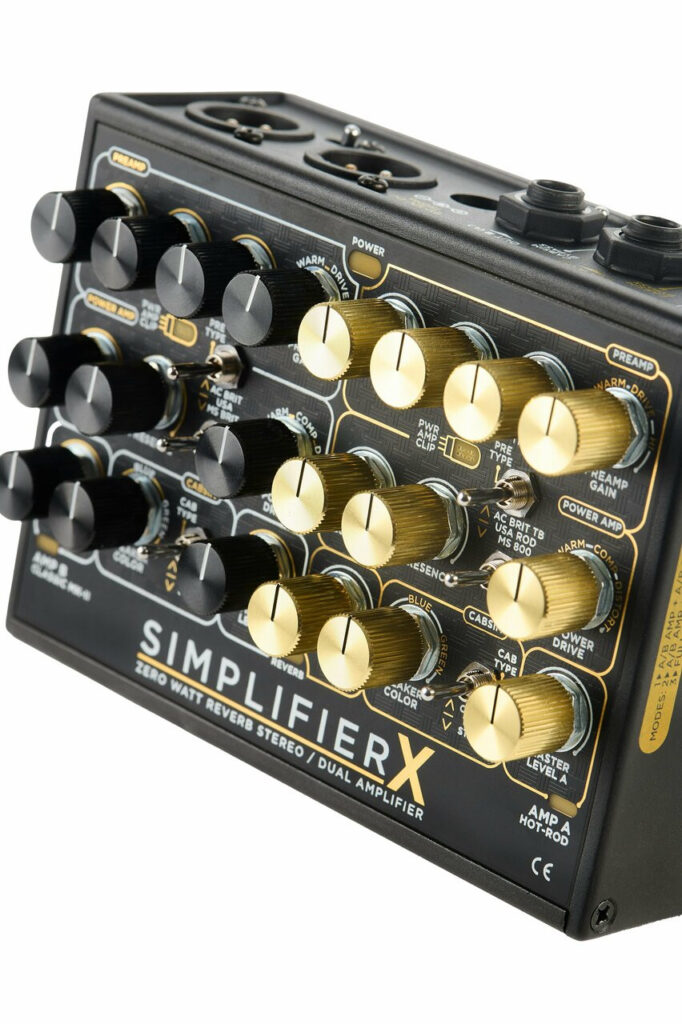
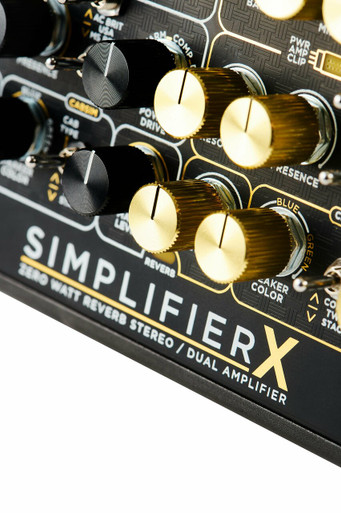
The Simplifier X is an amplifier pedal with two pre-amplifiers based on the best analogue tones to exist, with an inspiring multi-mode stereo reverb, and full of a whole host of cab sims for you to choose from. It is simple to use as there is no menu diving with the interactive host of control knobs. Simply put, create your own ampless rig in one pedal, with full stereo sound.
Key Features
- Pure Analogue Tone – This pedal simply has the best Analogue tone, all in one pedal. This one pedal holds classics such as the JCM 800, VOX AC-15, ’59 Plexi and more!
- True Stereo Amp in a Pedal – Just like running 2 amps in parallel, A/B-ing 2 cabinets, or creating your own stereo rig.
- Built-In Stereo Reverb – A full stereo reverb, with mix, control for each channel independently.
- Amplifier Modes – Toggle between having your amplifiers separated, or even run them together to create your own blended tones!
- No Menu Diving – Change settings on the fly with full control, and no menus for ease of use!
- Zero Latency – Expect zero latency for a luxurious response to your tone.
The X Amps
Amp B – Based on the Classic MK-II
- AC BRIT – Based on the 60’s VOX AC-15 Normal Channel
- USA – Based on the ‘59 Bassman
- MS BRIT – Based on the ’59 Plexi
Amp A – Based on the Hot-Rod
- AC Brit TB – Based on the 60’s VOX AC-30 Top Boost
- USA Rod – Based on the HOT-ROD Series
- MS800 – Based on the JCM 800
Multi-Mode Stereo Reverb
- Short: Room Style
- Mid: Plate Style
- Long: Ether Style
The Modes
1.A/B Amp + A/B Cab
This mode is dual mono, like having two different complete amplifiers, selecting each one with an A/B switch. Each amp will have their own preamp, power, cabinet, reverb mix and Loop FX. You can have different FX on each loop and select them by changing the channel.
2: A/B Amp + Stereo Cab
In this mode, you can toggle between amp A and B Amplifiers, while the Cabinets and FX loop will remain Left and Right. This allows you to use different FX and cabinets for each side, expanding the stereo options and complimenting the responses of the cabs for a fuller, 3D sound.
3: Full Parallel – Its like running two different amplifiers at the same time!
You can have different settings and effects for each side and make the perfect setup for a full stereo rig. You can even use different effects at the input of each amp.
Specifications
- Heavy Duty Custom Made Anodized Aluminium Case in Sandblasting /Frosted Black Finish
- Low Power Consumption: 200ma / 9v Center Negative
- Compact Size: 12,5×10,5×6.5 Cms — 5,2x 3,9×2.5 Inches
- Weight: 490 Grs. — 1 Pound
- True Stereo (Two Independent Inputs)
- 3 Different Useful Modes
- No Extra Y Cables Needed
- Dual FX Sends/Returns
- THRU Jack for Dedicated DRY AMP Signal Path
- ¼ Outputs with Cabsim Bypass
- Two XLR DI Outputs
- Includes the footswitch and 3.5mm TRS cable