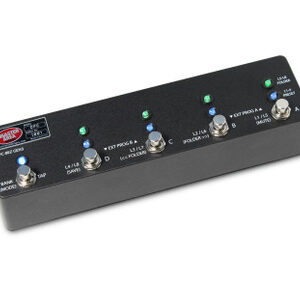
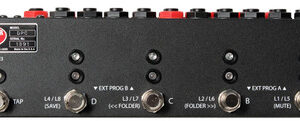
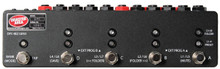

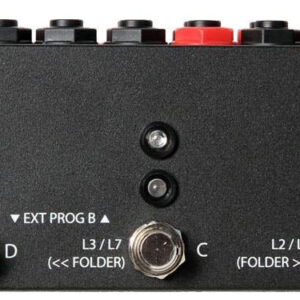
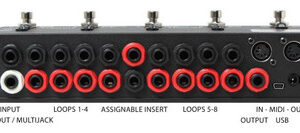
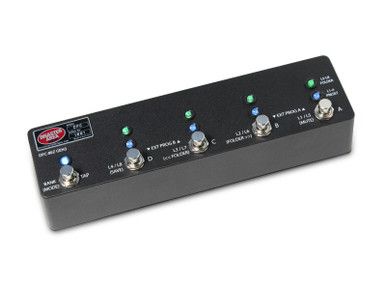
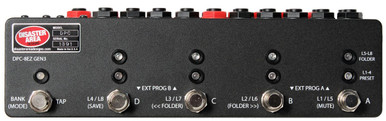
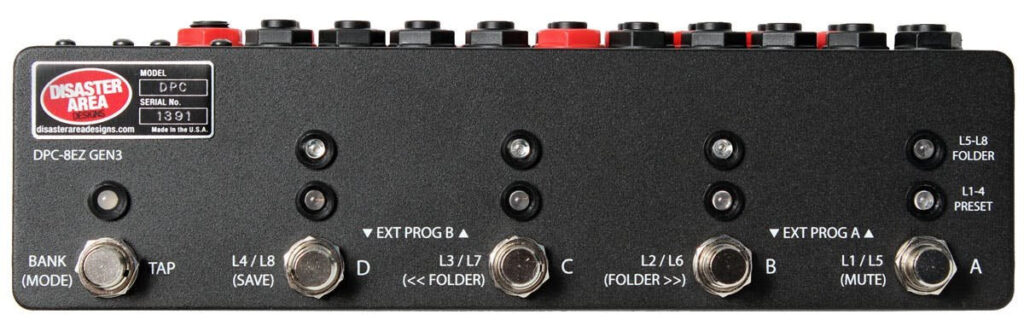
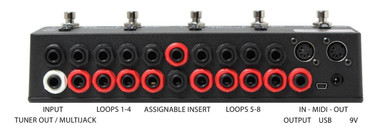
Here's what Disaster Area says about the DPC-8EZ:
A bypass looper can streamline your rig in ways you never thought possible – imagine being able to tap one footswitch to go from verse to chorus to bridge of a song, while changing up to eight different effects plus two MIDI devices!
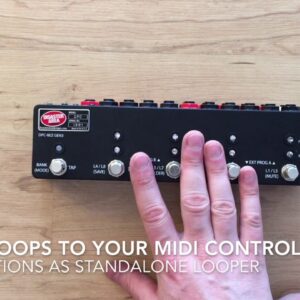
If you already have a MIDI controller, the DPC-8EZ can act as a MIDI “slave” on any available channel. You can even connect two or more DPC-8EZ to control more pedals.
The DPC-8EZ is fully compatible with the Disaster Area Gen3 pedal controllers – connect it to add eight effects loops under MIDI control. The DPC-8EZ can also function as a standalone MIDI controller for up to two devices.
What’s new in Gen3?
The switching system at the heart of the DPC-8EZ is so robust and transparent that we didn’t dare to change it! We did add a few nice new features, though!
- Faster, more powerful 32-bit processor
- Improved USB MIDI capabilities
- User-definable LED brightness (10 levels)
- New MIDI mode controls up to two MIDI devices with program select and tap tempo
- Preset mode now controls MIDI and loops
- Tuner output jack doubles as a MultiJack
- MultiJack functions as MIDI input & output OR double MIDI output
- MultiJack is directly compatible with Chase Bliss, Empress, or Meris pedals
Specifications
- Compact size – 10″ x 2.6″ x 2″ excluding switch caps and jacks.
- No special power supply required – uses less than 120mA, 9V from a Pedal Power 2 or similar.
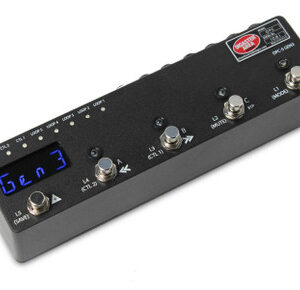
- 5 footswitches for preset selection or manual effects loop control.
- 48 presets accessible by foot, arranged in four folders with three banks of four presets each.
- 128 presets accessible using an external MIDI controller
- Full MIDI control of presets and effects loops
- 8 effects loops with a custom-designed switching matrix
- MIDI mode controls up to two MIDI devices
- Dedicated insert connection may be assigned to any position in the effects loop section.
- Always-on tuner out with tuner mute, doubles as second MIDI interface
- Status LEDs with user-definable brightness work in any situation from an orchestra pit to full sun.
- Exclusive Z-MODE buffer allows you to tailor the impedance to work with fuzz, vibe, wah, and other impedance-sensitive pedals
- USB connector for MIDI connection and future firmware upgrades (PC and Mac firmware update tools available.)