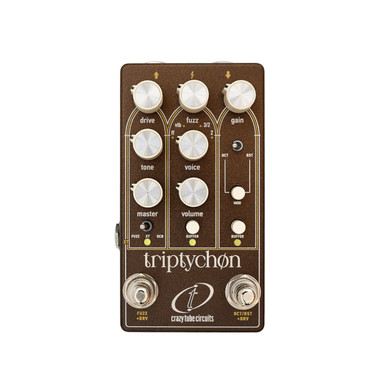
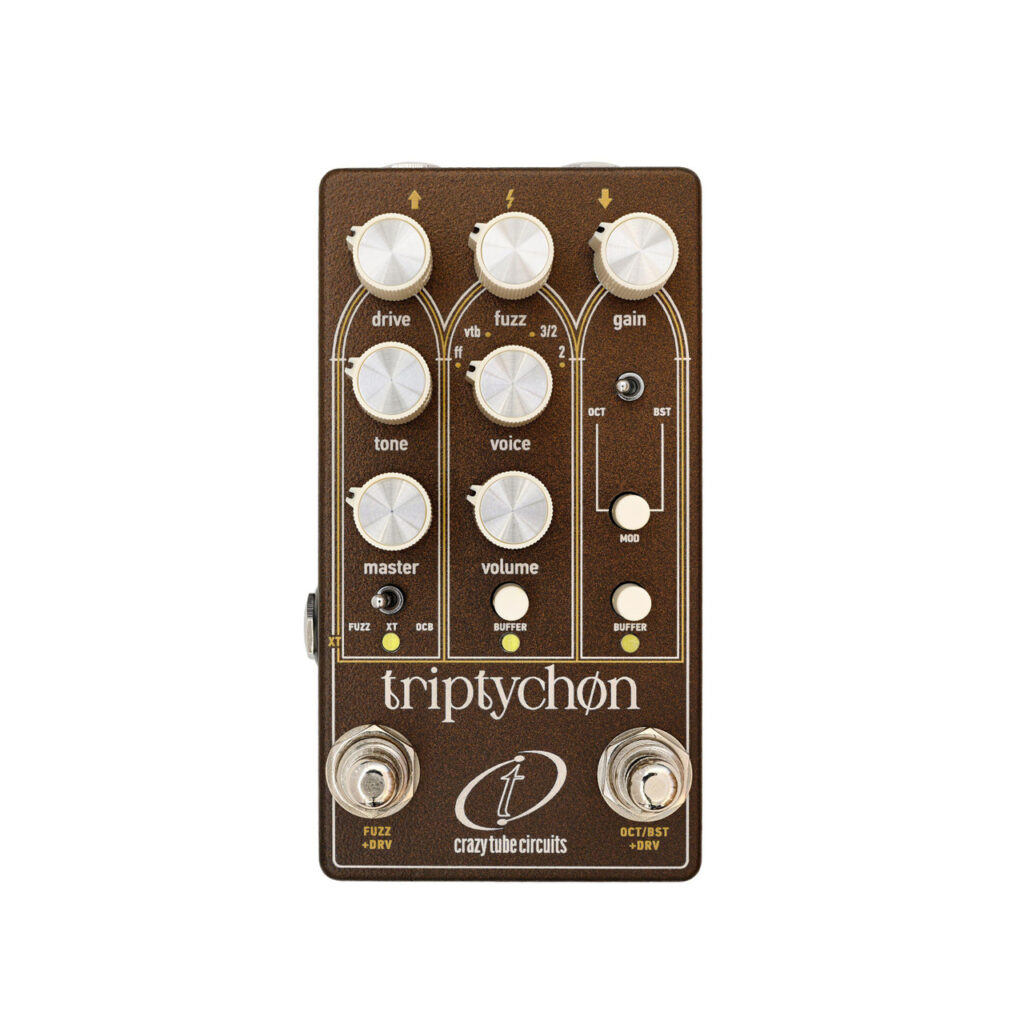



Get your Crazy Tube Circuits TRIPTYCHON Analogue Fuzz Multi-FX Pedal from Music Co. Today!



Crazy Tube Circuits TRIPTYCHON Analogue Fuzz Multi-FX Pedal
£259.00
This is a New Crazy Tube Circuits TRIPTYCHON Analogue Fuzz Multi-FX Pedal from Crazy Tube Circuits its found in our Multi-Effects Pedals on the Just Pedals menu. Read More below.
View Just Crazy Tube Circuits
As an affiliate partner, we may earn a small commission when you buy through our links — at no extra cost to you.

Related videos



Brand
Crazy Tube Circuits
In the current JustPedals catalogue, Crazy Tube Circuits is represented by Overdrive Pedals, Tremolo & Vibrato Pedals and Multi-Effects Pedals. Current listings include Mirage JR Reverb, Time Digital Delay and Unobtanium Dual Overdrive. That makes the range relevant to players looking for drive, gain and clipping, plus time-based effects and ambience. Check each model for its exact circuit or processing platform, controls, power requirements and connections, particularly where the catalogue includes both pedals and supporting gear.
Category
Multi-Effects Pedals
A multi-effects processor combines several effect algorithms and signal-routing stages in one unit. Its sound depends not only on the individual models but on their order, parallel or serial routing, processing resolution and available control. Preset structure, switching gaps, foot control, expression assignment, amp or cabinet modelling, USB audio and MIDI determine how completely the processor can replace separate pedals.
Tags
Analogue
The signal is shaped by continuously varying electronic circuitry rather than being converted into a digital effect algorithm. Component choice, operating voltage and circuit tolerances influence headroom, noise, clipping texture and the small variations in response between designs.
Fuzz
Pushes the signal into extreme clipping, often approaching a square wave and producing dense harmonics. Transistor type, bias, input loading and filtering govern whether the texture is smooth, woolly, gated, spluttering, octave-rich or highly responsive to the instrument volume.
Others Just Ordered :
- I Love A Happy Accident… – Animals Pedal

- Animals Pedal Vintage Van Driving is Very Fun Overdrive

- Animals Pedal Sunday Afternoon Is Infinity Bender

- Ninevolt Pedals | Bath Time Reverb (Animals Pedal)

- This Fuzz Pedal Makes No Sense… But It Sounds Incredible

- ANIME Pedals | Animals Pedal Custom Illustrated Series