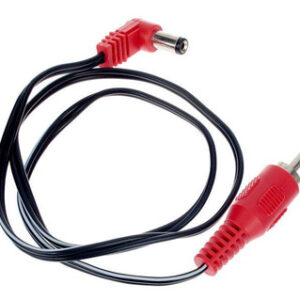
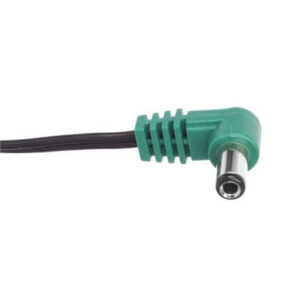
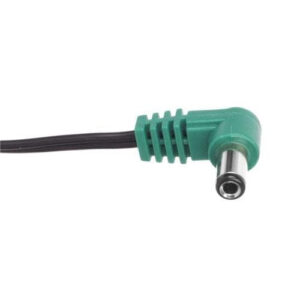
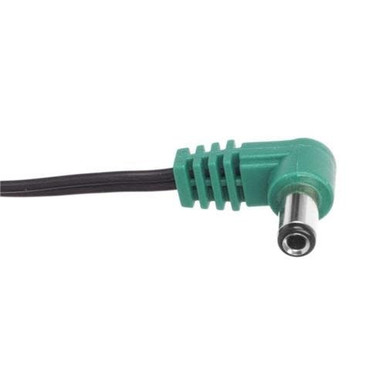
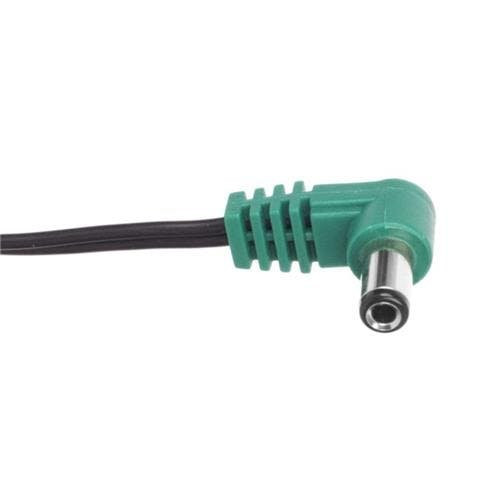
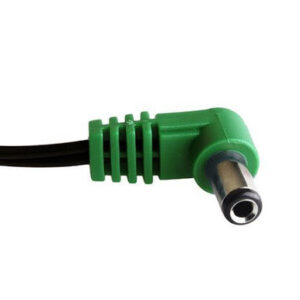
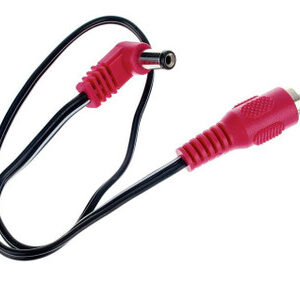
Cioks 4030 Flex 4 5.5/2.5mm Centre Positive 30cm DC Plug

£3.99

This is the Cioks 4030 Flex 4 5.5/2.5mm Centre Positive 30cm DC Plug from Cioks, listed in Specialist Effects Pedals on Just Pedals. Read More below.

View Just
more
and ,

Here's what Cioks say about the 4030 Flex 4:

Type 4 Flex cables are green and fitted with a centre positive 5,5/2,5mm DC plug. This Flex cable type is nowdays mainly used to power all Eventide Factor and H9 pedals and is widely used for many AC pedals. This Flex cable is available with angled (L-shaped) plug in three lengths 30, 50 or 80cm.

The applications we know are the following pedals:

  • All Eventide Factor and H9 pedals
  • Big older 4-button modeling Line 6 pedals (DL4, DM4, MM4, AM4 and FM4)
  • Older Electro-Harmonix pedals which need 18, 24 or 40V
  • DigiTech Whammy (the first original and 4th edition) *
  • DigiTech Talker, original JamMan *
  • DigiTech JamMan stereo original ones, later versions are DC and for type 1 Flex (BOSS standard) *
  • DigiTech Delay, TimeBender, HarmonyMan, Expression Factory, Space Station *
  • VoodooLab Control Switcher
  • M9 and M13 modelers from Line 6
  • Boomerang Phrase Sampler or Chorus Delay
  • FoxRox Captain Coconut
  • Rocktron All Access MIDI controller
  • Many pedals from say H&K, Mesa Boogie, Yamaha which should be powered with AC *

*For AC pedals polarity doesn’t matter! There’s nothing like a DC or AC cable. Power cables just have a negative or positive polarity which in case of alternating current doesn’t matter. If your black Flex cable doesn’t fit into your AC pedal’s socket you should use the green one which is for the larger 2,5mm pin. Minimum one green Flex cable is included with all our power supplies except the Adam link. You can also get a yellow type 3 Flex cable for your AC pedal and have the green ones to power your Eventides.
Related videos

Brand

Cioks

CIOKS is a well-known brand specializing in power supply solutions for musicians and audio professionals. Based in Denmark, CIOKS has been manufacturing high-quality power supplies since 1991, catering to the needs of guitarists, bassists, keyboardists, and other musicians.

CIOKS power supplies are renowned for their reliability, versatility, and innovative features. The company offers a wide range of products to accommodate different setups and requirements, including pedalboard power supplies, power distribution systems, and accessories such as cables and adapters.

One of the standout features of CIOKS power supplies is their ability to provide clean, noise-free power to pedals, ensuring optimal performance and minimizing unwanted hum or interference. Many CIOKS products also feature advanced features such as multiple voltage outputs, isolated outputs, and adjustable voltage settings, allowing users to power a variety of pedals with different requirements.

CIOKS power supplies are favored by professional musicians, touring artists, and studio engineers for their durability, performance, and ease of use. Whether for small pedalboards or elaborate rigs with numerous effects pedals, CIOKS offers solutions to keep the music powered up and sounding great.

Category

Specialist Effects Pedals

Specialist effects alter the signal in ways that do not sit cleanly inside one established family. They may use granular processing, frequency shifting, resonators, freeze or sustain, bit reduction, ring modulation, feedback networks or combinations of several techniques. The relevant distinction is the underlying process, its tracking or latency, and how completely the dry signal can be blended or replaced.

Tags

MIDI

Sends, receives or responds to Musical Instrument Digital Interface messages rather than carrying the instrument audio itself. Program changes recall presets, continuous controllers move parameters, and MIDI clock or transport messages synchronise timing between devices.

Stereo

Processes, creates or passes two audio channels. True stereo preserves separate left and right inputs, while mono-to-stereo effects generate spatial differences internally; routing, phase behaviour and whether trails remain stereo determine the resulting image. Some outputs sum to mono when only one socket is connected, which can change level or modulation depth.