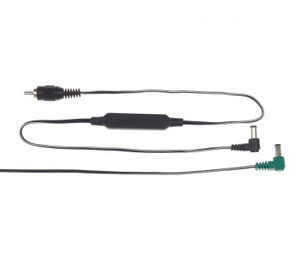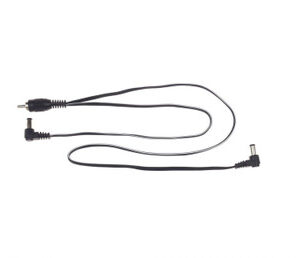
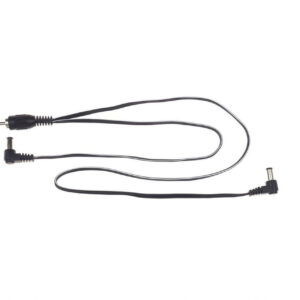
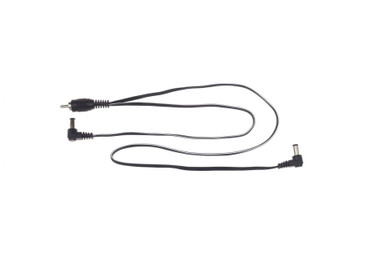
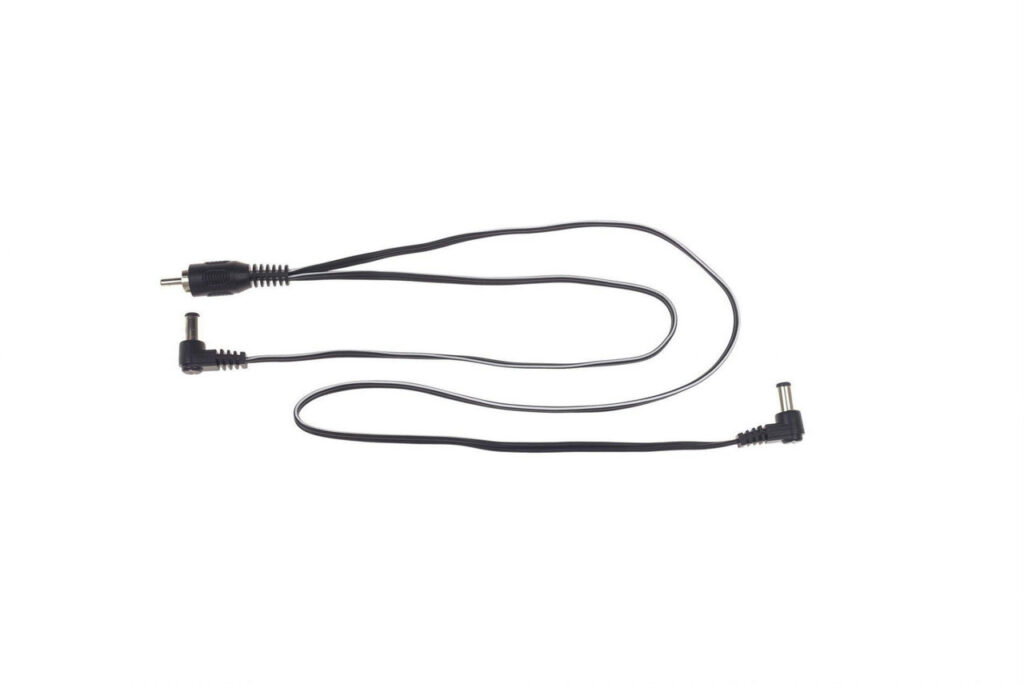
Cioks 1035 Split Flex 30/50cm Cable

£5.99

This is a New Cioks 1035 Split Flex 30/50cm Cable from Cioks, listed in Specialist Effects Pedals on Just Pedals. Read More below.

View Just
more
and ,

Here's what Cioks say about the Split Flex cable:

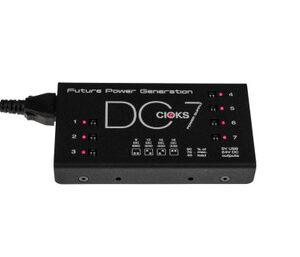
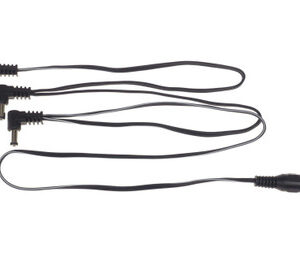
Split Flex gives you the possibility for connecting two pedals to the power supply using one outlet only. Two cables in lengths 30 and 50cm are connected to the plug on the power supply side. On the other end they are terminated with 5,5/2,1mm centre negative angled DC plugs which is the most common type also called the BOSS standard. Both pedals connected to the power supply will be powered with the same voltage and will not be isolated from each other. Split Flex is like a 2-way daisy chain. Make sure that the sum of currents drawn by the two pedals doesn’t exceed the rating of the outlet used. We mainly recommend to use the Split Flex with two analogue low current draw pedals and 100mA outlets. Using Split Flex with two digital pedal or one analogue and one digital might generate unwanted noise in your signal. If you wish to power three pedals with the same voltage of one outlet have a look at CIOKS 3-way daisy chain Flex.
Related videos

Brand

Cioks

In the current JustPedals catalogue, Cioks is represented by Pedal Power Supplies and Boost Pedals. Current listings include The Grip Bracket, L2450 DC Link Cable and L2415 DC Link Cable. That makes the range relevant to players looking for drive, gain and clipping, plus pedalboard infrastructure and control. Check each model for its exact circuit or processing platform, controls, power requirements and connections, particularly where the catalogue includes both pedals and supporting gear.

Category

Specialist Effects Pedals

Specialist effects alter the signal in ways that do not sit cleanly inside one established family. They may use granular processing, frequency shifting, resonators, freeze or sustain, bit reduction, ring modulation, feedback networks or combinations of several techniques. The relevant distinction is the underlying process, its tracking or latency, and how completely the dry signal can be blended or replaced.

Tags

Analogue

The signal is shaped by continuously varying electronic circuitry rather than being converted into a digital effect algorithm. Component choice, operating voltage and circuit tolerances influence headroom, noise, clipping texture and the small variations in response between designs.

Digital

Converts the signal or control process into numerical data for algorithmic processing. Digital designs can provide precise timing, long memory, complex routing and repeatable presets; sample rate, conversion, internal resolution and latency influence fidelity and response.