Brand
Caline’s official catalogue spans guitar and bass effects, acoustic preamps, amplifiers, pedalboards and pedal power supplies. The JustPedals listings reflect that breadth: the CP-40 is an acoustic-guitar preamp, the CP-45 is a bass compressor, and the CP-05 is a multi-output power supply for effects pedals. Caline is therefore represented by both tone-shaping products and practical board equipment. Compare the CP model number and stated function before choosing; a power supply or preamp serves a different role from an overdrive, delay or modulation pedal.
Tags
Build-your-own pedal products are intended for assembly rather than immediate plug-and-play use. The project may involve soldering a circuit board, wiring jacks and switches, drilling or finishing an enclosure and testing for noise or shorts. Difficulty depends on the instructions and how much is pre-populated. Check the parts list, tools, expected voltage, enclosure work and skill level before starting, and allow time for troubleshooting rather than treating the kit as a finished pedal.
Adds one or more slightly delayed voices whose delay time is continuously modulated. Their small pitch and timing differences thicken the source and create shimmer or stereo width; modulation rate, depth, base delay and mix determine how subtle or liquid the movement becomes.
Narrows dynamic range by reducing gain when the signal crosses a level threshold. Attack preserves or softens the initial pick transient, release shapes the recovery, ratio controls the strength of reduction, and blend restores uncompressed detail alongside sustain and level consistency.
Creates one or more time-separated copies of the signal. Delay time sets their spacing, feedback determines how many repeats continue, and filtering, modulation or saturation decides whether successive echoes remain clean, darken, wobble or break apart.
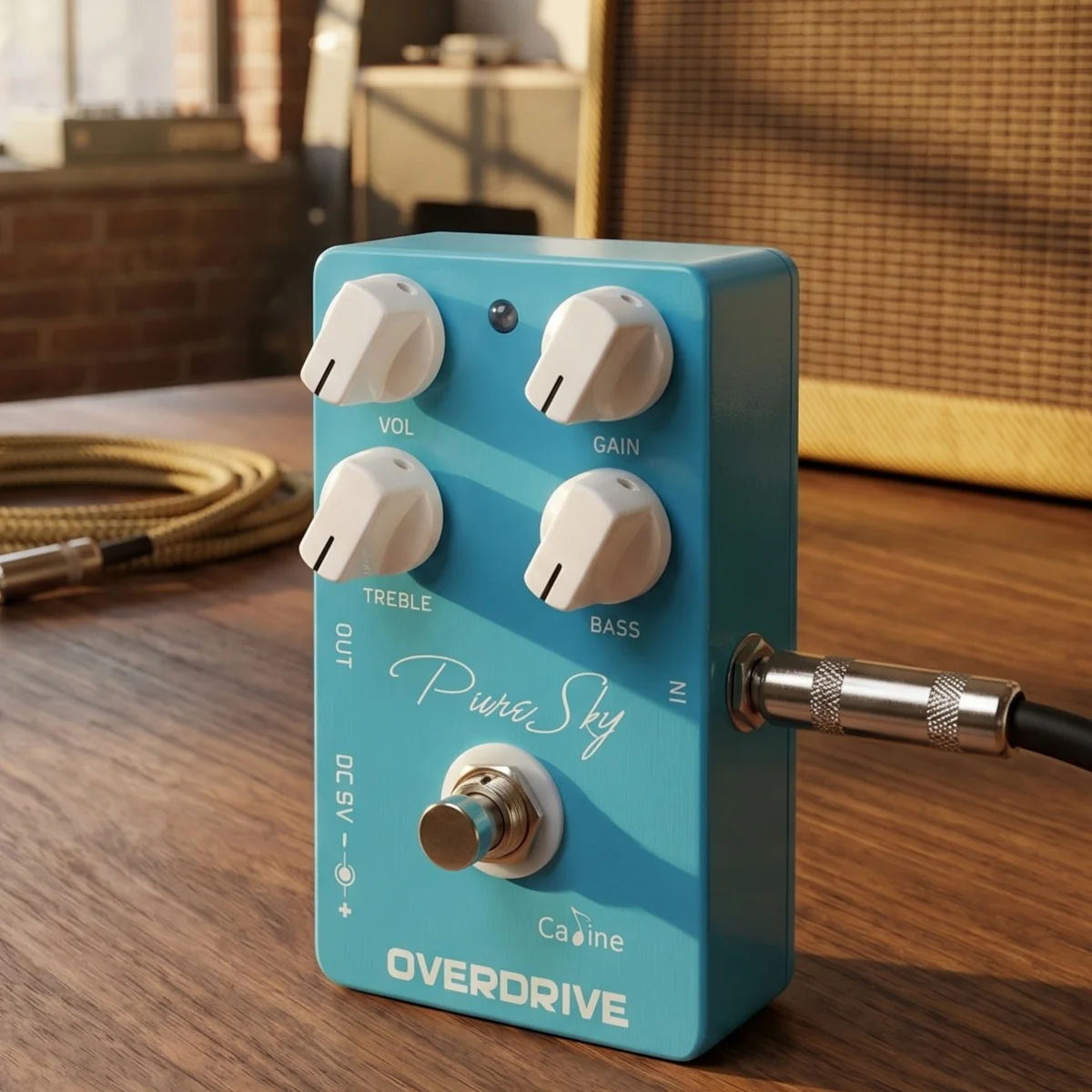
Clips the waveform firmly and adds a dense series of harmonics with compression and sustain. The clipping devices, gain stages and tone filters determine whether the result is tight, smooth, mid-focused, scooped, grainy or deliberately abrasive.
Effect pedal kits provide a set of parts for building an effects unit, often including a circuit board, components, enclosure or hardware. They can be a useful way to learn how clipping, filtering, gain and switching are implemented, but the required work varies from guided assembly to a full wiring and enclosure project. Read the build notes, check the expected voltage and make sure the kit includes the parts and tools needed for the intended finish.
Pushes the signal into extreme clipping, often approaching a square wave and producing dense harmonics. Transistor type, bias, input loading and filtering govern whether the texture is smooth, woolly, gated, spluttering, octave-rich or highly responsive to the instrument volume.
High-feedback designs return more of the processed signal to the circuit, making repeats, resonance, clipping or oscillation more pronounced. The result can be a longer delay trail, a sharper filter peak, a more aggressive distortion texture or controlled self-oscillation. Feedback is sensitive to level and placement, so check the available control range, stability, noise, mix and mute behaviour before using the product in a live or layered setup.
Uses moderate clipping and gain-dependent compression to add harmonics while retaining much of the original note contour. Bass filtering, mid emphasis, clipping symmetry and available headroom decide whether it sounds open and amplifier-like, tightly focused or heavily saturated.
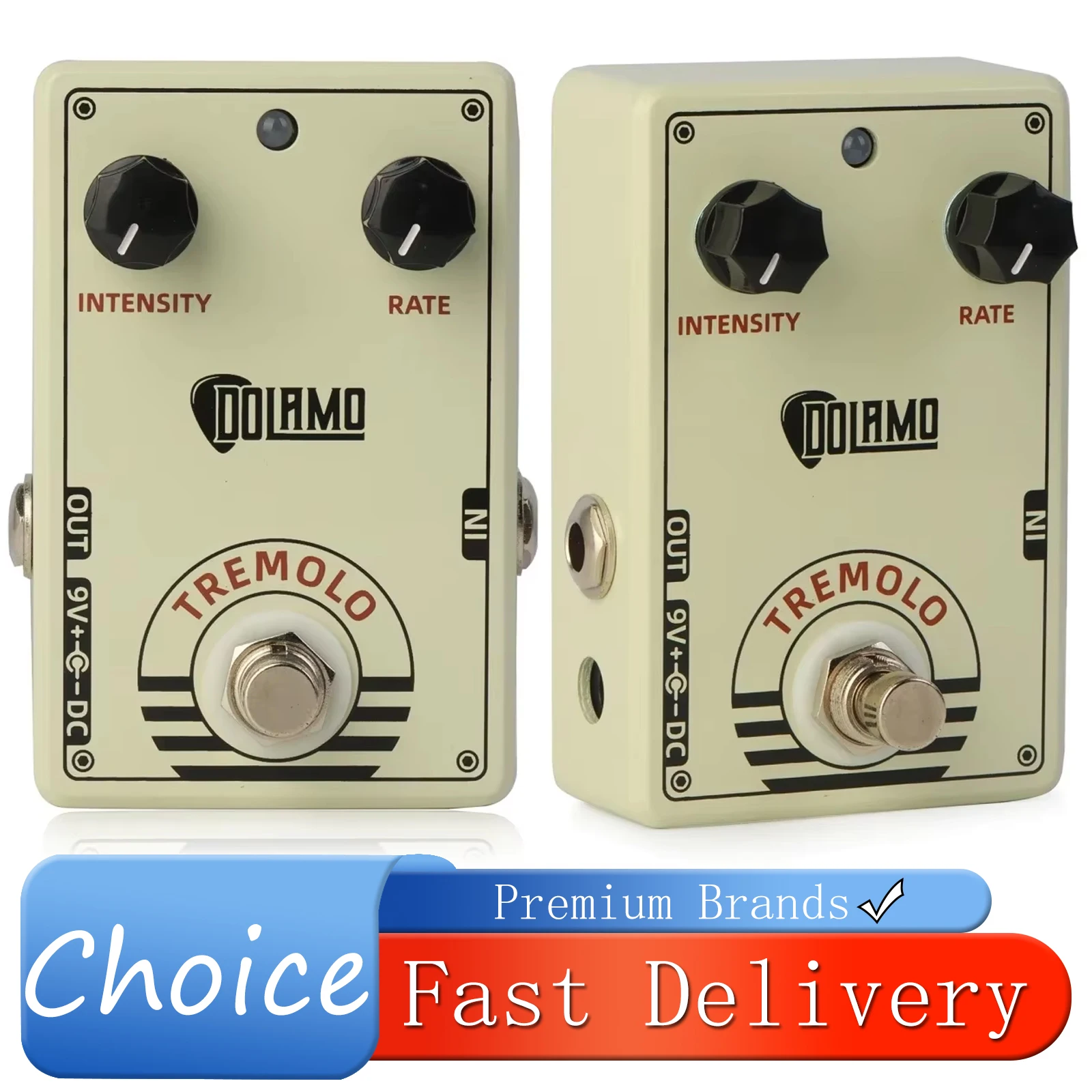
Modulates amplitude so the volume rises and falls in a repeating cycle. Rate controls speed, depth controls the amount of level change, and waveform moves the character from a rounded pulse to a hard rhythmic chop.

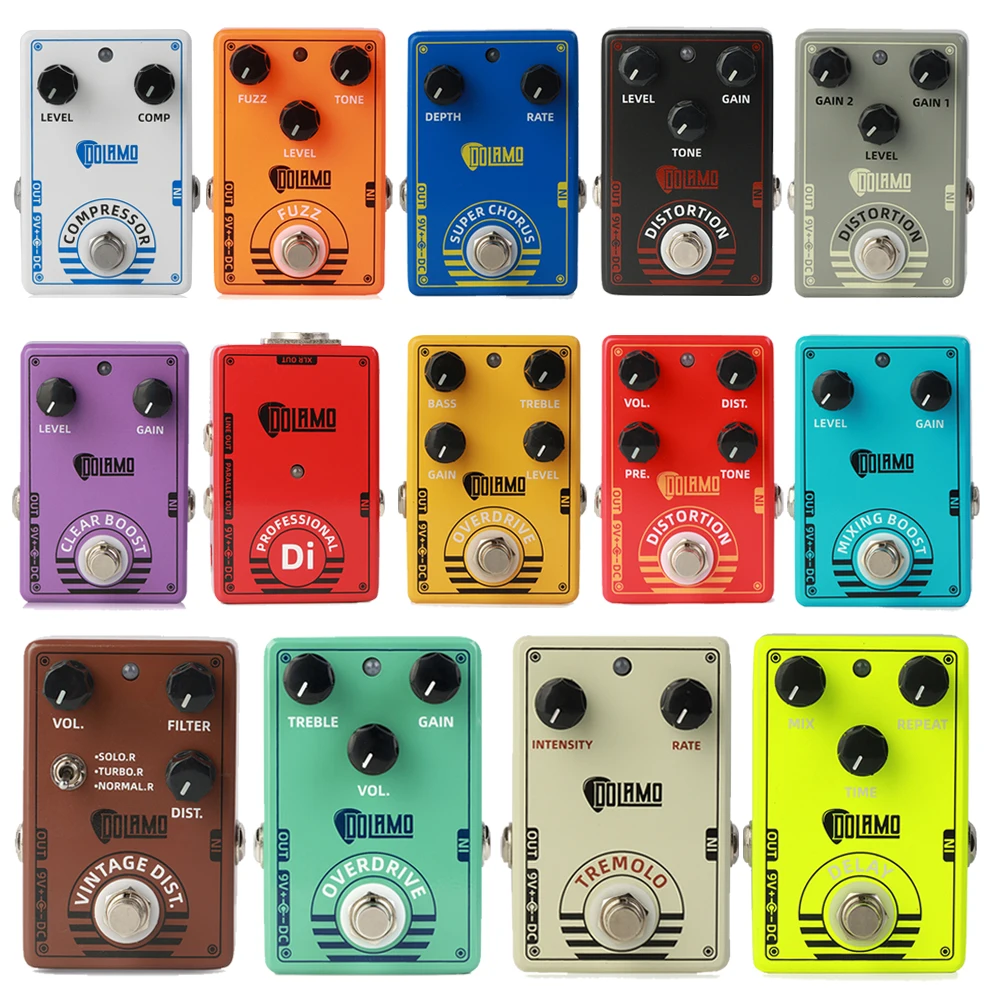
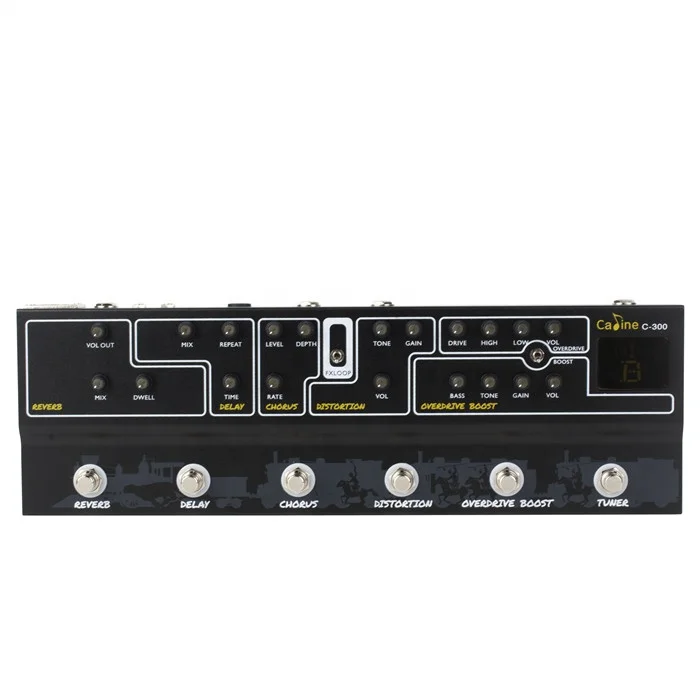 Caline C300 Multi Effect Pedal 6 Analog Effects Pedal Reverb Delay Chorus Distortion Overdrive Boostt Tuner for Electric Guitar
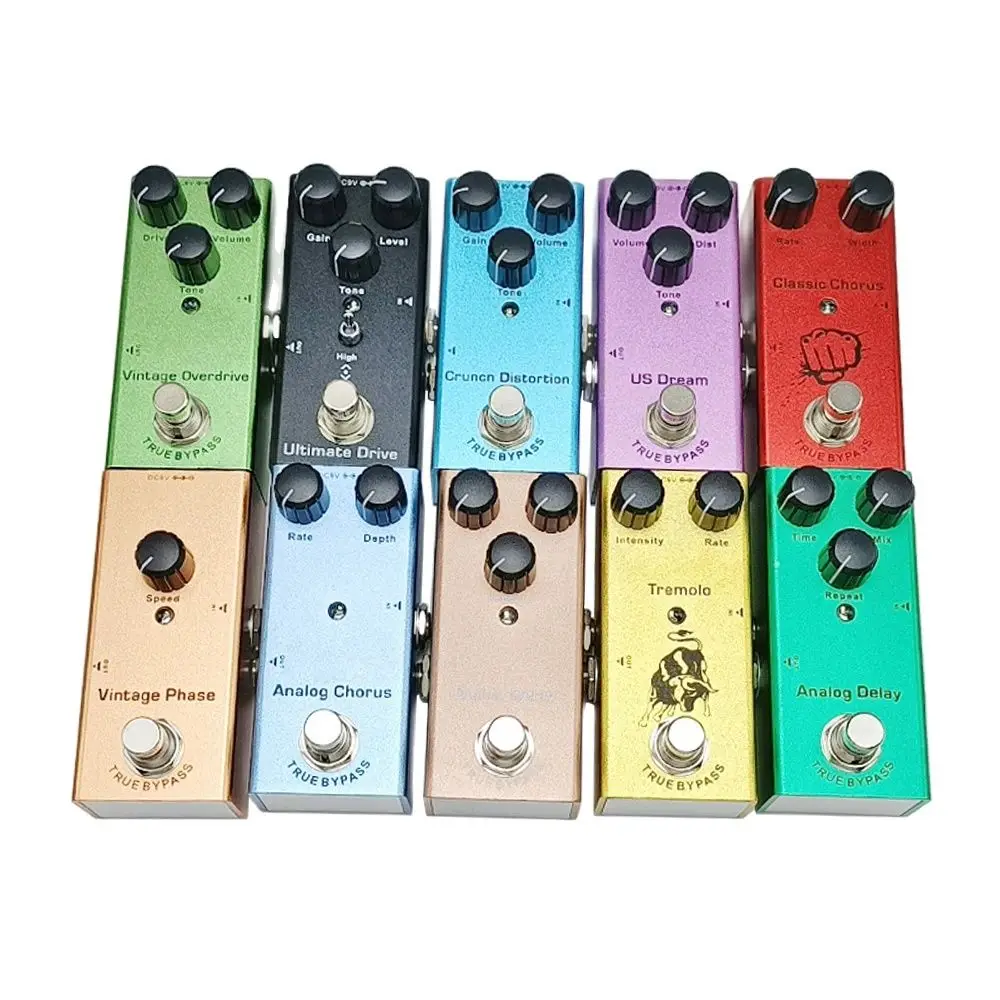 Electric Guitar Pedal Vintage overdrive/US Dream/Classic Chorus/Vintage Phase/Tremolo/Analog delay/Digital Delay/Ultimate Drive
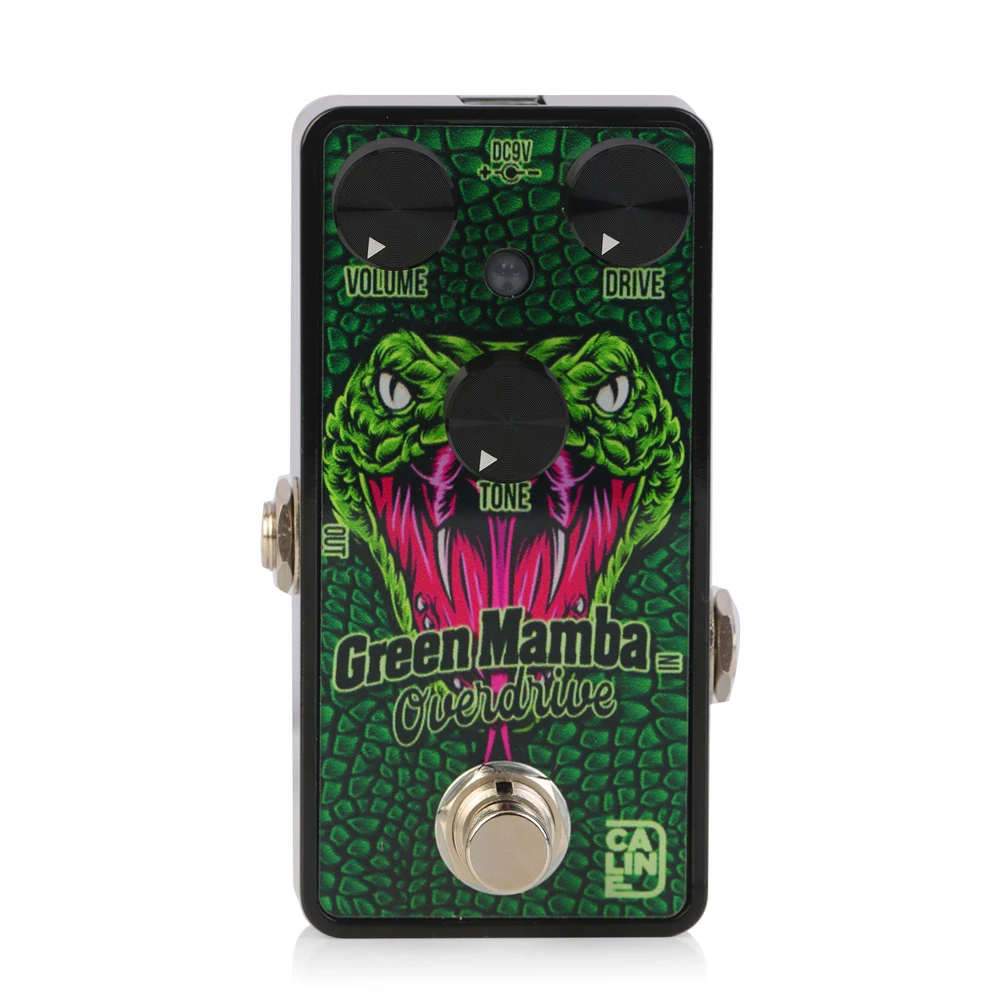 Caline G002 Green Mamba Overdrive Guitar Effect Pedal Mid-rich Vintage Voiced Overdrive True Bypass Electric Guitar Accessories