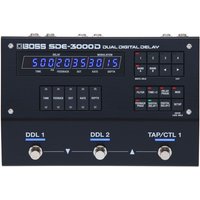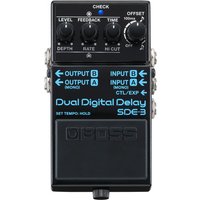
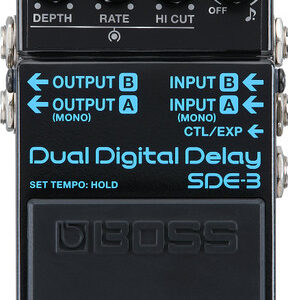
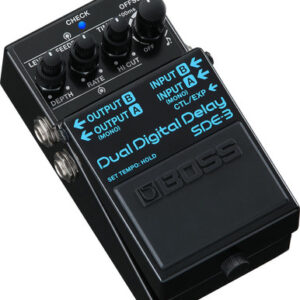
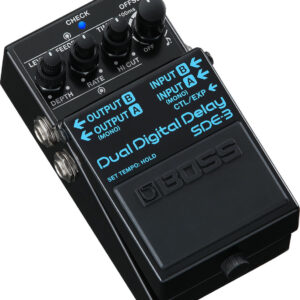
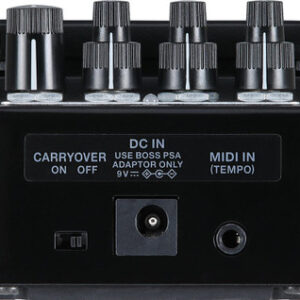
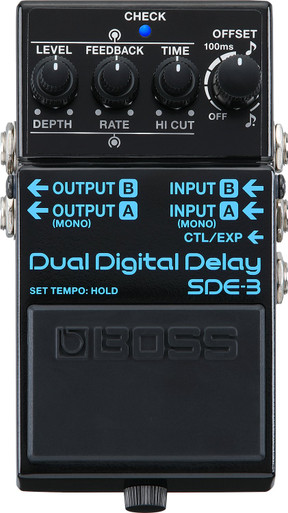
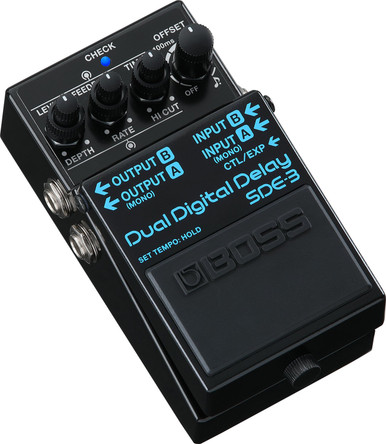
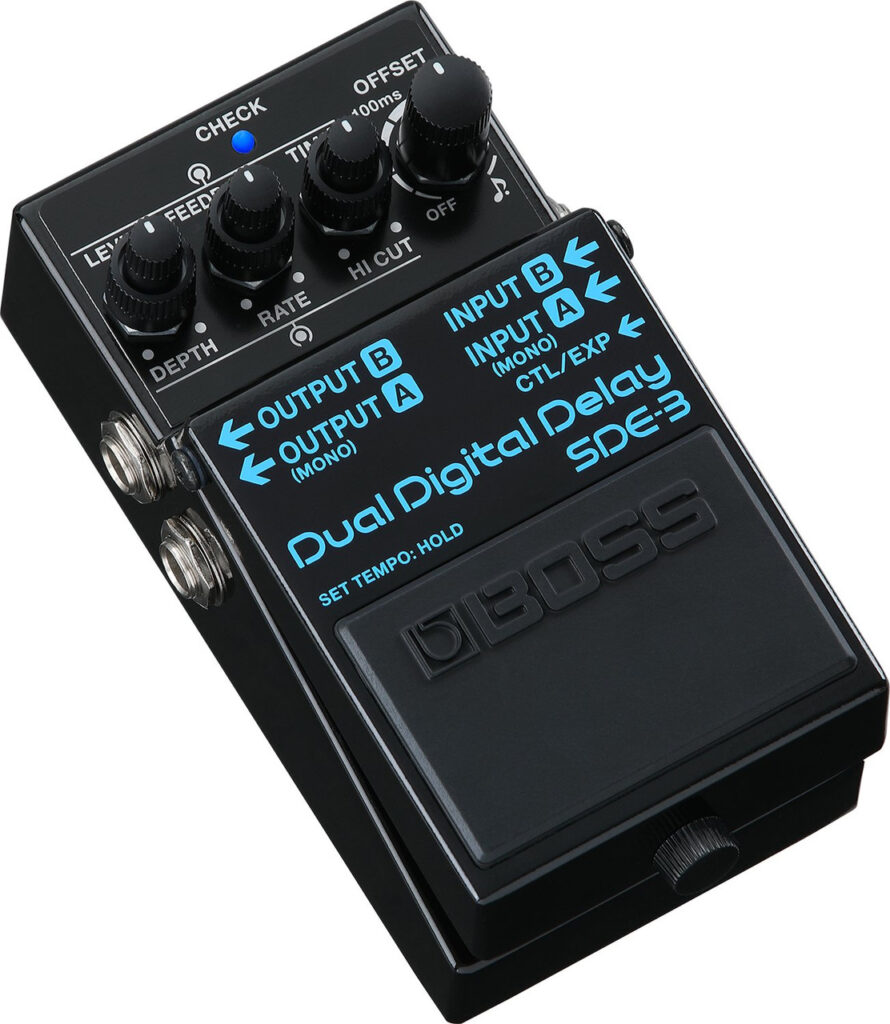
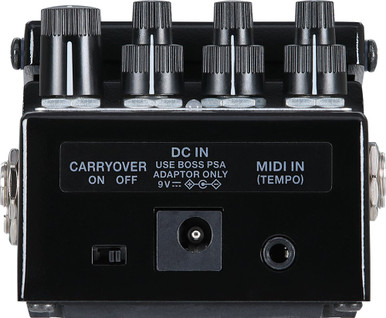
Boss SDE-3000D Dual Digital Delay Pedal

Retailing in the region of £349.00

On the menu for January 2026 are the Boss Guitar Pedals, freshly added and carefully selected. These New units are available to order online with fast, secure delivery from trusted UK retailers. Read on for full details, specifications, demos, videos, reviews, and the best places to buy the Boss Guitar Pedals today.


Spread the love

Description

Spread the love

On the menu for January 2026 are the Boss Guitar Pedals, freshly added and carefully selected. These New units are available to order online with fast, secure delivery from trusted UK retailers. Read on for full details, specifications, demos, videos, reviews, and the best places to buy the Boss Guitar Pedals today.

Released in 1983 at the dawn of the digital effects era, the Roland SDE-3000 is a hallowed icon among fans of classic gear. With its highly musical character, long delay times, and ability to store and recall presets — this rackmount legend went on to become the prime delay machine for the world’s finest touring guitarists, session musicians, and engineers of the time. Its special sound is still revered 40 years later, and now, the Boss SDE-3000D brings you not one but two authentic reproductions of the much-loved SDE-3000 in a floor-based pedal!

Fully independent delays, flexible internal routing, and expanded I/O offer modern versatility for all types of mono and stereo rigs. Modulation and tone-shaping capabilities have also been enhanced, and there are 100 memories for storing your favourite setups. And with a wealth of onboard and external control options too — including deep MIDI support — you can integrate this inspiring vintage voice with any stage or studio rig.

Key Features

  • Faithful floor-based reproduction of the legendary Roland SDE-3000 rackmount digital delay from the 1980s!
  • Classic warm digital delay sound with extended features for modern rigs.
  • Distinctive retro display and panel controls based on the original SDE-3000.
  • Includes two full-featured delays, each with independent parameters, mono/stereo modulation, and panning.
  • Widely-adjustable delay time with two range settings: 0–1500 ms and 0–3000 ms.
  • Characterful modulation inspired by the original circuit design.
  • Phase switches for the primary delay and delay feedback loop.
  • Adjustable low-cut and high-cut filters for shaping delay feedback sounds.
  • Two inputs and two outputs for dual mono, wet/dry, or stereo setups.
  • Selectable series or parallel operation for the two delays.
  • Save and recall sounds with 100 memories.
  • Assignable onboard footswitch control for tap tempo, hold, and more.
  • Jacks for extended operation with up to four footswitches, two expression pedals, or the GA-FC/GA-FC EX foot controller.
  • MIDI I/O on space-saving mini TRS jacks.

Retro Digital Magic!

Musicians and engineers gravitate toward certain classic effects because they make any sound better, and the SDE-3000 carries that magic touch. Many attributes made it highly expressive with live instruments, including ultra-wide dynamic range, adjustable delay phase, rich modulation, and multiple seconds of clear-yet-warm delay tone. The SDE-3000’s voice became an integral part of music in the ’80s and ’90s, and remains a source of inspiration for tone-seekers and effect builders everywhere. With the SDE-3000D, you can now access the authentic delay sounds used to produce some of the most iconic tracks of all time.

Faithful Sound Reproduction

In contrast with the clear, precise tones of other digital delays, the SDE-3000 stood out from the crowd with its beautiful warm sound and inviting musicality. This was the result of clever and complex internal digital processing coupled with non-linear behaviours from the supporting analogue circuitry. These behaviours included variable frequency response in the preamp based on input gain, magnetic saturation in the anti-alias filter, and evolving modulation produced by the components of the time. Boss deeply analysed these many factors in creating the SDE-3000D, bringing the complete character of this time-honoured classic alive for the modern era.

Authentic Details, Modern Enhancements

The SDE-3000D includes nearly every parameter from the SDE-3000, accessed via a retro interface derived from the vintage hardware. Two selectable delay ranges offer different frequency characteristics, vital elements in the original’s appealing sound. The unique tonal colour of the Boss SDE-3000’s external feedback loop circuit has been replicated as well, and it’s possible to turn this colouration off or internally process the feedback loop with a powerful EQ. You also get 100 memories — up from the original’s eight — plus carryover when switching sounds.

Masterful Modulation

The modulation circuit in the SDE-3000 also contributes to the effect’s distinctive sound. Along with basic depth and rate controls, it’s possible to independently switch the phase of the initial delay and the delay feedback loop, which influences the way the modulation reacts. The original analogue LFO behaviour has been faithfully reproduced in the SDE-3000D, and there’s now a sine wave option in addition to the original triangle wave. Boss have also provided even more control over the delay phase settings for a broader range of sounds.

Two SDE-3000s in One Pedal!

While the original SDE-3000 was mono, the SDE-3000D gives you two discrete delays with independent parameters and mono or stereo modulation on each. Run the delays in parallel and pan them for ever-evolving stereo colours. Or, chain them in series to create complex rhythms and reverb-like depth. And with the flexible audio I/O, you can route the effects for wide stereo operation, send each delay to its own output, or split effect and unprocessed sounds for wet/dry setups.

Modern, Compact Power

With its pedal-based design and expanded control options, the SDE-3000D offers much greater versatility than its rackmount inspiration. Three onboard footswitches provide instant control of memory selection, tap tempo, delay hold, momentary effect engagement, and more. Two control jacks allow you to connect up to four footswitches, two expression pedals, or a GA-FC/GA-FC EX for external operation, and TRS MIDI I/O is also included. There’s a large selection of assignable targets to choose from, delivering deep real-time control that reaches far beyond the capabilities of the original SDE-3000.

Specifications

  • Sampling Frequency: 48 kHz
  • AD Conversion: 24 bits + AF method
  • DA Conversion: 32 bits
  • Processing: 32-bit floating point
  • Effects: SDE-3000 Stereo Delay (x2), Noise Suppressor, Foot Volume
  • Memories: 100
  • Display: 7 segments, 12 digits LED
  • Nominal Input Level: INPUT (L/MONO, R): -10 dBu
  • Maximum Input Level: INPUT (L/MONO, R): +12 dBu
  • Input Impedance: INPUT (L/MONO, R): 1 M ohm
  • Nominal Output Level: OUTPUT (L/MONO, R): -10 dBu
  • Output Impedance: OUTPUT (L/MONO, R): 1 k ohm
  • Recommended Load Impedance: OUTPUT (L/MONO, R): 10 k ohms or greater

Connectors

  • INPUT (L/MONO, R) jack, OUTPUT (L/MONO, R) jacks, : 1/4-inch phone type
  • CTL2,3/EXP1 jack, CTL4,5/EXP2/GA-FC jack: 1/4-inch TRS phone type
  • MIDI (IN, OUT) jacks: Stereo miniature phone type
  • USB port: USB Type-C(R)
  • DC IN jack

Power

  • Power Supply: AC adaptor
  • Current Draw: 450 mA

Weight & Dimensions

  • Dimensions (W x D x H): 199 x 135 x 54 mm / 7-7/8 x 5-3/8 x 2-1/8 inches (including rubber feet)
  • Weight: 1.1 kg / 2 lbs 7 oz

Accessories

  • AC adaptor (PSB-1U + AC Cord Set)
  • Startup Guide
  • Leaflet “Using the Unit Safely”
  • Rubber feet (x4)

Options (Sold Separately)

  • Footswitch: FS-5U, FS-5L
  • Dual Footswitch: FS-6, FS-7
  • Expression Pedal: Roland EV-5, EV-30, FV-500L, FV-500H
  • Foot Controller: GA-FC, GA-FC EX
  • MIDI/TRS Connecting Cable: BMIDI-5-35, BMIDI-1-35, BMIDI-2-35, BCC-1-3535, BCC-2-3535

Additional information

Weight 1.59 kg

Brand

Boss

Boss is a prominent manufacturer of guitar effects pedals, multi-effects units, and related musical equipment, known for their durability, reliability, and wide range of effects. Founded in 1973 as a division of the Roland Corporation, Boss quickly became synonymous with high-quality effects pedals that are popular among guitarists and musicians worldwide.

Boss pedals are renowned for their rugged construction, intuitive controls, and signature sound quality. The company offers a comprehensive lineup of effects pedals covering various categories, including distortion, overdrive, delay, modulation, and more. Iconic pedals like the DS-1 Distortion, the DS-2 Turbo Distortion, the DD-3 Digital Delay, and the MT-2 Metal Zone have become staples on countless pedalboards due to their versatility and reliability.

Category

Guitar Pedals

Tags

Delay

A delay pedal records your signal and plays it back after a set time, creating echoes that can range from tight, slapback repeats to long, atmospheric trails. It’s one of the most versatile effects, used to thicken tones, add rhythmic depth, or build spacious, ambient layers. Analogue delays offer warm, decaying repeats that blend naturally with your tone, while digital units provide pristine echoes with precise control over time, feedback, and mix levels.

From classic rockabilly and tape-style echoes to modern looping and shimmer effects, delay pedals have become essential tools for shaping sound. They can make solos soar, rhythms pulse, or transform simple chord progressions into cinematic textures. Whether used subtly to add dimension or boldly to create soundscapes, a good delay pedal can completely redefine the feel and atmosphere of your music.

EQ

While Ed Sheeran primarily relies on the natural sound of his acoustic guitar and vocals, he occasionally uses EQ (Equalization) to shape and enhance his tone during live performances or in the studio. EQ pedals or onboard preamps can allow him to adjust the frequency response of his guitar signal to suit the acoustics of different venues or to achieve specific tonal characteristics. Here’s how EQ might be utilized in Ed Sheeran’s setup:

1. **Tonal Shaping**: EQ can be used to adjust the balance of frequencies in the guitar signal, allowing Ed Sheeran to shape his tone to his liking. For example, he might boost the midrange frequencies to bring out the warmth and presence of his acoustic guitar, or cut certain frequencies to reduce any harshness or mud in the sound.

2. **Feedback Control**: In a live setting, EQ can help control feedback by notching out problematic frequencies that might cause the guitar signal to feed back through the amplification system. This can be particularly useful when performing in venues with challenging acoustics or high volume levels.

3. **Room Correction**: In situations where the venue’s acoustics are less than ideal, EQ can be used to compensate for any deficiencies in the sound. By adjusting the EQ settings, Ed Sheeran can tailor the guitar tone to sound more balanced and natural, regardless of the room’s acoustic properties.

4. **Matching Gear**: EQ can also be used to match the tone of Ed Sheeran’s guitar to the sound of other instruments or equipment in his setup. For example, he might adjust the EQ to complement the tonal characteristics of his vocal microphone or to blend seamlessly with backing tracks or other instruments.

Overall, while EQ may not be a central component of Ed Sheeran’s guitar effects setup, it can still play a valuable role in shaping his tone and ensuring that he achieves the desired sound in different performance environments. Whether used subtly for tonal shaping or more aggressively for feedback control, EQ allows Ed Sheeran to tailor his guitar tone to suit his musical vision and performance needs.

Expression

Expression pedals allow real-time control over specific parameters on compatible guitar pedals, such as volume, delay time, modulation depth, or filter sweep. Used with an expression input, they let players shape effects dynamically with their foot, adding movement and performance control that cannot be achieved with fixed knob settings.

Filter

MIDI

MIDI pedals use the Musical Instrument Digital Interface standard to communicate with other guitar pedals, effects units, and hardware. They allow control over presets, parameters, and switching across multiple devices from a single controller. MIDI integration makes it possible to build complex, synchronised pedal setups while keeping control simple and consistent.

New

This is brand new, fresh in, and a UK warranty is included. New Gear always comes from trusted UK music retailers.

Preamp

A preamp pedal shapes and boosts your guitar’s signal before it reaches your amp or recording interface, giving you control over tone, gain, and headroom. It acts as the first stage of amplification, adding warmth, clarity, and character while preparing your signal for the next part of the chain. Some preamps emulate the response of classic valve circuits, while others offer clean, transparent tone shaping ideal for acoustic instruments or direct recording setups.

Used on its own, a preamp pedal can serve as the foundation of your tone, providing a consistent core sound wherever you play. When combined with other effects, it enhances dynamics and helps each pedal sound more defined and natural. Whether you’re looking to push your amp harder, bring life to a dull signal, or refine your sound for the studio, a good preamp pedal adds presence, punch, and musicality to any rig.

Reverb

A reverb pedal is like the rich sauce that ties every flavour on the plate into one smooth experience. It adds depth, warmth, and atmosphere — the sonic equivalent of a perfectly reduced glaze that lingers on the tongue. Whether you’re after the subtle ambience of a cosy café (spring or plate reverb) or the grand echoes of a cathedral (hall or shimmer reverb), this is where your tone breathes and expands. A touch of reverb can turn a dry sound into something lush and inviting — but pour on too much, and it’s all you can taste. Used with finesse, it’s the finishing touch that transforms your tone from plain to unforgettable.

used

Volume

Volume pedals control the output level of a guitar signal using a foot-operated treadle. They allow smooth volume swells, dynamic control during playing, and easy muting between songs. Volume pedals can be placed at different points in the signal chain to either control overall loudness or adjust gain and drive behaviour when positioned before distortion or overdrive pedals.