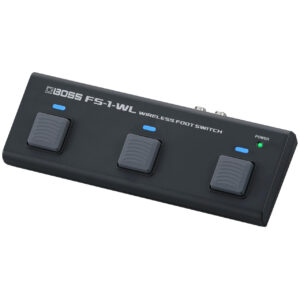
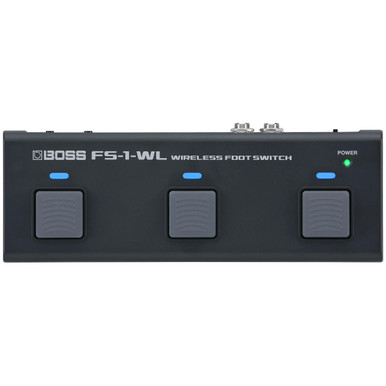
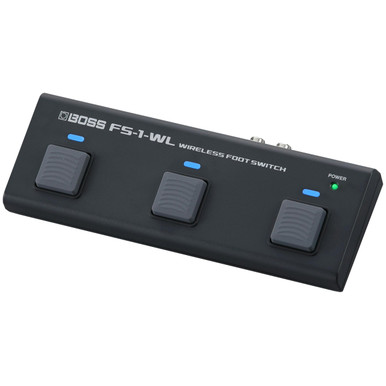
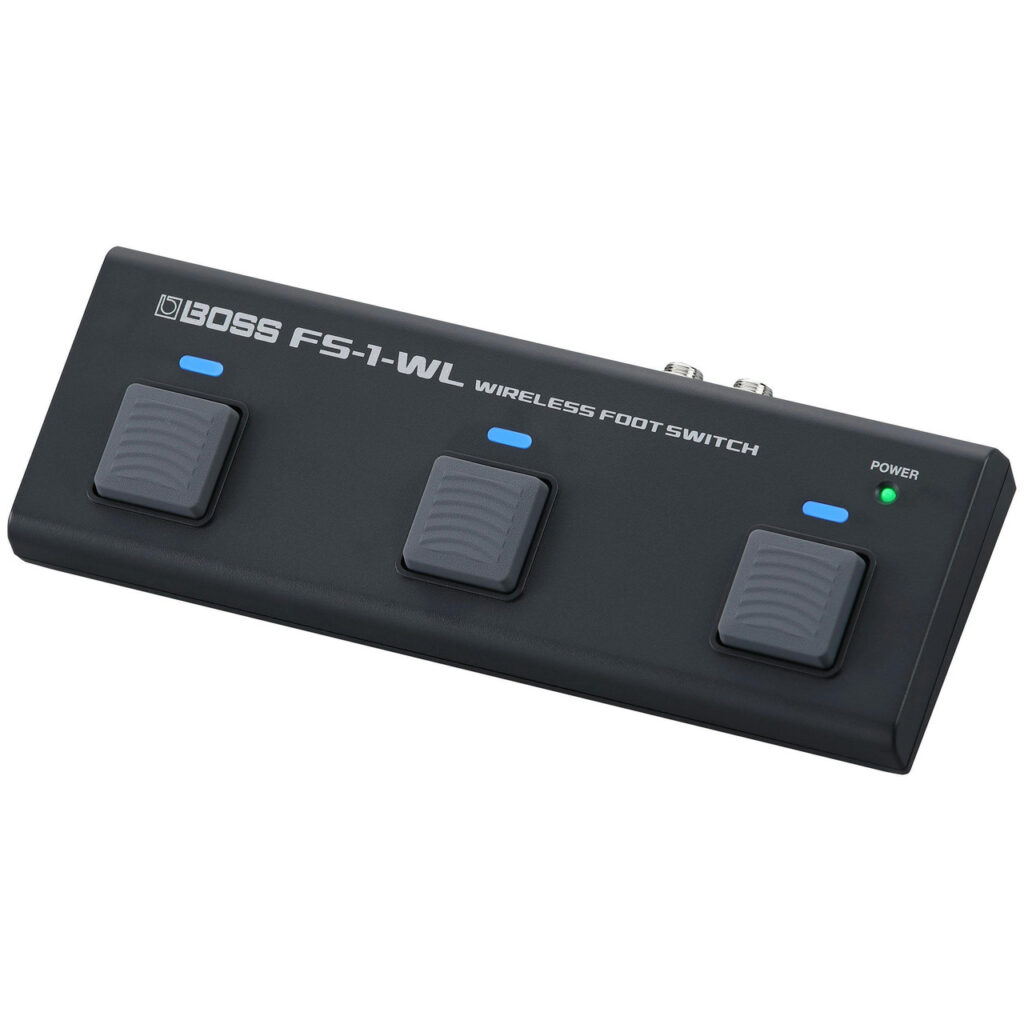
Boss FS-1-WL Wireless Footswitch

£109.99

This is the Boss FS-1-WL Wireless Footswitch from Boss, listed in Specialist Effects Pedals on Just Pedals. Read More below.

View Just
more
and , , ,

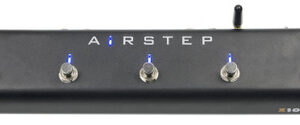
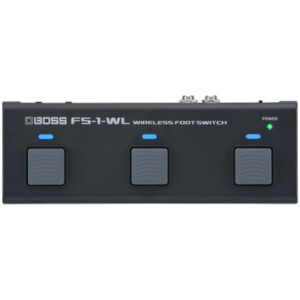
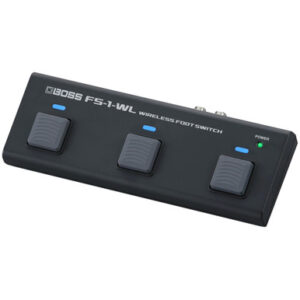
The Boss FS-1-WL is an ultra-compact and fully customisable foot controller for both software and MIDI hardware. Take control of digital music score apps, YouTube videos, DAWs, and supported Boss and Roland gear wirelessly over Bluetooth®.

Featuring easy-to-use, “clickless” footswitches, the FS-1-WL can be powered by two AAA batteries for up to fourteen hours of operation, or an optional Boss PSA adapter. The status LEDs are clear and easy to see and can be set to different colours via the editor app for a personalised user experience.

Compatible Products

The FS-1-WL can communicate wireless with a range of Boss and Roland products that feature Bluetooth support.

Boss Products

*BOSS Bluetooth® Audio MIDI Dual Adaptor required.

**FS-1-WL support coming soon.

Roland Products

Key Features

  • Versatile wireless foot controller for software applications and MIDI hardware
  • Control devices wirelessly over Bluetooth or connect to MIDI hardware with a BOSS TRS MIDI cable  
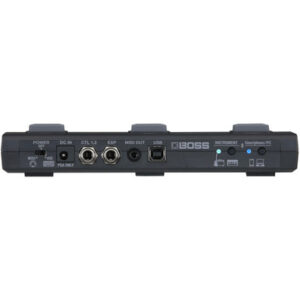
  • Rear-panel switch for selecting MIDI mode or HID mode (three onboard setups available in HID mode)
  • HID mode sends keyboard commands for controlling software on computers and mobile devices
  • MIDI mode sends PC/CC messages for controlling MIDI devices  
  • USB port for use as a class-compliant MIDI input device (HID mode not supported over USB)
  • Dedicated editor (macOS/Windows/iOS/Android) to customize footswitch assignments and save setups for different applications
  • Three rugged footswitches with smooth and quiet operation
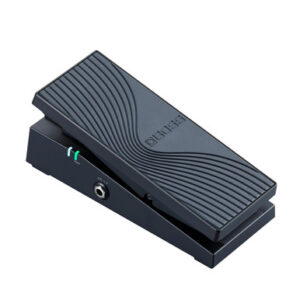
  • Jacks for up to two external footswitches and an expression pedal 
  • Runs on two AAA batteries or an optional PSA-series adaptor
Related videos

Brand

Boss

Boss is a prominent manufacturer of guitar effects pedals, multi-effects units, and related musical equipment, known for their durability, reliability, and wide range of effects. Founded in 1973 as a division of the Roland Corporation, Boss quickly became synonymous with high-quality effects pedals that are popular among guitarists and musicians worldwide.

Boss pedals are renowned for their rugged construction, intuitive controls, and signature sound quality. The company offers a comprehensive lineup of effects pedals covering various categories, including distortion, overdrive, delay, modulation, and more. Iconic pedals like the DS-1 Distortion, the DS-2 Turbo Distortion, the DD-3 Digital Delay, and the MT-2 Metal Zone have become staples on countless pedalboards due to their versatility and reliability.

Category

Specialist Effects Pedals

Specialist effects alter the signal in ways that do not sit cleanly inside one established family. They may use granular processing, frequency shifting, resonators, freeze or sustain, bit reduction, ring modulation, feedback networks or combinations of several techniques. The relevant distinction is the underlying process, its tracking or latency, and how completely the dry signal can be blended or replaced.

Tags

Bass

Voiced or equipped to retain low-frequency fundamentals and the higher headroom of a bass signal. Clean blends, crossovers and bass-specific filter ranges can preserve weight and articulation while the effected portion adds harmonics, movement or ambience.

Bluetooth

Provides a short-range wireless data or audio connection. Depending on the design it may carry backing audio, editing commands, preset management or MIDI rather than the live instrument signal; codec delay and supported Bluetooth profiles determine what the connection can do.

Digital

Converts the signal or control process into numerical data for algorithmic processing. Digital designs can provide precise timing, long memory, complex routing and repeatable presets; sample rate, conversion, internal resolution and latency influence fidelity and response.

MIDI

Sends, receives or responds to Musical Instrument Digital Interface messages rather than carrying the instrument audio itself. Program changes recall presets, continuous controllers move parameters, and MIDI clock or transport messages synchronise timing between devices.