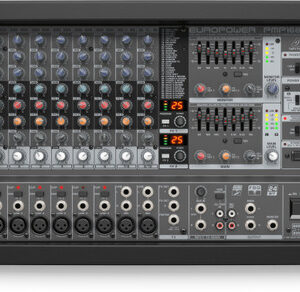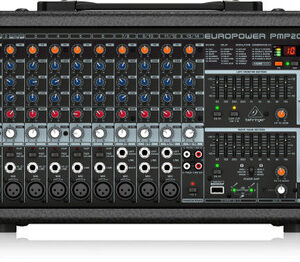
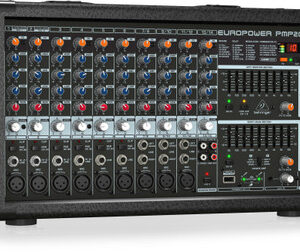
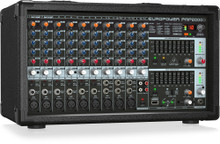
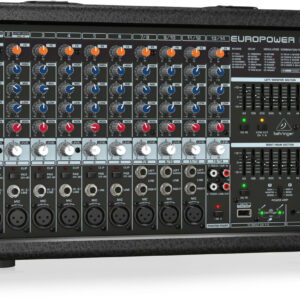
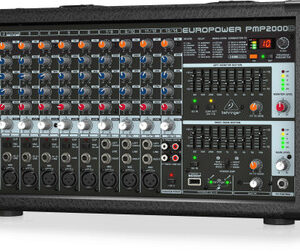
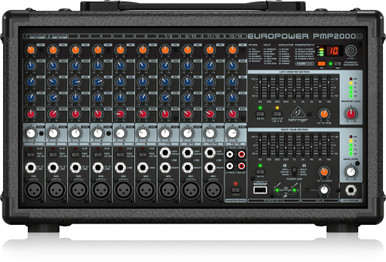
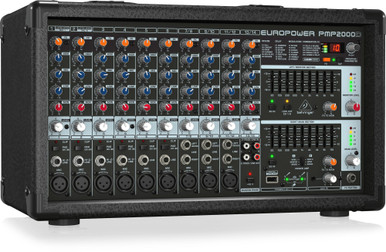
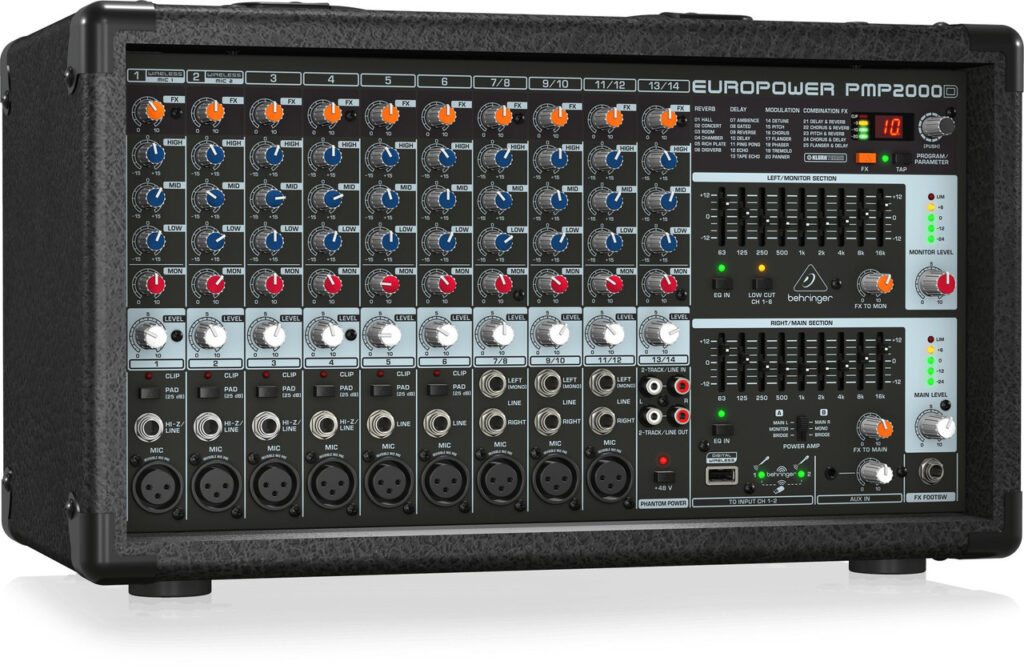
Behringer PMP2000D 2000-Watt 14-Channel Powered Mixer with Klark Teknik Multi-FX Processor

£232.00

This is the Behringer PMP2000D 2000-Watt 14-Channel Powered Mixer with Klark Teknik Multi-FX Processor from Behringer, listed in Multi-Effects Pedals on Just Pedals. Read More below.

View Just
more
and , ,

Here's What Behringer Say About the PMP2000D

2000-Watt 14-Channel Powered Mixer with Klark Teknik Multi-FX Processor and Wireless Option

Europower PMP2000D

The amazing PMP2000D Powered Mixer packs 2,000 Watts of high-efficiency Class-D output power, while maintaining an incredible power-to-weight ratio. With 14 available input channels, the PMP2000D features 9 of our premium-grade “Invisible” IMP mic preamps with switchable +48 V phantom power, 4 stereo channels, an ultra-high quality KLARK TEKNIK FX processor with 25 presets including studio-class reverbs, delays, pitch shifter and various multi-effects – and dual 9-band stereo graphic EQs. Top it all off with “Wireless-ready” operation, thanks to our high-quality ULM digital wireless microphones (sold separately), and the PMP2000D is the ideal, easy to use, and ready for anything live sound solution!

Class-D – Massive Power, Perfect Sound

Thanks to our revolutionary Class-D amplifier technology, we are able to provide you with enormous power and incredible sonic performance in an easy-to-use, ultra-portable and lightweight package. Class-D amplification makes all the difference, offering the ultimate in energy efficiency – and eliminating the need for heavy power supplies and massive heat sinks. This amazing technology makes it possible to design and build extremely-powerful products that are significantly lighter in weight than their traditional counterparts, while using less energy and protecting the environment.

Massive Mono or Stunning Stereo

The powerful PMP2000D gives you the choice of 2 x 1,000-Watt stereo, 2 x 1,000-Watt dual mono (1 Mains powered output, 1 Monitor powered output), or 2,000-Watt bridged mono modes. Whether the center of attention happens to be a folk trio, a speech, or a synth-rock band with mind-boggling stereo patches, the PMP2000D can accommodate all of them with ease. This sonic versatility also makes this outstanding powered mixer an excellent choice for churches where vocals and stereo recordings often share face time.

Features

  • Ultra-compact 2 x 1000-Watt stereo powered mixer
  • Revolutionary Class-D amplifier technology: enormous power, incredible sonic performance and super-light weight
  • 9 ?Invisible? IMP mic preamps with switchable +48 V phantom power for condenser microphones
  • Ultra-high quality Klark Teknik FX processor with 25 presets including reverb, chorus, flanger, delay, pitch shifter and various multi-effects
  • "Wireless-ready" for high-quality Behringer digital wireless system (not included)
  • 14-channel mixer section features 6 mono and 4 stereo channels
  • Effective, extremely musical 3-band EQ, switchable Pad and Clip LEDs on all mono channels
  • Dual 9-band graphic EQs allow precise frequency correction of monitor and main outputs
  • Selectable stereo (main L/R), double mono (main/monitor) or bridged mono amplifier operation mode
  • Adjustable stereo Aux input for connecting external signal sources
  • Internal switch-mode power supply, noise-free audio, superior transient response and very low power consumption
  • 3-Year Warranty Program
  • Designed and engineered in Germany

Related videos

Brand

Behringer

Behringer is a prominent manufacturer of audio equipment, including mixers, amplifiers, signal processors, synthesizers, and digital effects units, known for their affordability and wide range of products. Founded in 1989 by Uli Behringer, the company has grown rapidly to become one of the largest manufacturers of audio equipment in the world.

Behringer’s product lineup covers a broad spectrum of audio equipment, catering to musicians, audio engineers, DJs, and live sound professionals. The company offers a variety of mixers, ranging from compact analog mixers for home studios to digital mixers with advanced features for live sound and recording applications.

In addition to mixers, Behringer produces a wide range of amplifiers, including guitar amps, bass amps, and powered PA speakers, as well as signal processors such as equalizers, compressors, and effects units. Behringer synthesizers, like the DeepMind series, have also gained popularity for their affordability and impressive sound quality.

Behringer is known for its commitment to providing high-quality audio equipment at affordable prices, making professional-grade gear accessible to a wide range of musicians and audio enthusiasts. However, the brand has also faced criticism and controversy over issues related to intellectual property rights and product cloning. Despite this, Behringer’s extensive product lineup continues to be popular among musicians and audio professionals seeking reliable and affordable audio solutions.

Category

Multi-Effects Pedals

A multi-effects processor combines several effect algorithms and signal-routing stages in one unit. Its sound depends not only on the individual models but on their order, parallel or serial routing, processing resolution and available control. Preset structure, switching gaps, foot control, expression assignment, amp or cabinet modelling, USB audio and MIDI determine how completely the processor can replace separate pedals.

Tags

Digital

Converts the signal or control process into numerical data for algorithmic processing. Digital designs can provide precise timing, long memory, complex routing and repeatable presets; sample rate, conversion, internal resolution and latency influence fidelity and response.

Presets

Stores complete groups of parameter values for later recall. The number of locations, switching time, spillover behaviour and whether presets include routing, expression and MIDI assignments determine how completely one sound can change into another.

Stereo

Processes, creates or passes two audio channels. True stereo preserves separate left and right inputs, while mono-to-stereo effects generate spatial differences internally; routing, phase behaviour and whether trails remain stereo determine the resulting image. Some outputs sum to mono when only one socket is connected, which can change level or modulation depth.