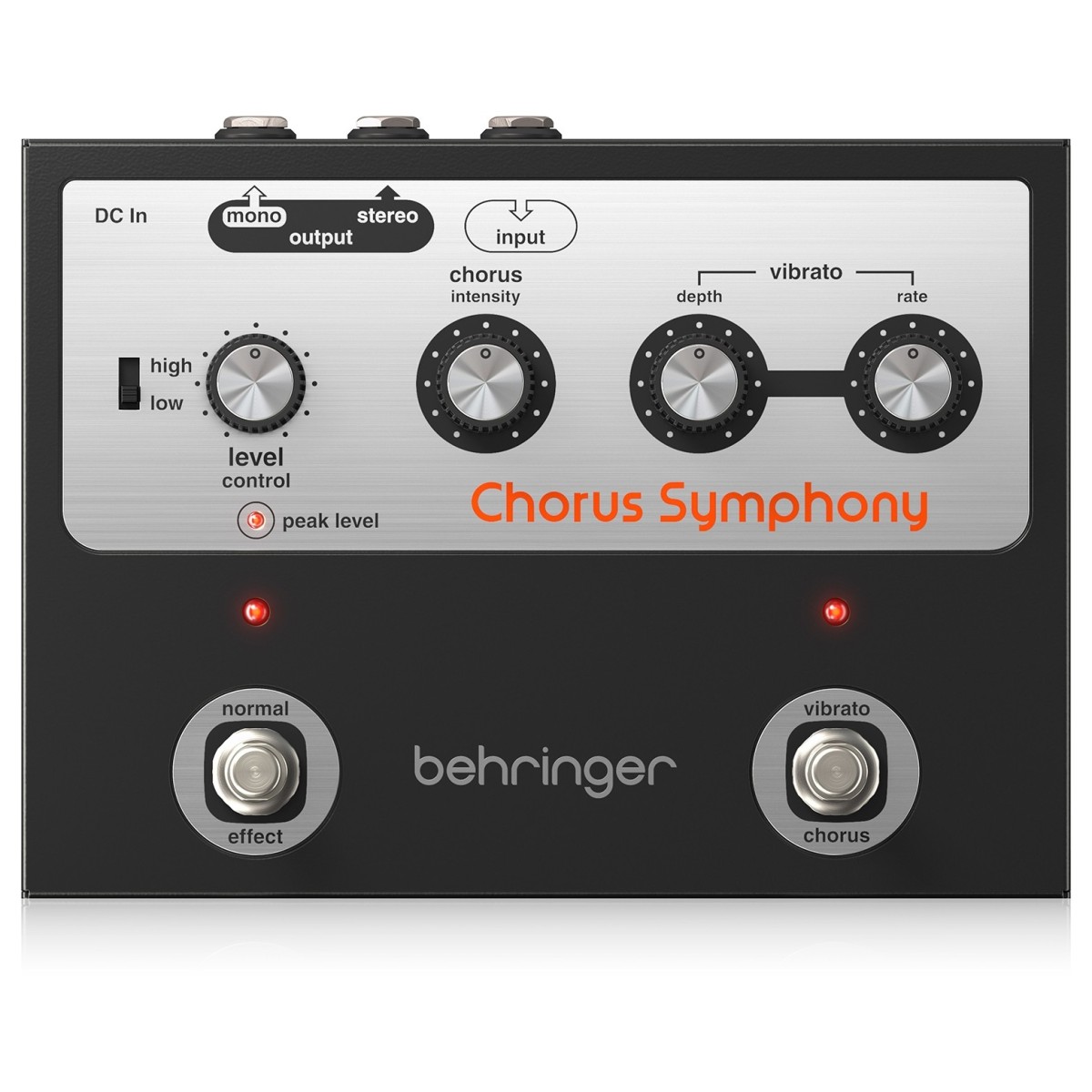
The Behringer CHORUS SYMPHONY is ideal for musicians seeking rich vintage-style modulation effects with versatile controls for a wide range of setups. Designed around authentic 1970s BBD circuitry this pedal offers both classic chorus and vibrato modes ensuring timeless expressive sound quality. With its adjustable input range the CHORUS SYMPHONY can accommodate various instruments from guitars to synths. The dual outputs create a wide 3D stereo field adding depth to your sound in live or studio environments. Simple yet effective the one-knob control makes it easy to set your preferred chorus speed and depth. For vibrato dedicated rate and depth controls let you fine-tune the effect to your taste. Featuring all-analogue circuitry and a robust vintage-style housing the CHORUS SYMPHONY ensures reliability and authentic sound. An internal switch also allows you to select between true or buffered bypass for added flexibility.
Behringer CHORUS SYMPHONY Vintage 70s Modulation Pedal
This is a New Behringer CHORUS SYMPHONY Vintage 70s Modulation Pedal from Behringer, listed in Chorus Pedals on Just Pedals. Read More below.
As an affiliate partner, we may earn a small commission when you buy through our links — at no extra cost to you.
Related videos


Brand
Behringer
Behringer was founded in 1989 by musician and sound engineer Uli Behringer, who began building equipment because he could not afford the studio gear he needed. The company has since grown into a broad audio supplier, and its JustPedals listings cover guitar, bass and utility units rather than effects alone. Examples include the DR600 digital reverb, EQ700 graphic equalizer, UT300 tremolo, BDI21 bass preamp, acoustic preamp and TU300 tuner. This spread makes model-level detail useful: check the instrument, circuit type and intended signal-chain role instead of assuming every Behringer listing is a guitar effect.
Category
Chorus Pedals
Chorus mixes the dry signal with one or more short, continuously modulated delays. The small pitch and timing movement between the paths creates width, shimmer and the impression of several instruments playing together. Rate controls the modulation speed, depth controls its excursion, and delay or mix settings determine whether the result is subtle thickening, a liquid wobble or a broad stereo image.
Tags
Analogue
The signal is shaped by continuously varying electronic circuitry rather than being converted into a digital effect algorithm. Component choice, operating voltage and circuit tolerances influence headroom, noise, clipping texture and the small variations in response between designs.
Buffered Bypass
Keeps an active buffer in the signal path when the effect is bypassed. The buffer converts a high-impedance input to a lower-impedance output, helping long cables and multiple pedals retain level and high frequencies, although its headroom and noise remain part of the path.
Stereo
Processes, creates or passes two audio channels. True stereo preserves separate left and right inputs, while mono-to-stereo effects generate spatial differences internally; routing, phase behaviour and whether trails remain stereo determine the resulting image. Some outputs sum to mono when only one socket is connected, which can change level or modulation depth.
Others Just Ordered :
- I Love A Happy Accident… – Animals Pedal

- Animals Pedal Vintage Van Driving is Very Fun Overdrive

- Animals Pedal Sunday Afternoon Is Infinity Bender

- Ninevolt Pedals | Bath Time Reverb (Animals Pedal)
- This Fuzz Pedal Makes No Sense… But It Sounds Incredible

- ANIME Pedals | Animals Pedal Custom Illustrated Series