Brand
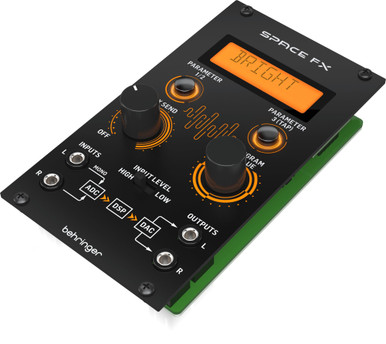
Behringer is a prominent manufacturer of audio equipment, including mixers, amplifiers, signal processors, synthesizers, and digital effects units, known for their affordability and wide range of products. Founded in 1989 by Uli Behringer, the company has grown rapidly to become one of the largest manufacturers of audio equipment in the world.
Behringer’s product lineup covers a broad spectrum of audio equipment, catering to musicians, audio engineers, DJs, and live sound professionals. The company offers a variety of mixers, ranging from compact analog mixers for home studios to digital mixers with advanced features for live sound and recording applications.
In addition to mixers, Behringer produces a wide range of amplifiers, including guitar amps, bass amps, and powered PA speakers, as well as signal processors such as equalizers, compressors, and effects units. Behringer synthesizers, like the DeepMind series, have also gained popularity for their affordability and impressive sound quality.
Behringer is known for its commitment to providing high-quality audio equipment at affordable prices, making professional-grade gear accessible to a wide range of musicians and audio enthusiasts. However, the brand has also faced criticism and controversy over issues related to intellectual property rights and product cloning. Despite this, Behringer’s extensive product lineup continues to be popular among musicians and audio professionals seeking reliable and affordable audio solutions.
Category
A multi-effects processor combines several effect algorithms and signal-routing stages in one unit. Its sound depends not only on the individual models but on their order, parallel or serial routing, processing resolution and available control. Preset structure, switching gaps, foot control, expression assignment, amp or cabinet modelling, USB audio and MIDI determine how completely the processor can replace separate pedals.
Tags
Converts the signal or control process into numerical data for algorithmic processing. Digital designs can provide precise timing, long memory, complex routing and repeatable presets; sample rate, conversion, internal resolution and latency influence fidelity and response.
Processes, creates or passes two audio channels. True stereo preserves separate left and right inputs, while mono-to-stereo effects generate spatial differences internally; routing, phase behaviour and whether trails remain stereo determine the resulting image. Some outputs sum to mono when only one socket is connected, which can change level or modulation depth.