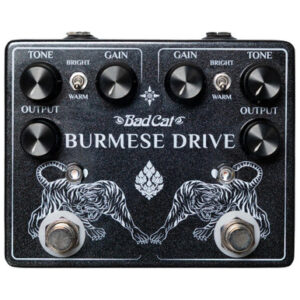
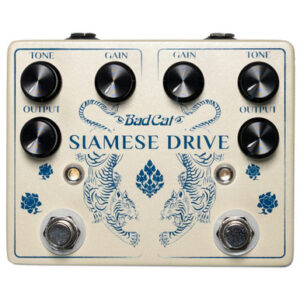
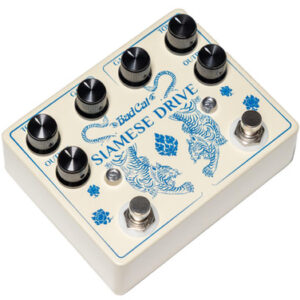

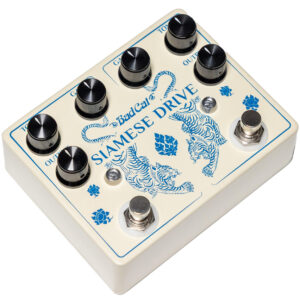
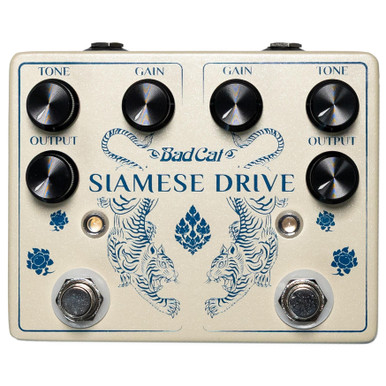
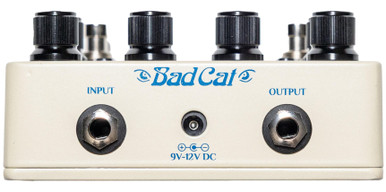
The Bad Cat Siamese Dual Harmonic Overdrive Pedal brings the legendary clarity and dynamic response of a K-style circuit to your board — times two! With rich harmonics and gorgeous grit that feels alive under your fingers, this dual-channel overdrive is ready to become your new tonal powerhouse.
Key Features
- Two K-style circuits in one: What’s better than one K-style pedal on your board? Two, of course! Run it into a clean amp and instantly transform your rig into a three-channel setup. Dial in one side for a clean boost or crunchy rhythm, and the other for cranked leads.
- Standalone, stacked — it’s up to you: You can use each channel independently for two distinct drive flavours. Or stack them for a saturated, layered tone that slices through the mix with plenty of punch.
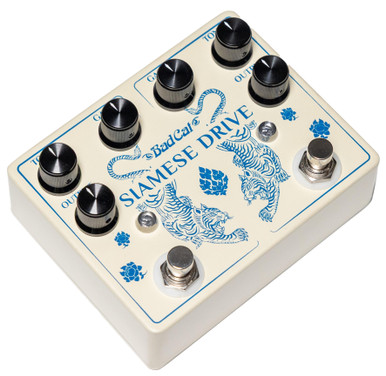
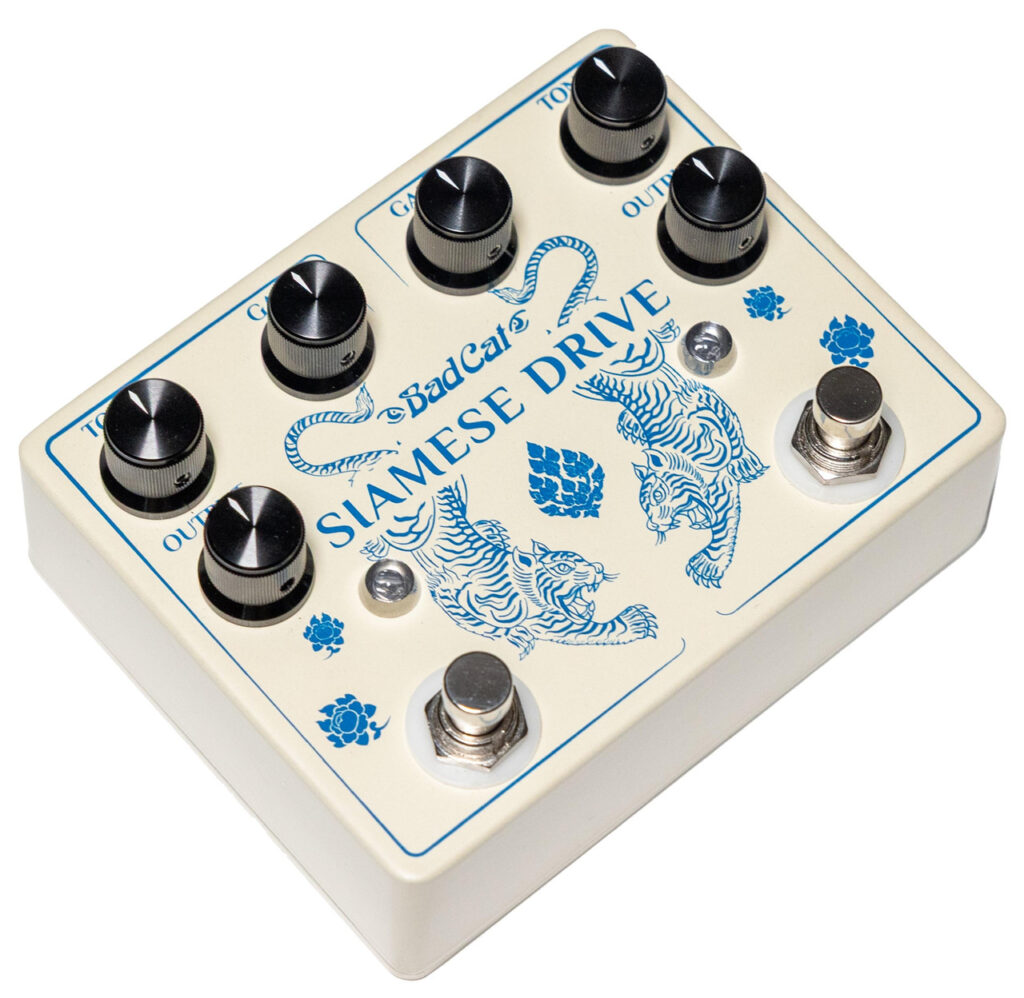
- Built to turn heads: With its pearl white finish and custom graphics, the Bad Cat Siamese Drive doesn’t just sound incredible — it looks stunning on your pedalboard too.
Specifications
- Controls: Gain, Tone, Output (Per Channel)
- True Bypass: Yes
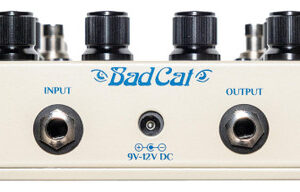
- Power: 9–12V DC, Centre-Negative
- Size: 5.75″ x 4.5″ x 2.75″ (146 x 114 x 70 mm)
- Weight: 0.45 kg (1 lb)