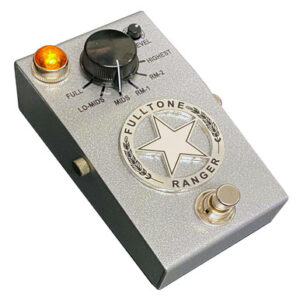
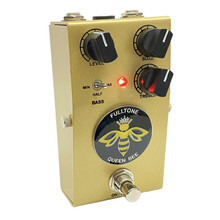
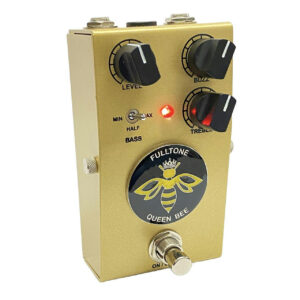
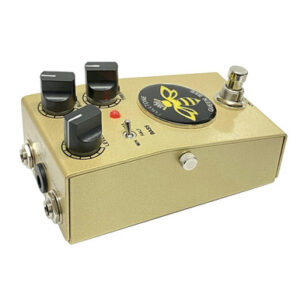
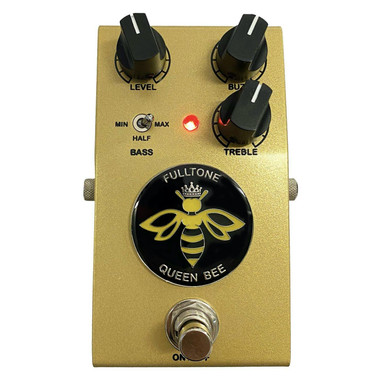
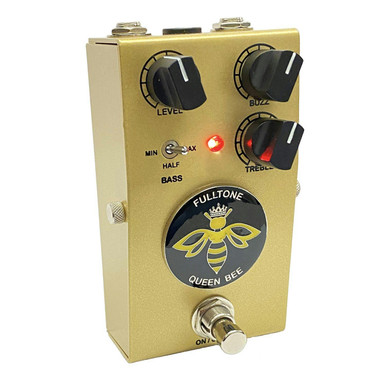
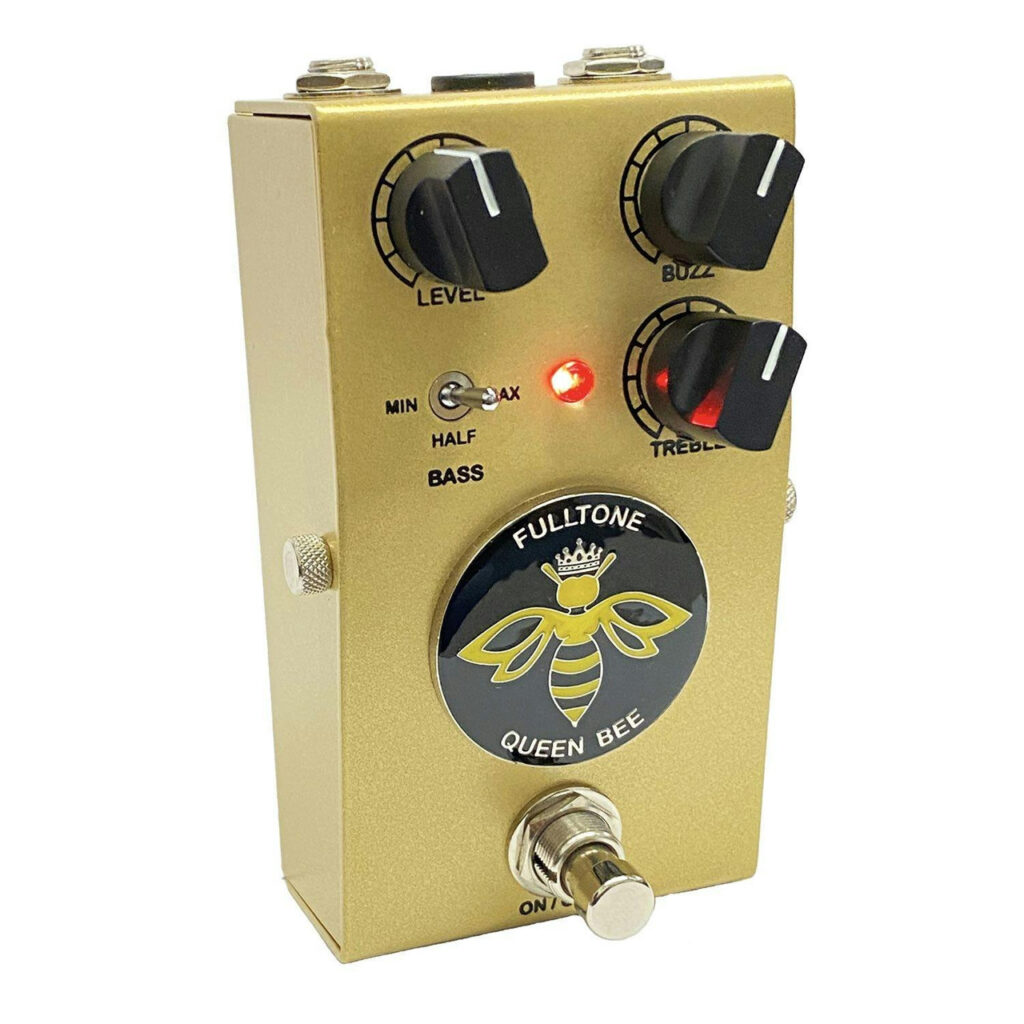
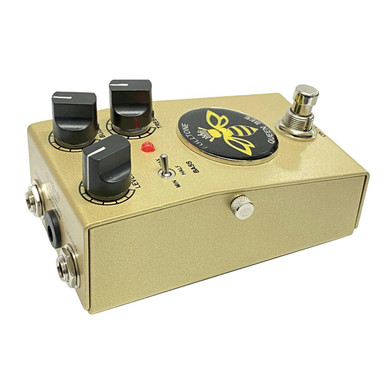
Fulltone CS-QB Custom Shop Queen Bee Fuzz Pedal

£259.00

This is the Fulltone CS-QB Custom Shop Queen Bee Fuzz Pedal from Fulltone, listed in Fuzz Pedals on Just Pedals. Read More below.

View Just
more
and

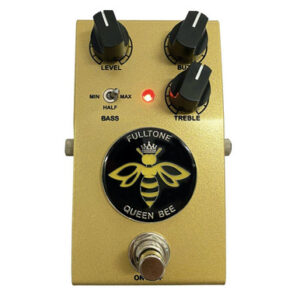
Fulltone's all-analogue Custom Shop Queen Bee pedal delivers gloriously-saturated, old-school fuzz tones. Reacting beautifully to the position of your guitar's volume pot, the Queen Bee can be cleaned up to provide subtle boost and mild overdrive sounds – all the way up to ferocious high-gain fuzz.

The Custom Shop Queen Bee is powered by a trio of NOS military “Flying Saucer” germanium transistors, in an original Fulltone circuit that behaves in an amp-like manner. This meticulously-crafted design allows the Queen Bee to respond dynamically to the input from your hands and guitar, and is very touch-sensitive. Sweet mids, precise note clarity, piano-like sustain and rich harmonic content are all there – forming an incredible-sounding stompbox that can elevate any dull-sounding amplifier to new sonic heights!

Unique Circuitry

Queen Bee's first and second transistors are configured to achieve maximum gain in order to hit the third transistor extremely hard, creating more sustain and distortion than is possible with typical 2-transistor fuzzes. This proprietary design also gives the pedal a surprisingly low-noise floor for such a high-gain design.

Rich in Mid-Range

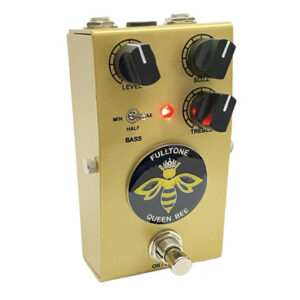
Another thing the Bee has, something that many fuzzes lack, is ample mid-range! Fender amp owners will appreciate the 'Passive Hi-Cut' tone control for taming the treble, while further sonic-sculpting is accomplished via a smart, loss-less 3-position Bass switch (placed before transistor #3) tailoring the low frequencies and keeping the bottom-end tight.

Adjustable Bias

Inside the pedal is a trim pot that allows you to adjust the bias of the third transistor by a range between 2 and 6 volts DC. Fulltone's favourite is somewhere between 3 and 4 volts. The trimmer should be adjusted by ear as there are no wrong settings, and a slight turn results in a drastic change in sound, volume and compression characteristics. Suddenly firm becomes soft, bright becomes warm, grainy becomes smooth… it’s astonishing what this little trimmer does!

Specifications

  • True-Bypass: Yes 
  • Power: 9V Battery or PSU (Centre Positive)
  • 100% Hand-Built in the USA

Related videos

Brand

Fulltone

Fulltone is a boutique guitar effects pedal manufacturer known for its high-quality, hand-built pedals designed to replicate vintage tones while incorporating modern features and reliability. Founded by musician and engineer Michael Fuller in 1991, Fulltone initially gained recognition with its flagship product, the Full-Drive overdrive pedal, which offered players a versatile range of overdriven tones inspired by classic tube amplifiers.

Since then, Fulltone has expanded its product line to include a variety of effects pedals such as fuzz, distortion, delay, modulation, and more. Each Fulltone pedal is meticulously crafted using top-quality components and circuit designs, resulting in pedals that are celebrated for their rich sound, responsiveness, and durability. Notable offerings include the OCD (Obsessive Compulsive Drive) overdrive/distortion pedal, the ’69 fuzz, and the TTE (Tube Tape Echo) tape echo emulator.

Fulltone’s commitment to excellence and its dedication to preserving the sonic legacy of vintage gear have made it a favorite among discerning guitarists and musicians seeking premium effects pedals. With a reputation for delivering exceptional tone and craftsmanship, Fulltone continues to be a prominent player in the boutique pedal market.

Category

Fuzz Pedals

Fuzz drives the signal into extreme clipping, often flattening the waveform and generating a thick spectrum of harmonics. Transistor type, bias, input loading and tone filtering create markedly different responses, from loose and velvety to gated, spluttering or octave-rich. Some circuits interact strongly with pickup impedance and guitar volume, while others include buffers or blends for a more consistent response.

Tags

Analogue

The signal is shaped by continuously varying electronic circuitry rather than being converted into a digital effect algorithm. Component choice, operating voltage and circuit tolerances influence headroom, noise, clipping texture and the small variations in response between designs.