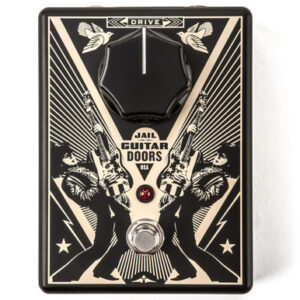

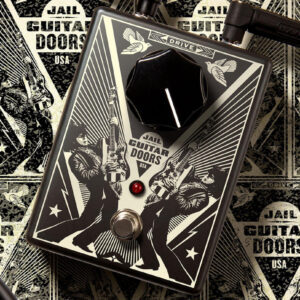
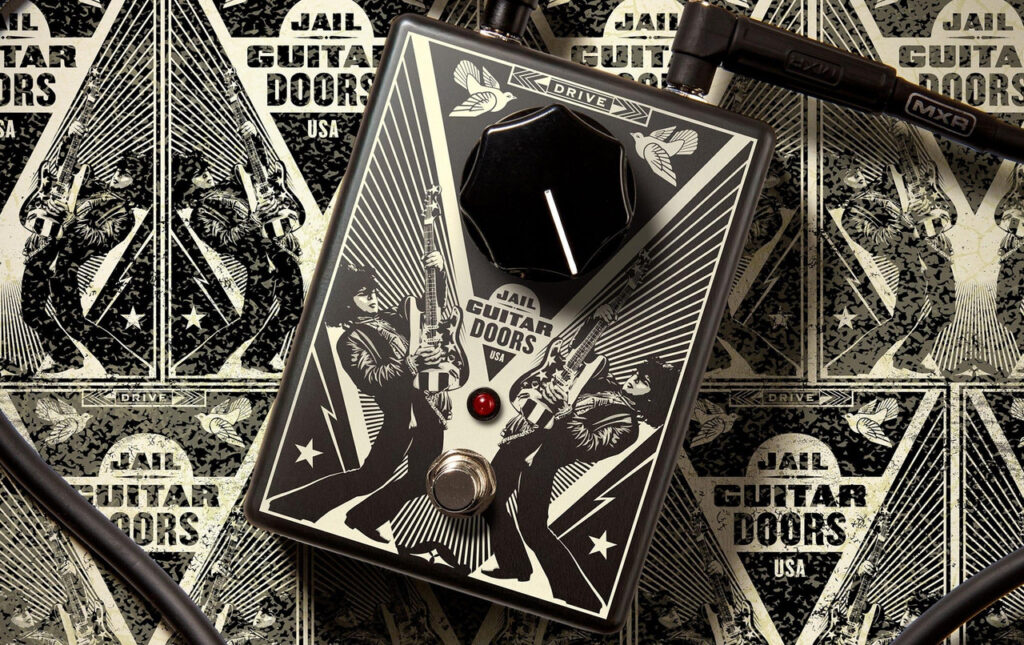
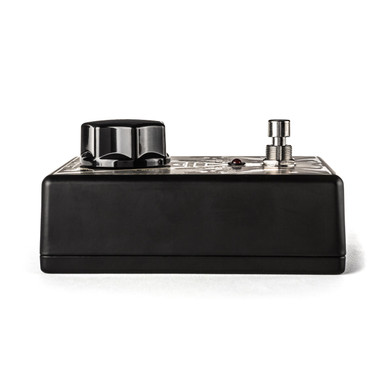
The MXR Jail Guitar Doors Drive captures the raw, gritty tones that Wayne Kramer used to upend rock ’n’ roll through MC5’s legendary early 1970s recordings. Daredevil Pedals’ Johnny Wator worked closely with the MXR design team to fuse his Drive-Bi Dual Gain Distortion with the MXR Micro Amp, creating cascading gain stages for a sound reminiscent of two dimed-out 100-watt stacks. A single knob controls the outputs of both circuits, feeding the first into the second as the volume increases and delivering an unrestrained roar that’s thick with harmonics.
Control
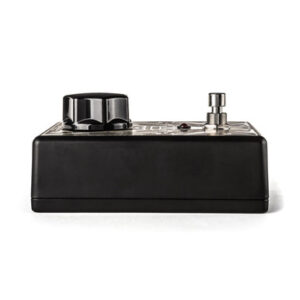
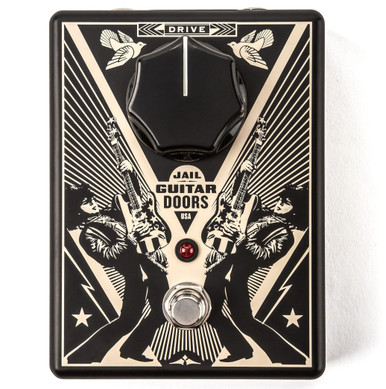
The DRIVE knob increases the output of both circuits at once. As you turn it clockwise, the first stage feeds into the second, boosting overall gain and volume.
JGD1 JAIL GUITAR DOORS OVERDRIVE
You’d be hard-pressed to find a punk or garage rocker who was not influenced by the raw tones that Wayne Kramer pitched into the guitar universe through MC5’s iconic recordings in the early 1970s. MXR teamed up with Johnny Wator of Daredevil Pedals—himself a student of Wayne Kramer’s work—to capture that gritty, groundbreaking sound in a compact, straightforward stompbox. The result is a pedal that delivers a huge rock ’n’ roll kick in the pants—just like Wayne’s music.
The MXR Jail Guitar Doors Drive cranks out powerfully rich tones reminiscent of two dimed-out 100-watt amp stacks. Johnny combined his Drive-Bi Dual Gain Distortion with the MXR Micro Amp to design two separate gain stages, one cascading into the other. A single knob controls the outputs of both circuits, and as the volume is raised, more gain is fed from the first stage into the second. The EQ range is wide and balanced with all the definition you need to cut through a loud live mix with an unrestrained roar thick with harmonics. And it’s all passed the ultimate test—an early prototype of this pedal, delivered to an MC5 recording session, made it onto the album.
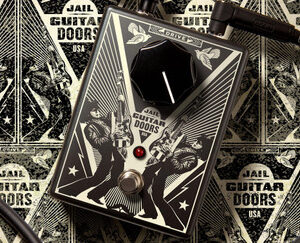
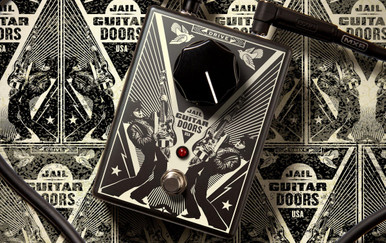
We figured this pedal should look as great as it sounds, so we enlisted street art pioneer Shepard Fairey to create a visual representation of the pedal’s rebellious tones.
A limited run, a majority of the proceeds from the sale of each pedal will be donated to Jail Guitar Doors USA, a nonprofit organization co-founded by Mr. Kramer, his wife Margaret, and Billy Bragg. For over fifteen years, JGD’s efforts have included programs to help incarcerated individuals heal and grow through music in over two hundred facilities nationwide. In 2021, JGD opened the doors to their youth-driven C.A.P.O Center (Community, Arts, Programming & Outreach) in the heart of Los Angeles to aid system impacted young men and women in the exploration of personal healing through the art of self-expression.
Specifications
- INPUT IMPEDANCE: 450 kΩ
- OUTPUT IMPEDANCE: 25 kΩ
- BYPASS: True Bypass
- CURRENT DRAW: 2 mA
- POWER SUPPLY: 9 volts DC