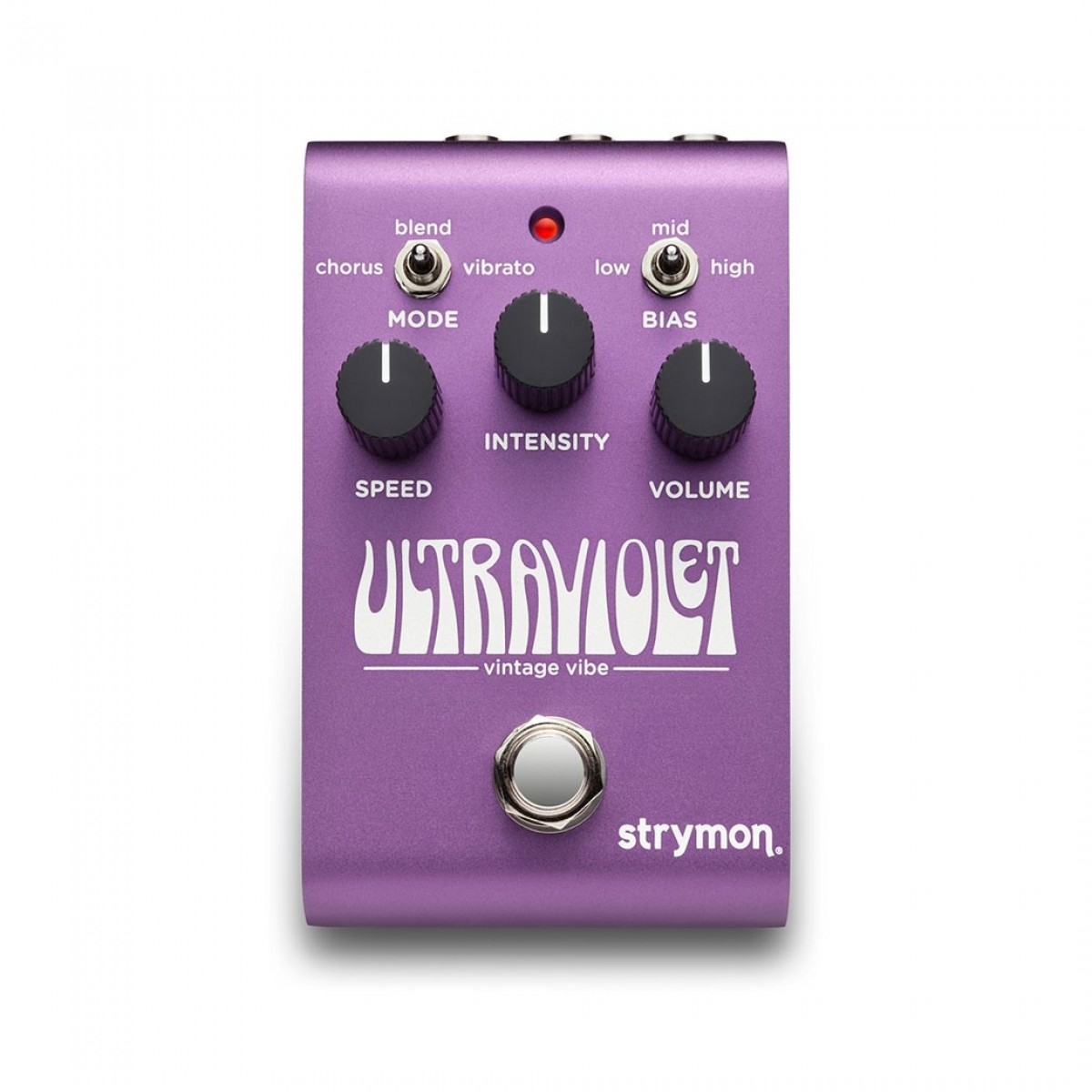
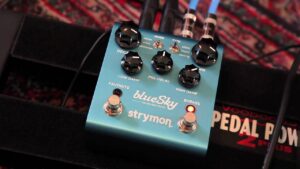
This tasty Chorus number is delivered to your pedal board. A tasty Chorus and Tremolo that stands out amongst other Modulation Pedals on the menu. Strymon make great Modulation Pedals, so If you like Chorus and Tremolo, then a Strymon Ultraviolet Vintage UniVibe Pedal is the perfect Chorus to order in. The Strymon Ultraviolet Vintage UniVibe Pedal delivers lush authentic vibe tones with the perfect balance of warmth grit and responsiveness. Meticulously engineered this pedal recreates the nuanced interdependencies of classic optical vibe circuits offering a dynamic playing experience that inspires creativity. With versatile controls and a range of Bias settings UltraViolet provides everything from deep pulsing modulation to subtle phase-like tremolo effects all while maintaining exceptional touch sensitivity and tonal richness. Designed for both simplicity and flexibility UltraViolet features modes like Chorus Vibrato and Blend expanding the potential of traditional vibe pedals. The addition of full MIDI integration TRS stereo inputs and outputs and an expression pedal option make it a powerful and adaptable tool for your setup. This pedal brings back a quintessential vibe sound of the 60s.
Strymon Ultraviolet Vintage UniVibe Pedal
JustPedals serve up a tasty Chorus. A solid Chorus and Tremolo that stands out amongst other Modulation Pedals on the JustPedals menu. Strymon make great Modulation Pedals, so If you like Chorus and Tremolo, then a Strymon Ultraviolet Vintage UniVibe Pedal is the perfect Chorus to order in. Read More details Below.
As an affiliate partner, we may earn a small commission when you buy through our links — at no extra cost to you.
Related videos
Brand
Strymon
Strymon specialises in detailed digital effects and amp tools designed for pedalboard, studio and direct-recording setups. The company grew from the Damage Control team and is known for deep delay and reverb processing, alongside modulation, amp modelling and tape-inspired effects. JustPedals listings include the TimeLine delay, BigSky reverb, Iridium amp and cabinet simulator, Deco tape-saturation pedal, DIG dual delay and Flint tremolo and reverb. Strymon states its products are designed and built in the USA, in the Los Angeles area. Check MIDI, preset storage, stereo I/O and expression options when comparing its larger-format pedals.
Category
Modulation Pedals
Modulation changes a signal through a continuously moving control source. This broad category covers effects that alter delay time, phase, pitch, amplitude or filtering to create rotation, movement and evolving texture when no narrower effect family is dominant. Waveform, rate, depth, stereo phase and control routing determine the shape and spatial behaviour of that movement.
Tags
MIDI
Sends, receives or responds to Musical Instrument Digital Interface messages rather than carrying the instrument audio itself. Program changes recall presets, continuous controllers move parameters, and MIDI clock or transport messages synchronise timing between devices.
Stereo
Processes, creates or passes two audio channels. True stereo preserves separate left and right inputs, while mono-to-stereo effects generate spatial differences internally; routing, phase behaviour and whether trails remain stereo determine the resulting image. Some outputs sum to mono when only one socket is connected, which can change level or modulation depth.
Others Just Ordered :
- I Love A Happy Accident… – Animals Pedal

- Animals Pedal Vintage Van Driving is Very Fun Overdrive

- Animals Pedal Sunday Afternoon Is Infinity Bender

- Ninevolt Pedals | Bath Time Reverb (Animals Pedal)
- This Fuzz Pedal Makes No Sense… But It Sounds Incredible

- ANIME Pedals | Animals Pedal Custom Illustrated Series