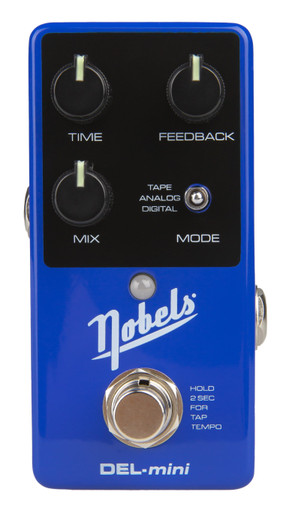
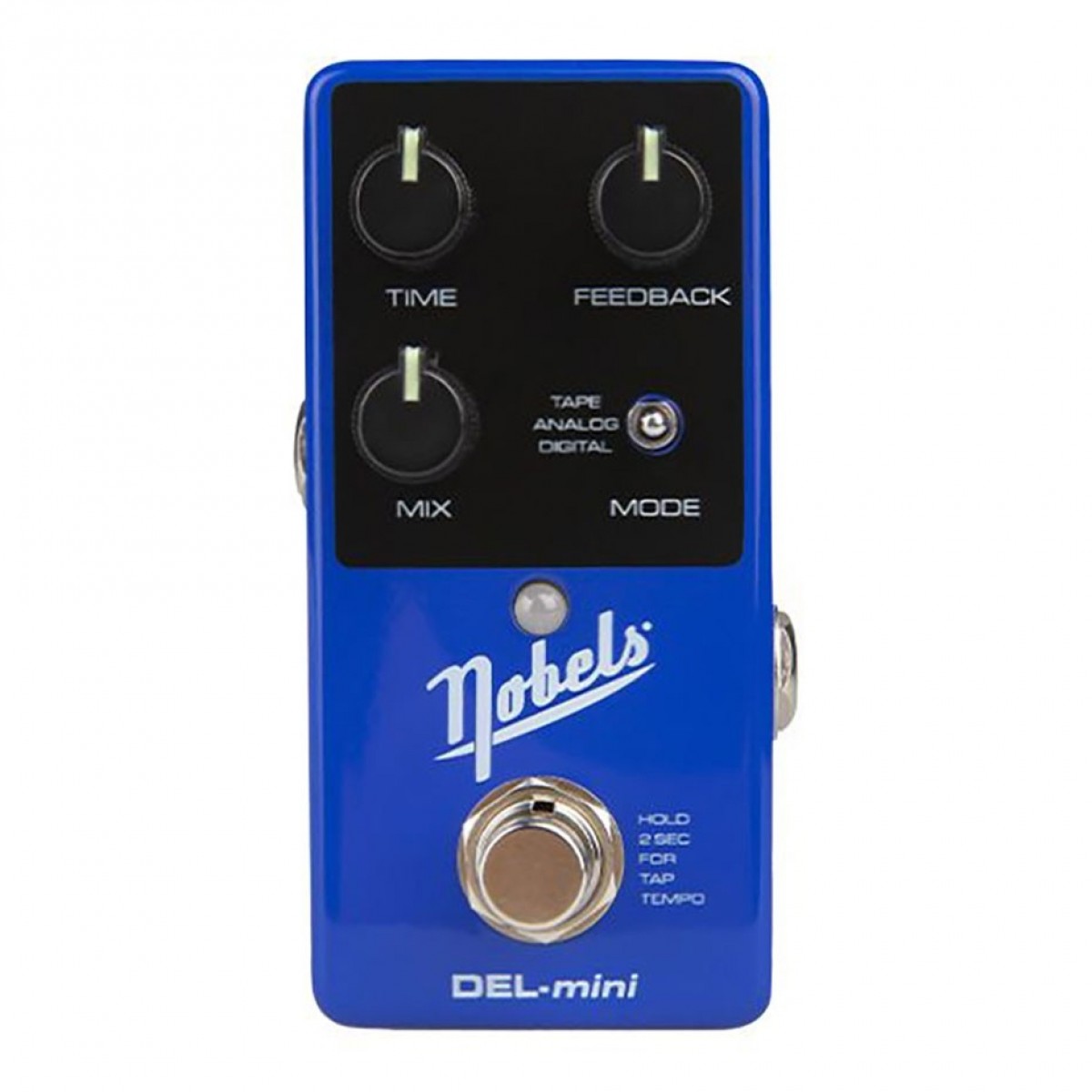
Nobels DEL-mini Mini Delay Pedal

£84.99

This is the Nobels DEL-mini Mini Delay Pedal from Nobels, listed in Delay Pedals on Just Pedals. Read More below.

View Just
more
and , , ,

Here’s what Nobels say about the Nobels DEL-mini Mini Delay Pedal:

The diminutive, yet feature packed, Nobels DEL-mini delay pedal combines an outstanding selection of delay tones in a budget-friendly and space-saving enclosure. While Nobels has a heritage of past delay units, this newly engineered pedal offers maximum versatility in a super compact package.

Providing an expertly curated selection of timeless delay effects with either a mono or spacious stereo image, DEL-mini delivers a wealth of sonic possibilities, far beyond its modest size and is an excellent addition to any size of setup.

Key Features

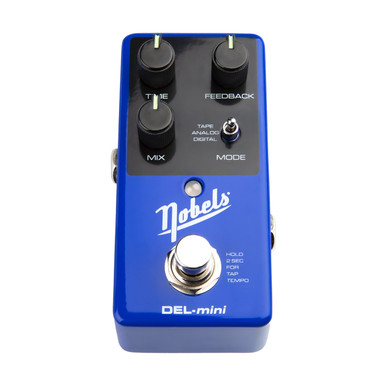
  • Mini Stereo Delay Pedal
  • Three distinct Delay modes – Tape, Analog and Digital
  • Tap Tempo
  • Selectable Mono or Stereo (via TRS) inputs and outputs
  • Selectable True or Buffered Trails Bypass modes
  • Glow in the Dark pointer knobs
  • Metal Enclosure
  • Includes 4 x Integrated fold-out Mounty-P Mounting Plates
  • Powered by (opt.) 9 V DC PSU
  • (centre -, 2.1mm, ~ 58 mA current draw, not included)

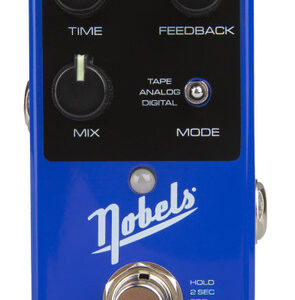
Featuring three carefully crafted delay flavours, Tape (up to 553 ms), Analog (up to 402 ms) and Digital (up to 1000 ms), all three modes all faithfully capture the iconic delay tones that have shaped music across genres, past and present. Each mode is simply selected by the pedal’s convenient mode switch right on the face of the pedal.

Adding to its flexibility, the DEL-mini features full tap tempo functionality, but in a single switch design. Simply holding the footswitch for approximately two seconds enters the pedal into “Tap Tempo Mode”, following which the pedal will respond to rhythmic tapping instantly. Further defying expectations based on its compact appearance, there are dedicated toggles for selection between mono and stereo (TRS) operation as well as true or buffered bypass modes, making the pedal suitable for almost any musical situation, anywhere, any time.

As with all other current Nobels pedals, the DEL-mini features 4 integrated Mounty-P Mounting Plates for safe and secure attachment to pedalboards. With its full metal enclosure and Glow in the Dark pointer knobs, the DEL-mini is a pint-sized powerhouse that’s built for performance!
Related videos

Brand

Nobels

Nobels is a respected brand in the guitar pedal market, primarily known for their ODR-1 overdrive pedal, which has become a staple for players seeking a natural, amp-like overdrive sound. The ODR-1 is celebrated for its smooth distortion, making it a popular choice among guitarists in genres such as rock and country. It has gained a loyal following, with endorsements from notable artists like Michael Wagener and Robbie McIntosh, who have praised its tone and versatility.

The ODR-1 is available in various versions, including the ODR-mini and the ODR-S, each designed to offer different tonal possibilities. The ODR-S model is particularly appreciated for its three-band EQ, which provides greater control over the tonal shape compared to the standard model. Nobels’ pedals, including the ODR-1, are often recommended as alternatives to more well-known overdrive pedals like the Tube Screamer, offering a unique character with a focus on warmth and clarity.

Category

Delay Pedals

Delay records the incoming signal for a chosen interval and repeats it after the original note. Feedback returns repeats to the delay line, while tone, filtering, modulation and saturation determine whether echoes remain clear, darken progressively, wobble like tape or degrade like analogue bucket-brigade circuits. Delay time and rhythmic subdivisions govern the spacing and musical pattern of the repeats.

Tags

Analogue

The signal is shaped by continuously varying electronic circuitry rather than being converted into a digital effect algorithm. Component choice, operating voltage and circuit tolerances influence headroom, noise, clipping texture and the small variations in response between designs.

Digital

Converts the signal or control process into numerical data for algorithmic processing. Digital designs can provide precise timing, long memory, complex routing and repeatable presets; sample rate, conversion, internal resolution and latency influence fidelity and response.

Stereo

Processes, creates or passes two audio channels. True stereo preserves separate left and right inputs, while mono-to-stereo effects generate spatial differences internally; routing, phase behaviour and whether trails remain stereo determine the resulting image. Some outputs sum to mono when only one socket is connected, which can change level or modulation depth.

Tap Tempo

Measures repeated foot taps and converts their interval into an effect rate or delay time. Subdivisions translate that pulse into dotted, triplet or other rhythmic values, while averaging and range limits influence how quickly and accurately the tempo settles.