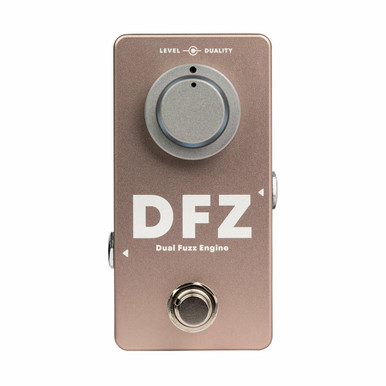
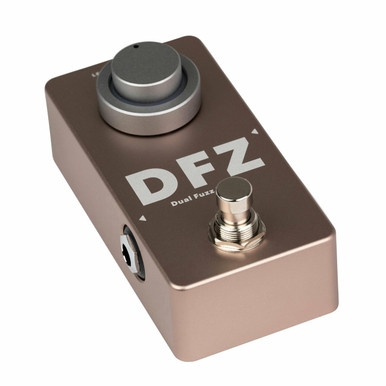
Darkglass Duality DFZ Dual Fuzz Pedal

£199.99

This is a New Darkglass Duality DFZ Dual Fuzz Pedal from Darkglass Electronics, listed in Fuzz Pedals on Just Pedals. Read More below.

View Just
more

Here's what Darkglass say about the Duality DFZ

The Duality DFZ is a unique pedal that contains not one but two discrete fuzz circuits: a gated saw-tooth wave and a raunchy high-gain sound.

The original Duality Dual Fuzz from Darkglass Electronics was highly regarded for its superb tonal quality, harmonic richness and ease of use. Now, after years of requests from players, it’s returning in the form of the new Duality DFZ.

Featuring the same basic circuitry as the original unit, the Duality DFZ is a unique pedal that contains not one but two discrete fuzz circuits: a gated saw-tooth wave and a raunchy high-gain sound. These can be mixed together to deliver a vast selection of distinct sonic textures.

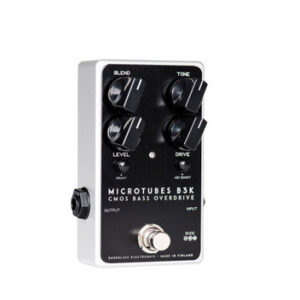
Sharing the same mechanical configuration and pedalboard-friendly form-factor as the Microtubes B1K Overdrive pedal, the Duality DFZ delivers massive tones far exceeding its small proportions.

Specifications

  • Input impedance: 1 MΩ
  • Output impedance: 1 KΩ
  • Current consumption: ~40 mA
  • Voltage: 9V DC (centre negative)
  • Dimensions (WxHxD): 50 x 130 x 65 mm
  • Weight: 340g

Related videos

Brand

Darkglass Electronics

Darkglass is a Finnish effects and amplification brand focused on bass. Its range centres on preamps, drives and dynamics tools for shaping a bass signal on stage and in the studio. The Microtubes family includes the B7K preamp and X series, while Alpha and Omega offer distinct distortion voices; Hyper Luminal adds compression with digital control. JustPedals listings include Alpha Omicron, Microtubes B7K, Microtubes X and Hyper Luminal. Darkglass documentation identifies Helsinki for some equipment, but manufacturing origin should be checked by model rather than assigned to the whole range.

Category

Fuzz Pedals

Fuzz drives the signal into extreme clipping, often flattening the waveform and generating a thick spectrum of harmonics. Transistor type, bias, input loading and tone filtering create markedly different responses, from loose and velvety to gated, spluttering or octave-rich. Some circuits interact strongly with pickup impedance and guitar volume, while others include buffers or blends for a more consistent response.