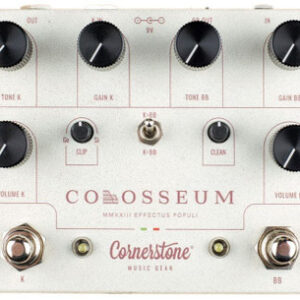
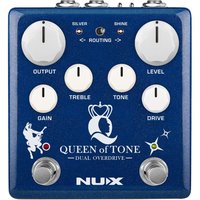
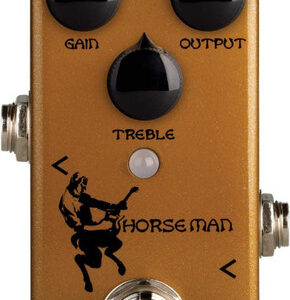
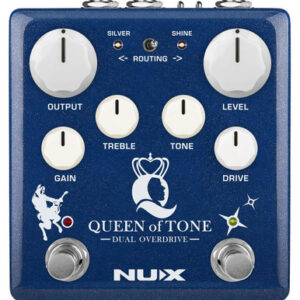
The NUX Queen of Tone Overdrive Pedal is a compact dual-drive unit that combines two legendary circuits for ultimate tonal flexibility. On one side the Horseman delivers Klon-style overdrive with selectable Gold and Silver modes giving you everything from transparent boost to high-headroom gain. On the other the Morning Star channels the warmth of a Bluesbreaker with a Shine mode for added treble bite. With switchable routing options input FET stage for amp-pushing dynamics and a choice between buffer or true bypass this pedal adapts effortlessly to your setup.
NUX Queen of Tone Overdrive Pedal
£96.00
This is a New NUX Queen of Tone Overdrive Pedal from NUX its found in our Overdrive Pedals on the Just Pedals menu. Read More below.
View Just NUX
As an affiliate partner, we may earn a small commission when you buy through our links — at no extra cost to you.
Related videos

Brand
NUX
NUX made its industry debut in 2006 and is one of the brands owned by Cherub Technology. Its official catalogue ranges from analogue and digital stompboxes to multi-effects, amplifiers, wireless systems, drums, keyboards and recording gear. Cherub lists company locations in Guangdong, China, as well as overseas offices; that identifies the company base, not the factory for every NUX product. JustPedals listings include the NBP-5 Melvin Lee Davis bass preamp, NAI-5 Optima Air acoustic simulator and NDR-5 Atlantic delay and reverb. The range rewards model-by-model comparisons of signal path, presets and instrument-specific features.
Category
Overdrive Pedals
Overdrive uses soft or moderate clipping to add harmonics and compression while retaining more of the original note shape than heavy distortion. Some circuits emphasise the midrange and trim bass before clipping; others remain broad, transparent or amplifier-like. Gain, clipping arrangement, headroom and tone filtering decide whether it supplies a light edge, a saturated drive sound or extra push into another gain stage.
Tags
True Bypass
Connects input directly to output through mechanical or relay switching when the effect is off, removing the active circuit from the audio path. It avoids buffer colour but leaves cable capacitance and switching design to influence high-frequency loss and possible switching noise.