The TC Electronic Vibraclone Rotary Emulator is a pedal the provides players with the iconic rotating speaker sounds legendary guitarists such as Hendrix Harrison and Gilmour used to deliver their signature riffs with. Its dual knob setup allows for quick adjustments while its 2-way switch provides you with Chorale or tremolo settings. Youll be able to easily tap into these legendary sound effects and mould them to help you find your own sound. Whats more the top-mounted jacks keep the Vibraclones pedal footprint to a minimum while the true bypass function ensures your original signal remains intact even when the pedal is disengaged. Enclosed within a durable metal chassis which is designed to survive life on the road this pedal offers everything from earthy swampy soundscapes – all the way to kaleidoscopic psychedelia.
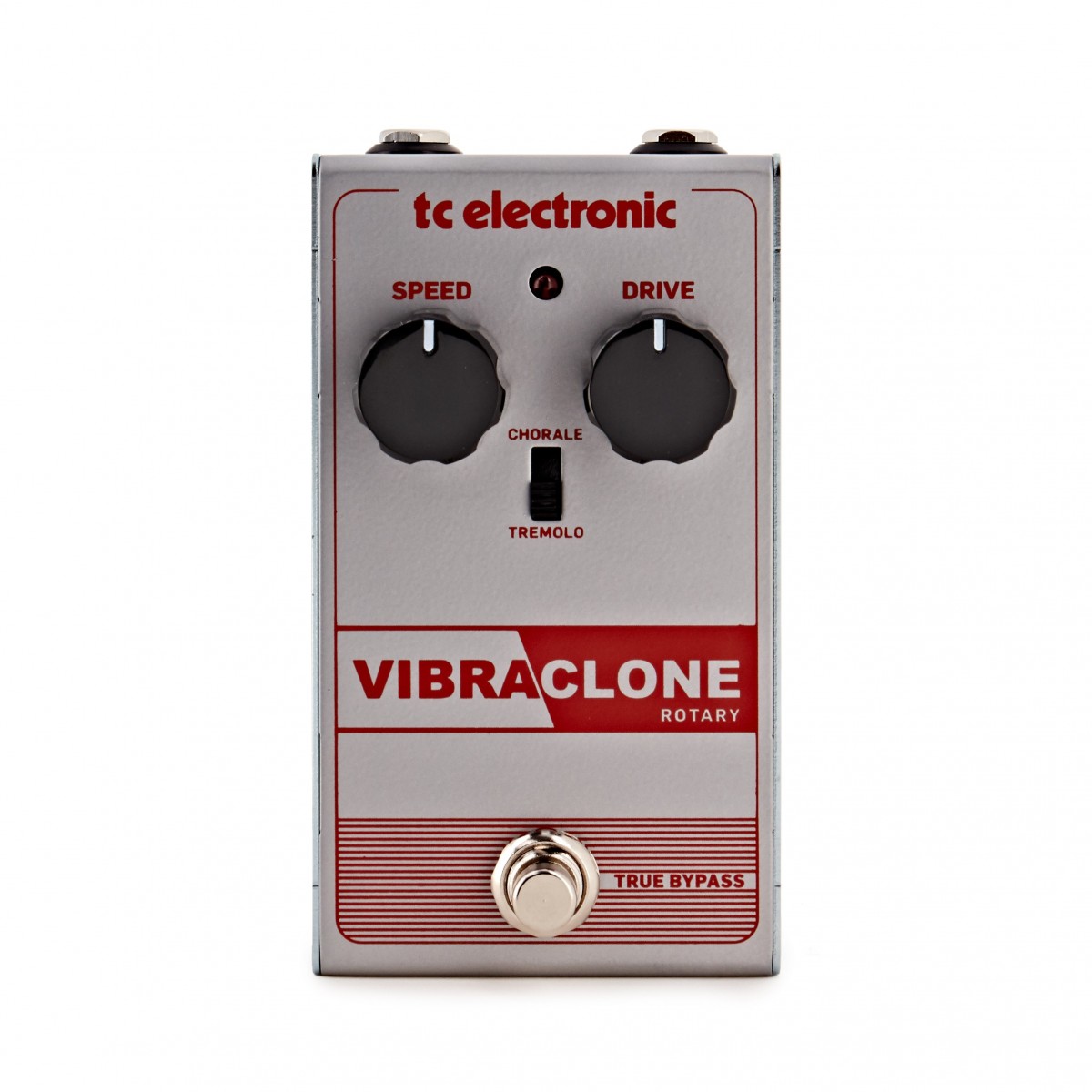
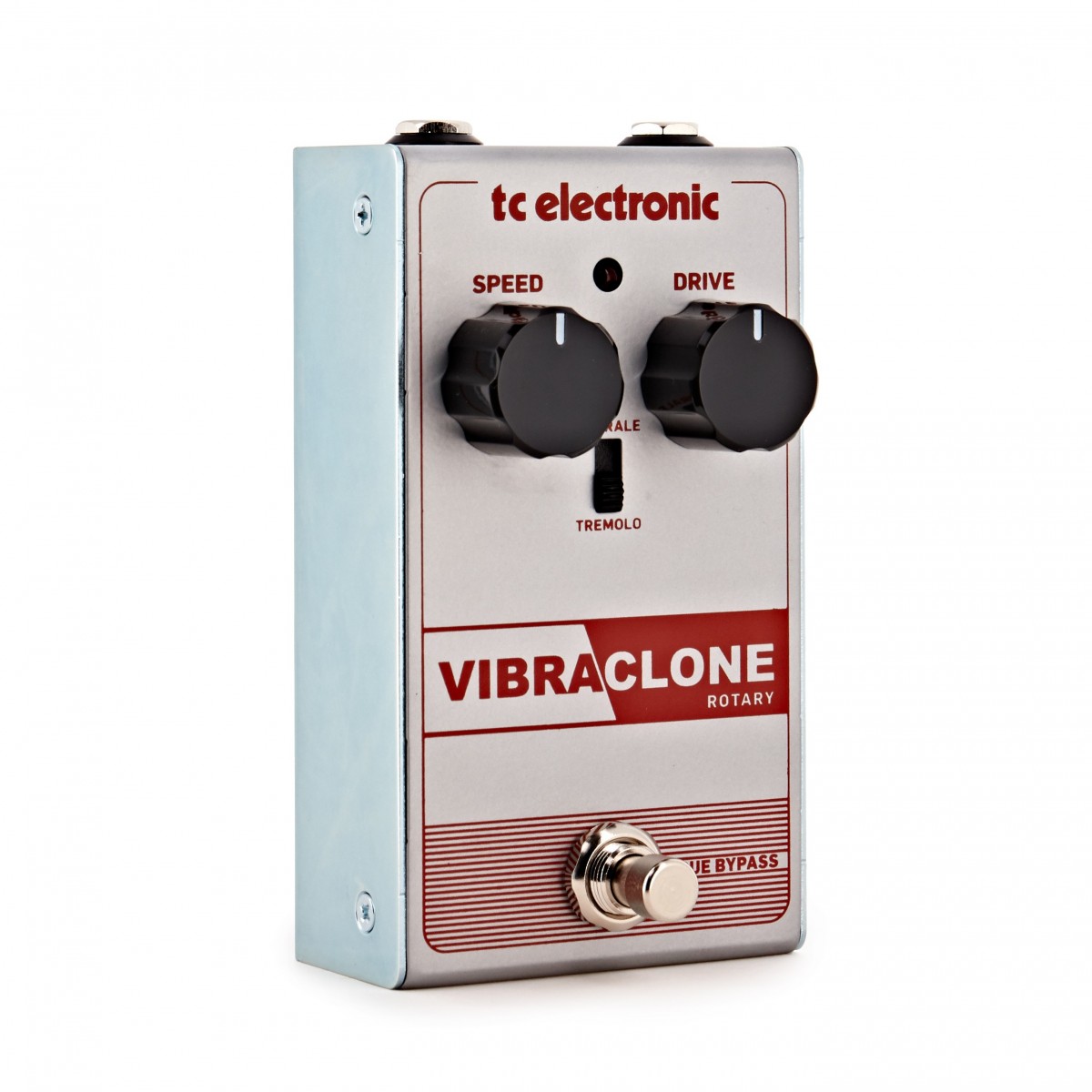
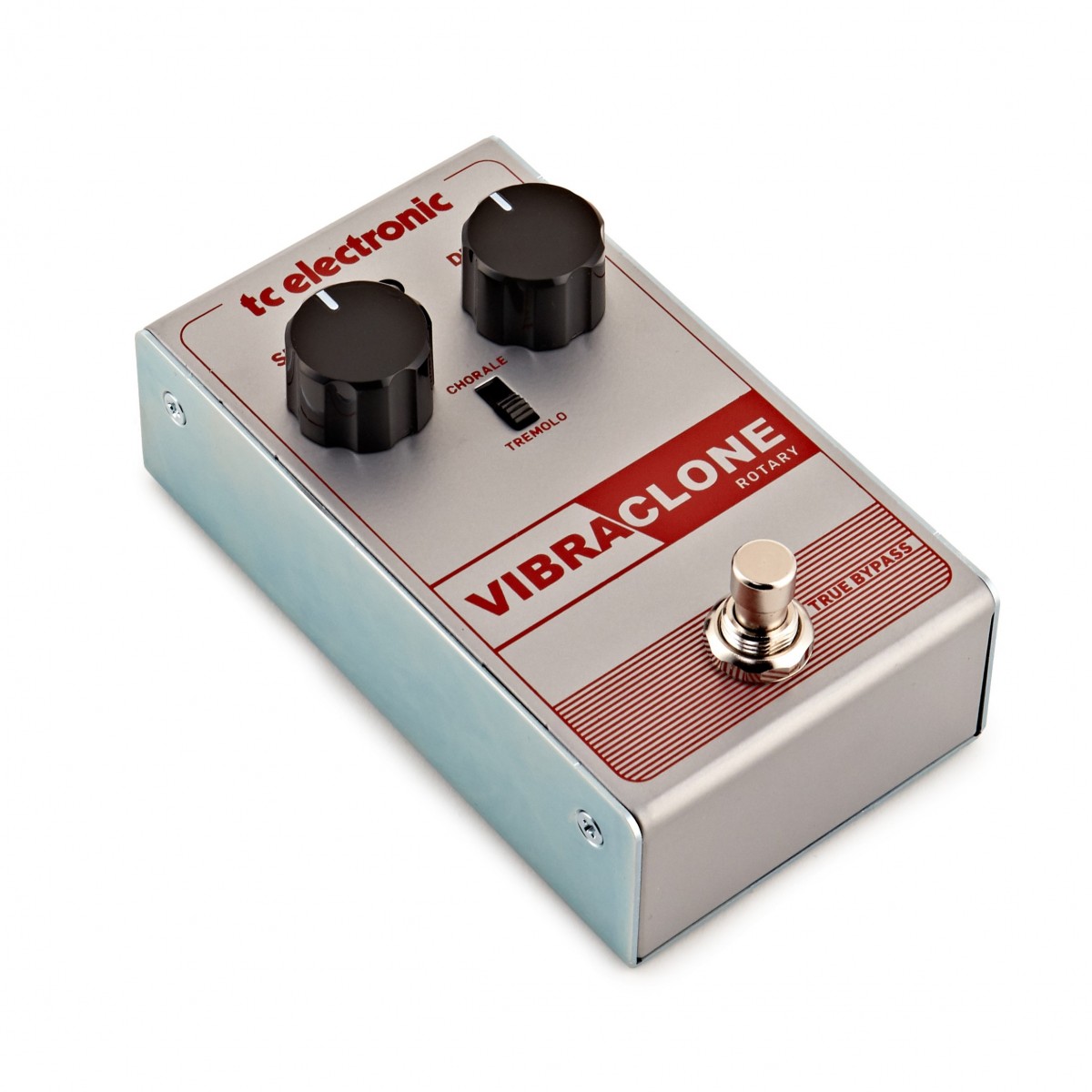
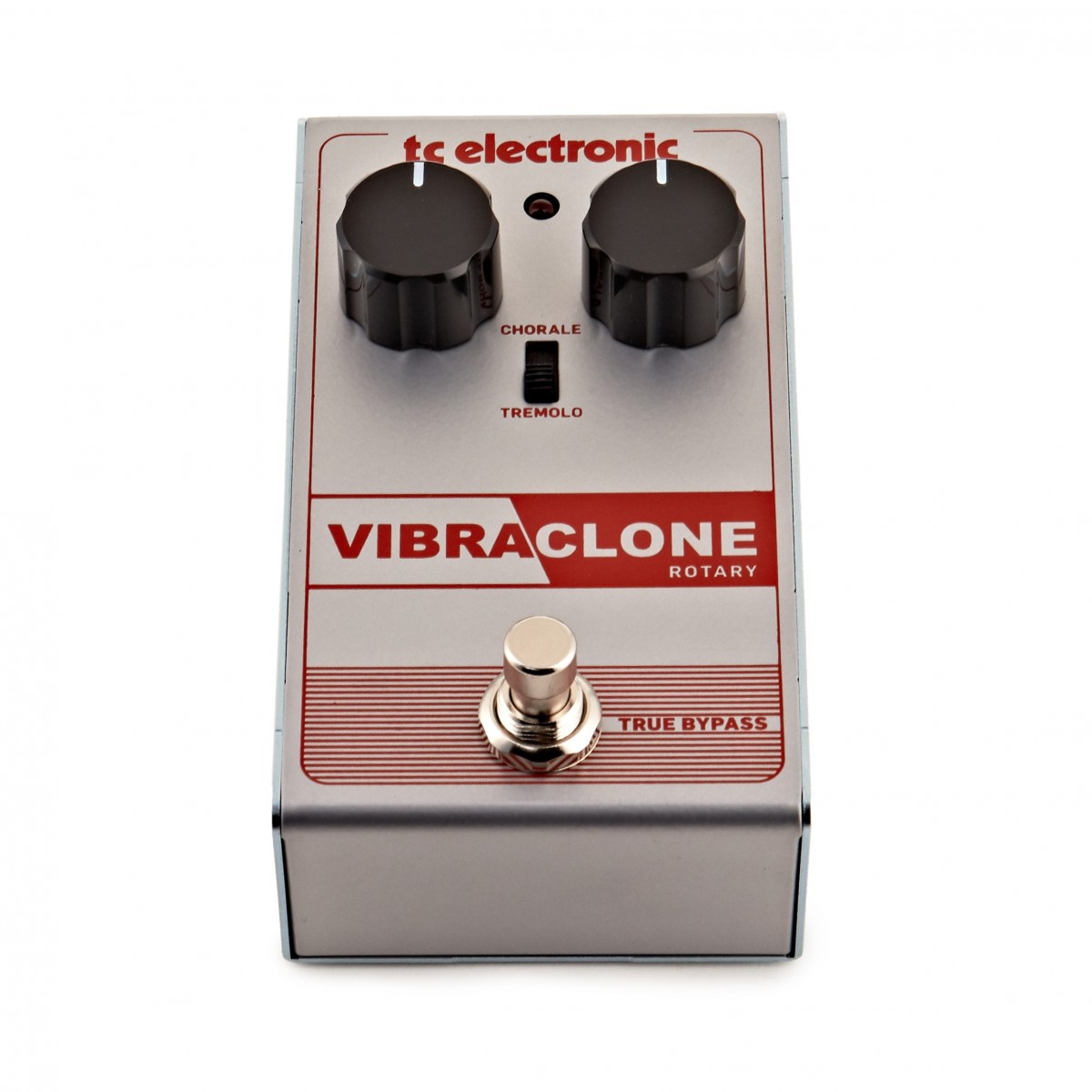
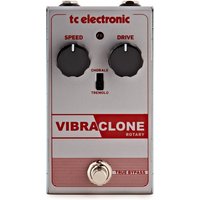
TC Electronic Vibraclone Rotary Emulator
This is a New TC Electronic Vibraclone Rotary Emulator from TC Electronic, listed in Modulation Pedals on Just Pedals. Read More below.
As an affiliate partner, we may earn a small commission when you buy through our links — at no extra cost to you.
Related videos
Brand
TC Electronic
In the current JustPedals catalogue, TC Electronic is represented by Delay Pedals, Reverb Pedals and Looper Pedals. Current listings include DC30 Preamp, Plethora X1 and V550 Pre-Amp. That makes the range relevant to players looking for drive, gain and clipping, plus time-based effects and ambience. Check each model for its exact circuit or processing platform, controls, power requirements and connections, particularly where the catalogue includes both pedals and supporting gear.
Category
Modulation Pedals
Modulation changes a signal through a continuously moving control source. This broad category covers effects that alter delay time, phase, pitch, amplitude or filtering to create rotation, movement and evolving texture when no narrower effect family is dominant. Waveform, rate, depth, stereo phase and control routing determine the shape and spatial behaviour of that movement.
Tags
True Bypass
Connects input directly to output through mechanical or relay switching when the effect is off, removing the active circuit from the audio path. It avoids buffer colour but leaves cable capacitance and switching design to influence high-frequency loss and possible switching noise.
Others Just Ordered :
- Mooer Meta FX – Review

- MOOER META FX Review: 3 Effects in 1—but Here’s the Problem

- I Wasn’t Expecting To Be Impressed – But What Is The Mooer Meta FX?

- Mooer // META FX Stereo Multi-Effect Platform (Demo)

- A NEW GENERATION OF PEDALS IS HERE – Mooer Meta FX Reverb Review

- Mooer META FX | All the REVERBS from subtle to WILD!