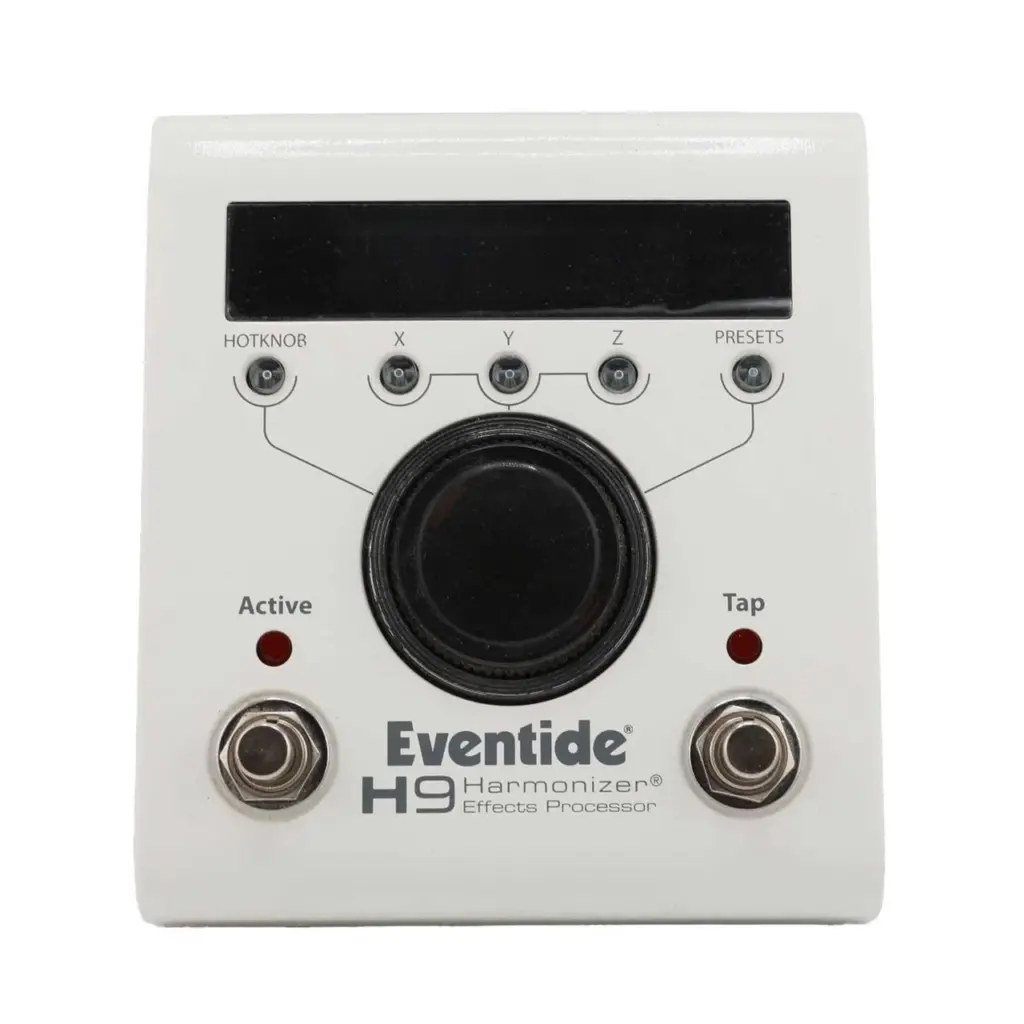



Condition: Loved The item is in good condition but does display signs of use. This may include light scratches and scuffs to the enclosure, cosmetic wear to the knobs and switches and minor scuffs/scratches to any screens that are barely noticeable.Includes the original Box This instrument comes with the original box; the condition of the box will be shown in the pictures.Power supply provided You don’t need an extra power supply; one is included with this item, so you can get playing straight out of the box.
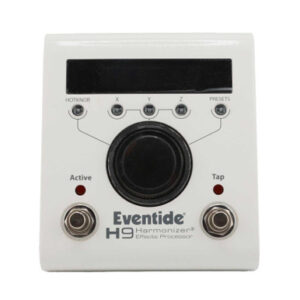



Second Hand Eventide H9 Harmoniser GEN 1 Multi FX Pedal #496
£279.00
This is a Used Second Hand Eventide H9 Harmoniser GEN 1 Multi FX Pedal #496 from Eventide, available in the Multi-Effects Pedals category this Christmas on the JustPedals board. Read More below to get the latest prices, demos and how to order for fast delivery to all areas of the UK.
View Just Eventide
As an affiliate partner, we may earn a small commission when you buy through our links — at no extra cost to you.
Brand
Eventide
In the current JustPedals catalogue, Eventide is represented by Multi-Effects Pedals, Overdrive Pedals and Pedal Power Supplies. Current listings include UltraTap Stompbox, H9 Harmonizer Gen 2 and H90 Harmonizer. That makes the range relevant to players looking for drive, gain and clipping, plus modelling, direct rigs and multi-effects. Check each model for its exact circuit or processing platform, controls, power requirements and connections, particularly where the catalogue includes both pedals and supporting gear.
Category
Multi-Effects Pedals
A multi-effects processor combines several effect algorithms and signal-routing stages in one unit. Its sound depends not only on the individual models but on their order, parallel or serial routing, processing resolution and available control. Preset structure, switching gaps, foot control, expression assignment, amp or cabinet modelling, USB audio and MIDI determine how completely the processor can replace separate pedals.
Tags
Pitch
Moves the detected note to another interval or adds shifted voices alongside it. Tracking method, polyphonic capability, latency, scale awareness and formant handling determine whether the result follows chords naturally or produces a more synthetic, stepped character.