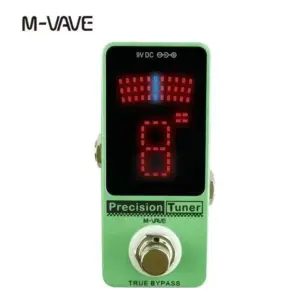
Brand
M-VAVE is a music-gear brand of Shengke, whose official company history describes a move from consumer wireless audio into instrument products using wireless transmission and digital signal processing. The current range mixes compact single-effect pedals, multi-effects processors, headphone tools and wireless systems. JustPedals listings include the Mini Universe digital reverb, Tank multi-effects, H8 headphone amplifier and pedal tuners. TANK-G adds amp modelling, USB audio and recording features, while Mini Universe is a compact dedicated reverb. Check the product type before comparing M-VAVE listings, as the brand covers both stompboxes and supporting equipment.
Category
Delay records the incoming signal for a chosen interval and repeats it after the original note. Feedback returns repeats to the delay line, while tone, filtering, modulation and saturation determine whether echoes remain clear, darken progressively, wobble like tape or degrade like analogue bucket-brigade circuits. Delay time and rhythmic subdivisions govern the spacing and musical pattern of the repeats.
Tags
The signal is shaped by continuously varying electronic circuitry rather than being converted into a digital effect algorithm. Component choice, operating voltage and circuit tolerances influence headroom, noise, clipping texture and the small variations in response between designs.
Connects input directly to output through mechanical or relay switching when the effect is off, removing the active circuit from the audio path. It avoids buffer colour but leaves cable capacitance and switching design to influence high-frequency loss and possible switching noise.

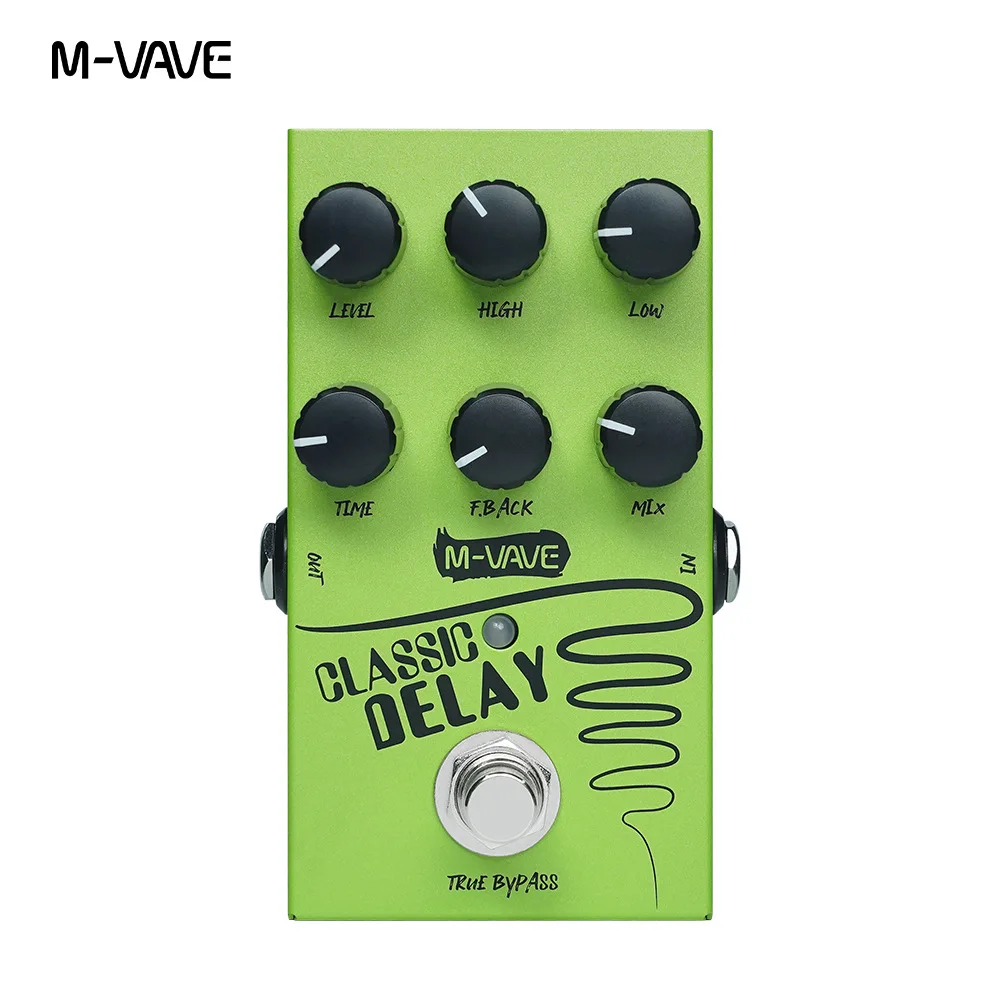
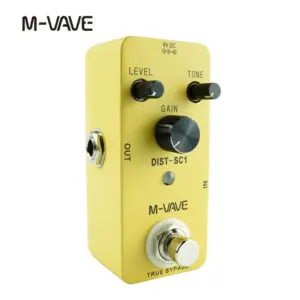 M-VAVE Electric Guitar Effect Pedal Guitar Multi-effects Effect Pedal True Bypass Guitar Accessories Parts Premium Music Store
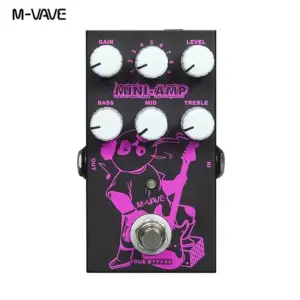 M-Vave Guitar Effect Pedal Distortion Overdrive True Bypass Portable Electric Guitar Effector For Stage Performance
 M-Vave 600MS Classic Delay Pedal True Bypass Delay Time Pedal Bass