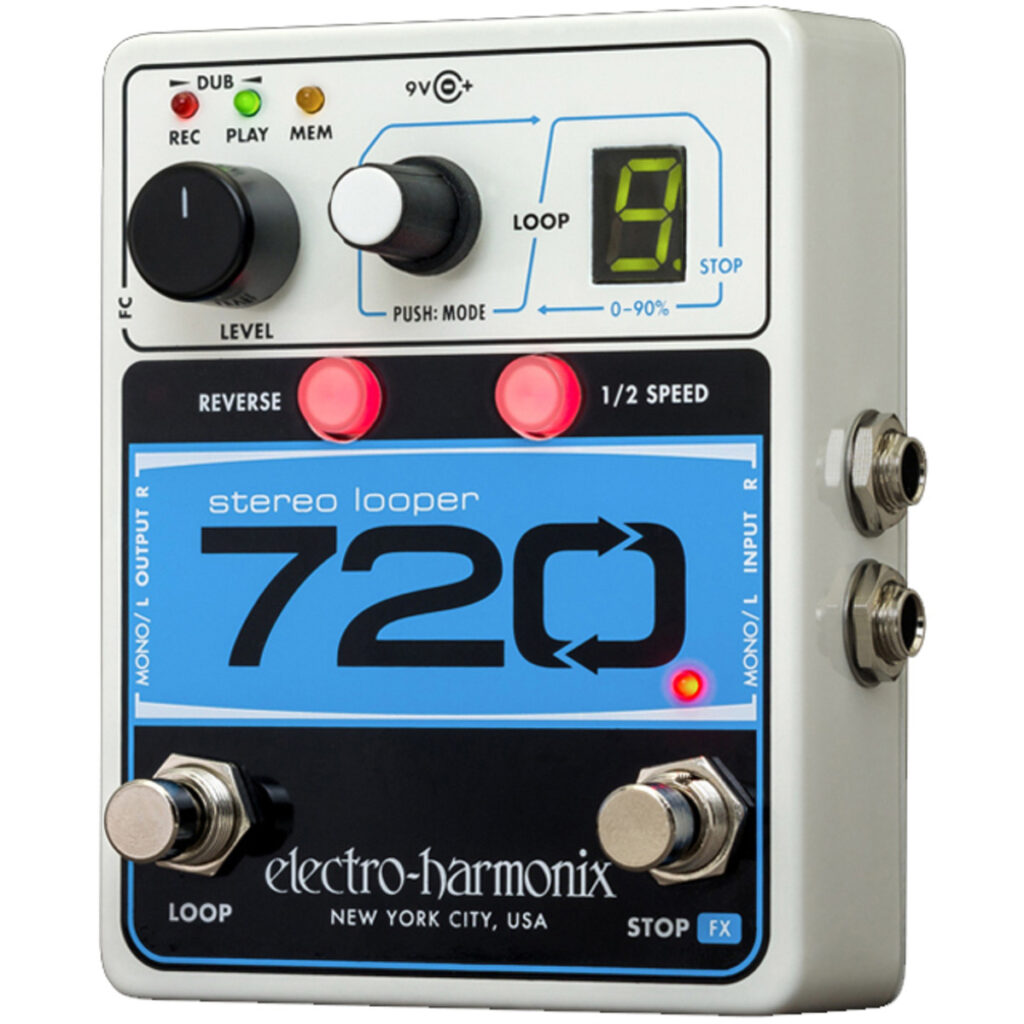
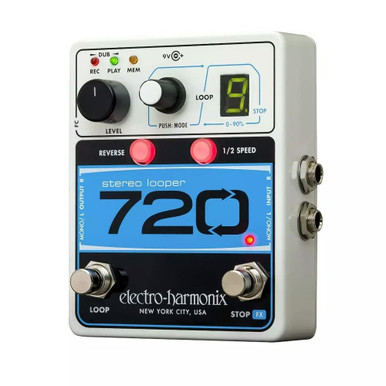
Youre not going loopy. Youre just looking at one of the best looping pedals ever. The Electro Harmonix 720 Stereo Looper likes to keep things simple with its super intuitive interface and small array of control dials. The result? An incredibly effective pedal which is super easy to use. With an extra-long stereo recording time of 12 minutes youll be unrestricted as you craft your own loops. Theres handy undo redo and ½ speed effects which lend you greater control when youre creating each loop. And 10 independent loop slots give you room to create multiple tracks with ease. Bring a new dimension to your live setup or enhance your bedroom practice sessions using this exceptional pedal.
Electro Harmonix 720 Stereo Looper
£149.00
This is a New Electro Harmonix 720 Stereo Looper from Electro Harmonix, listed in Looper Pedals on Just Pedals. Read More below.
View Just Electro Harmonix
As an affiliate partner, we may earn a small commission when you buy through our links — at no extra cost to you.
Related videos

Brand
Electro Harmonix
Founded by Mike Matthews in New York City in 1968, Electro-Harmonix became known for inventive effects that brought new sounds within reach of guitarists. Its first product was the LPB-1 Linear Power Booster; the company’s long-running catalogue ranges from fuzz and overdrive to delay, modulation, octave and experimental processing. JustPedals listings include the Small Clone chorus, Small Stone phaser, Memory Boy delay, POG 2 octave generator and Micro Q-Tron envelope filter. Check the exact version and power requirements when comparing EHX models, since familiar names often span different generations and formats.
Category
Looper Pedals
A looper records a passage and plays it back repeatedly so additional parts can be overdubbed over the cycle. Loop length, audio quality, storage and the number of independent tracks define the basic capability. Undo, quantisation, synchronisation, rhythm guides, reverse and half-speed functions determine how recordings can be corrected, transformed and aligned with other equipment.
Tags
Stereo
Processes, creates or passes two audio channels. True stereo preserves separate left and right inputs, while mono-to-stereo effects generate spatial differences internally; routing, phase behaviour and whether trails remain stereo determine the resulting image. Some outputs sum to mono when only one socket is connected, which can change level or modulation depth.
Others Just Ordered :
- Mooer Meta FX – Review
- MOOER META FX Review: 3 Effects in 1—but Here’s the Problem

- I Wasn’t Expecting To Be Impressed – But What Is The Mooer Meta FX?

- Mooer // META FX Stereo Multi-Effect Platform (Demo)
- A NEW GENERATION OF PEDALS IS HERE – Mooer Meta FX Reverb Review

- Mooer META FX | All the REVERBS from subtle to WILD!