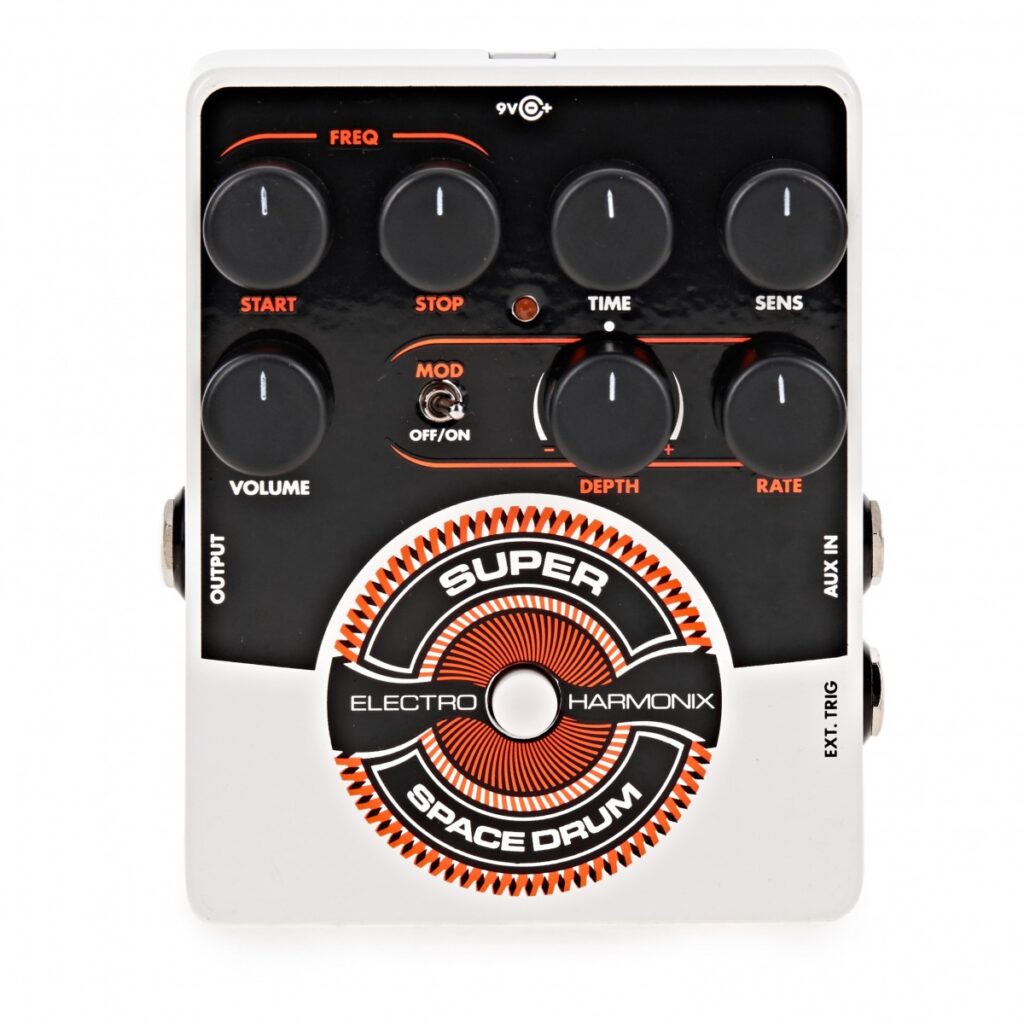
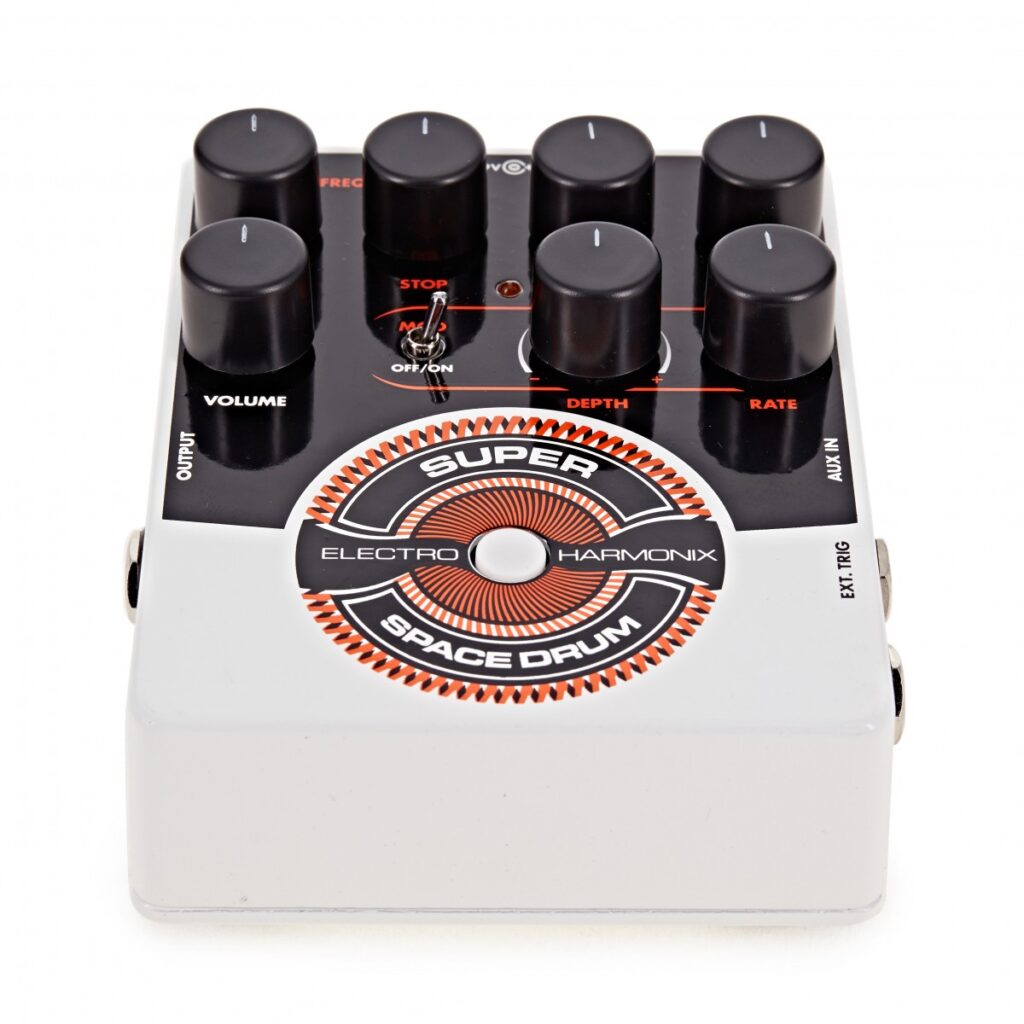
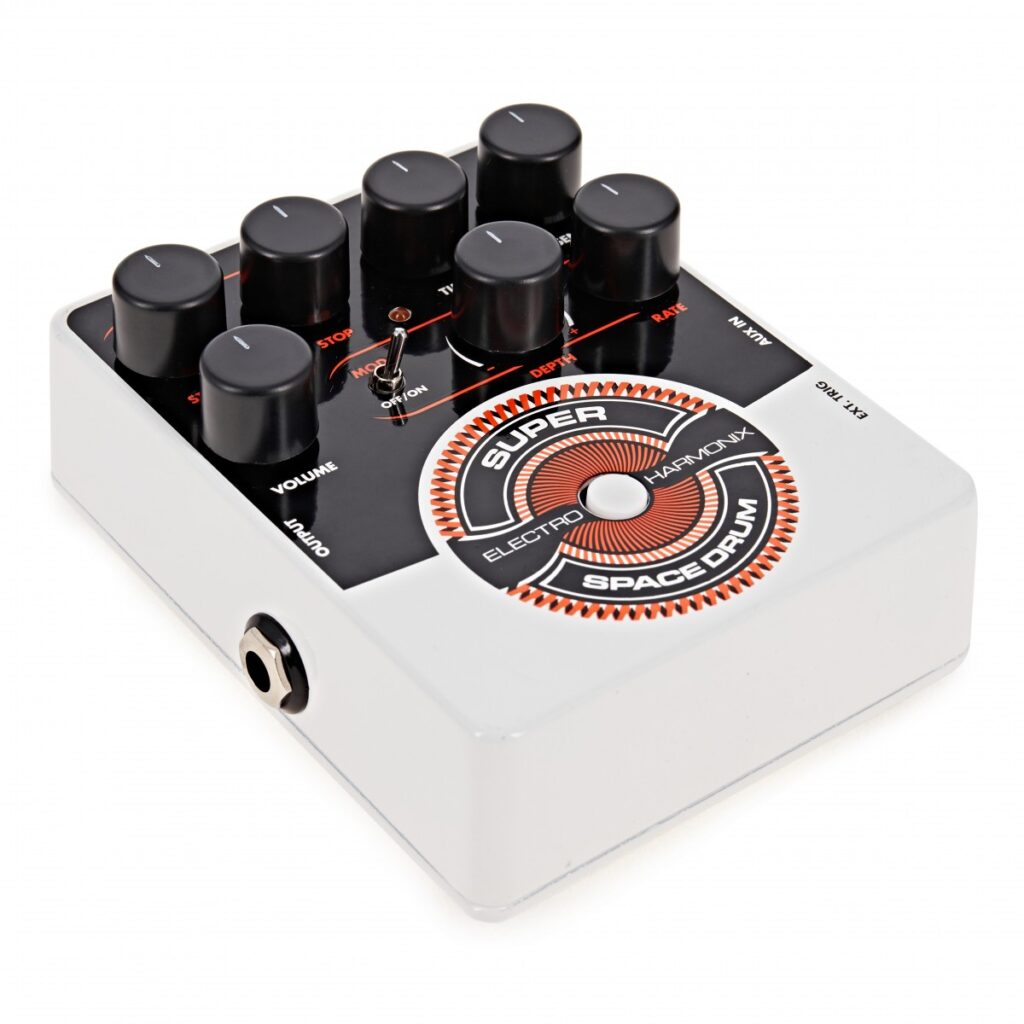
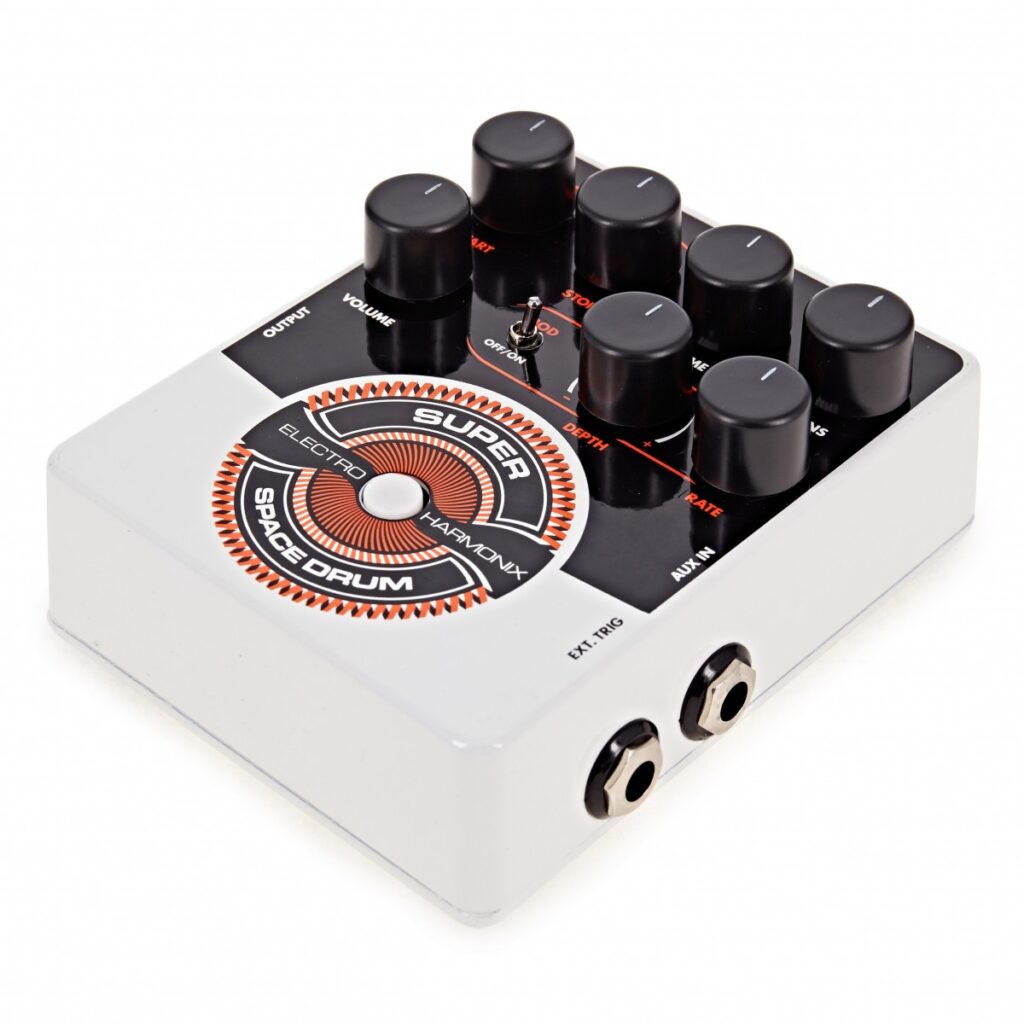
The original cult-classic revived. The Electro Harmonix Super Space Drum Analog Drum Synthesizer is a faithful reissue of the cult-classic released in 1979. The SSD uses analog synthesis techniques to create mind-blowing sounds ranging from deep kicks to high toms to sci-fi drums. Trigger it from the built-in pushbutton or an external (non-MIDI) electronic drum pad. Pass external sounds through the gated amplifier via the aux input. The EHX Super Space Drum lets you create control and manipulate a stunning array of synthesized sounds.
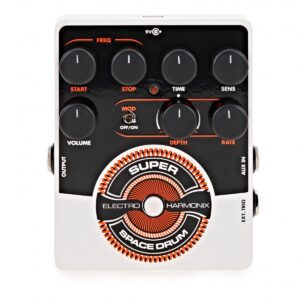
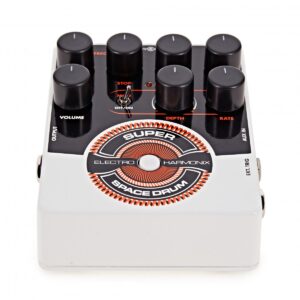
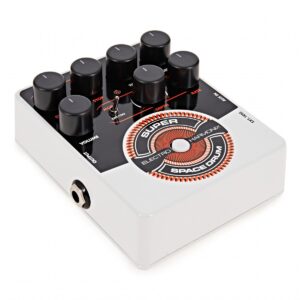
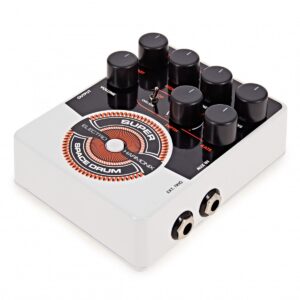
Electro Harmonix Super Space Drum Analog Drum Synthesizer
£138.00
This is a New Electro Harmonix Super Space Drum Analog Drum Synthesizer from Electro Harmonix, listed in Specialist Effects Pedals on Just Pedals. Read More below.
View Just Electro Harmonix
As an affiliate partner, we may earn a small commission when you buy through our links — at no extra cost to you.

Related videos

Brand
Electro Harmonix
Founded by Mike Matthews in New York City in 1968, Electro-Harmonix became known for inventive effects that brought new sounds within reach of guitarists. Its first product was the LPB-1 Linear Power Booster; the company’s long-running catalogue ranges from fuzz and overdrive to delay, modulation, octave and experimental processing. JustPedals listings include the Small Clone chorus, Small Stone phaser, Memory Boy delay, POG 2 octave generator and Micro Q-Tron envelope filter. Check the exact version and power requirements when comparing EHX models, since familiar names often span different generations and formats.
Category
Specialist Effects Pedals
Specialist effects alter the signal in ways that do not sit cleanly inside one established family. They may use granular processing, frequency shifting, resonators, freeze or sustain, bit reduction, ring modulation, feedback networks or combinations of several techniques. The relevant distinction is the underlying process, its tracking or latency, and how completely the dry signal can be blended or replaced.
Tags
Analogue
The signal is shaped by continuously varying electronic circuitry rather than being converted into a digital effect algorithm. Component choice, operating voltage and circuit tolerances influence headroom, noise, clipping texture and the small variations in response between designs.
MIDI
Sends, receives or responds to Musical Instrument Digital Interface messages rather than carrying the instrument audio itself. Program changes recall presets, continuous controllers move parameters, and MIDI clock or transport messages synchronise timing between devices.
Others Just Ordered :
- Mooer Meta FX – Review
- MOOER META FX Review: 3 Effects in 1—but Here’s the Problem

- I Wasn’t Expecting To Be Impressed – But What Is The Mooer Meta FX?

- Mooer // META FX Stereo Multi-Effect Platform (Demo)
- A NEW GENERATION OF PEDALS IS HERE – Mooer Meta FX Reverb Review

- Mooer META FX | All the REVERBS from subtle to WILD!