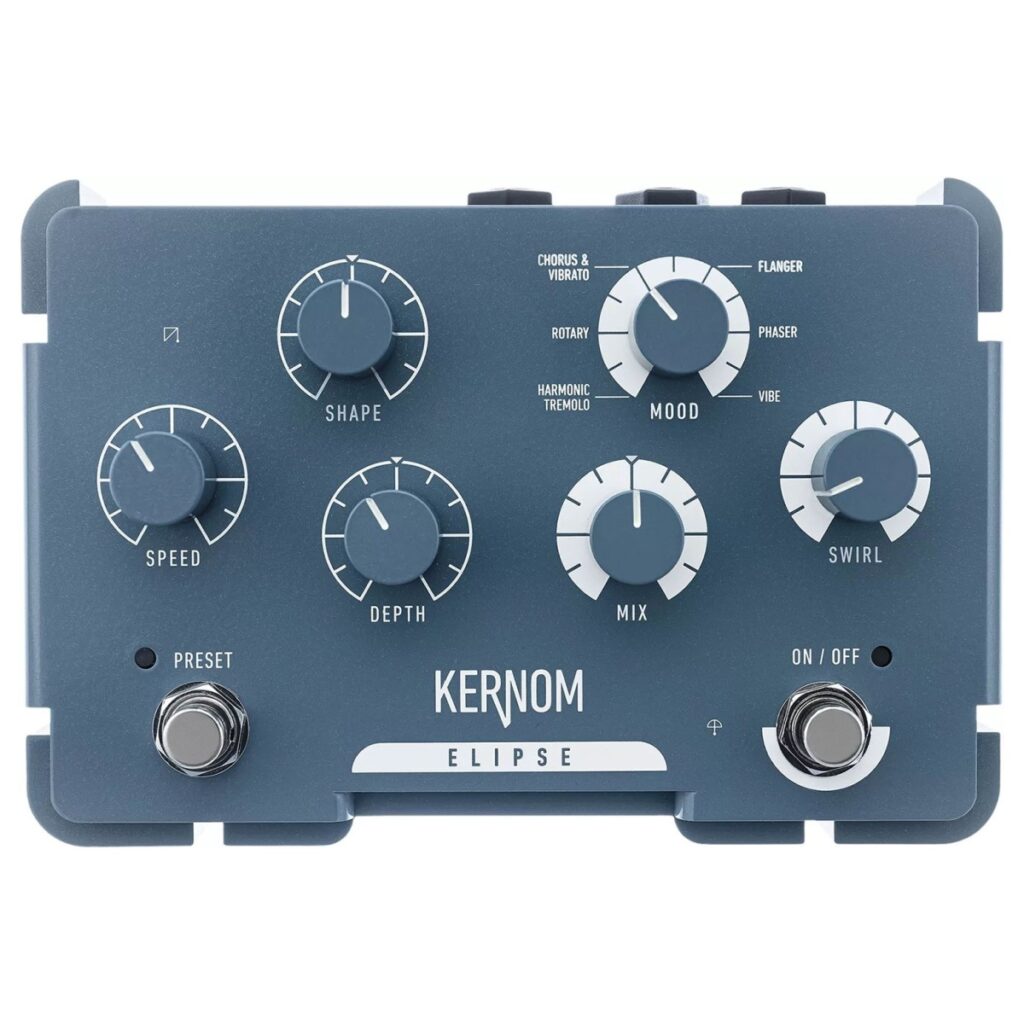
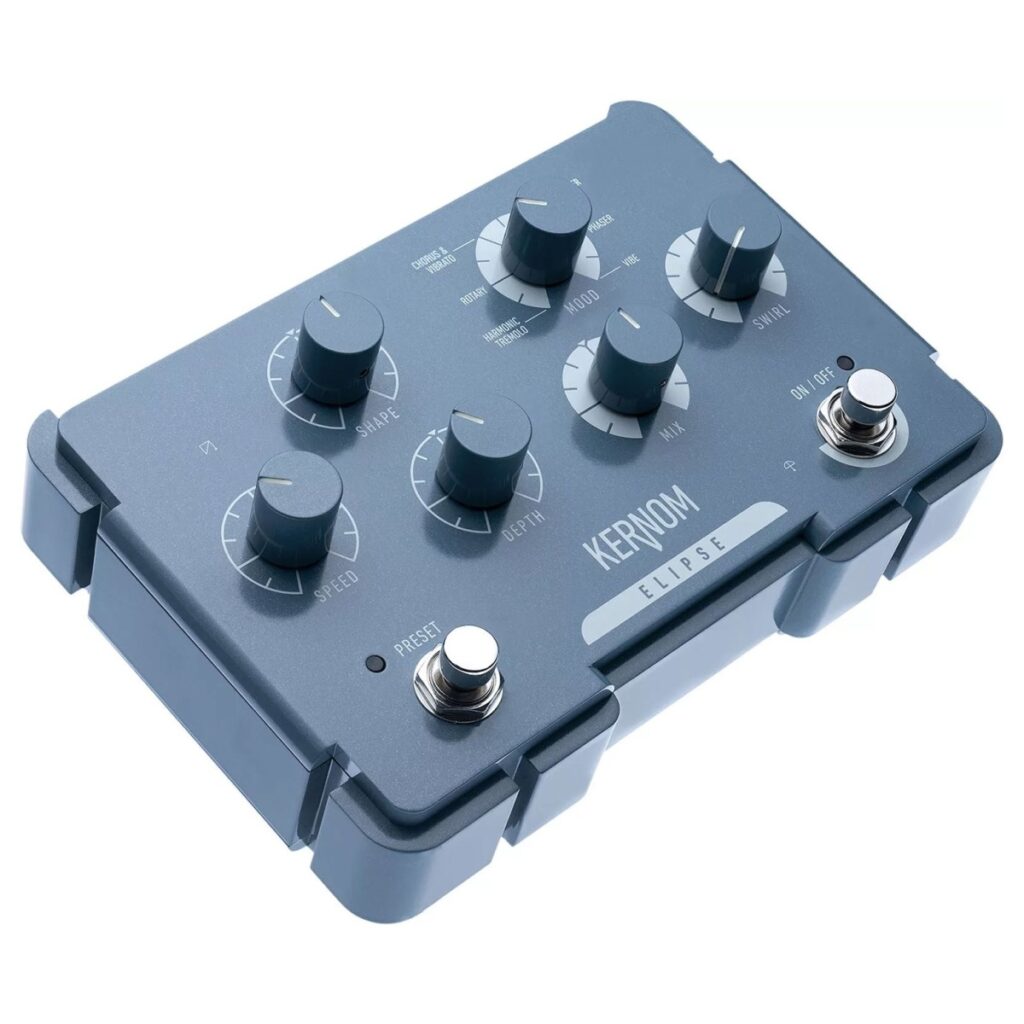
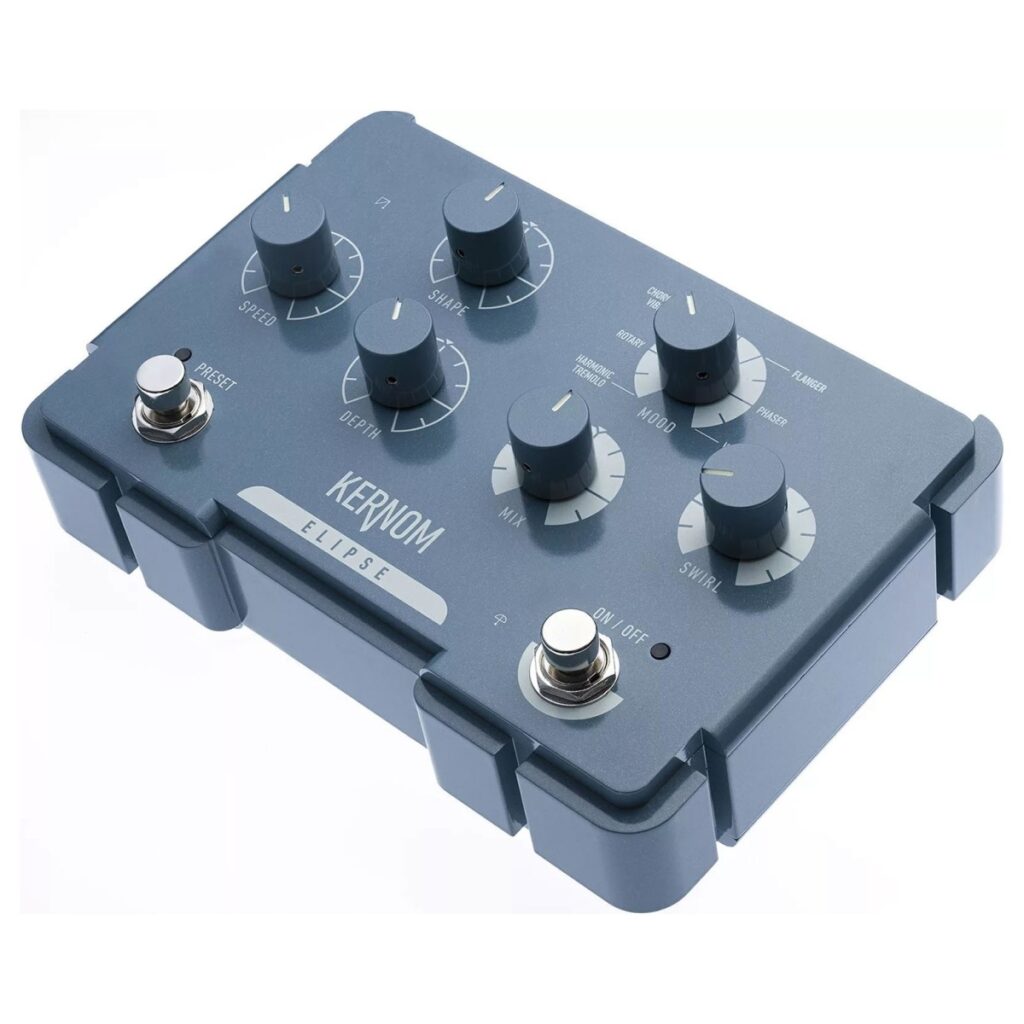
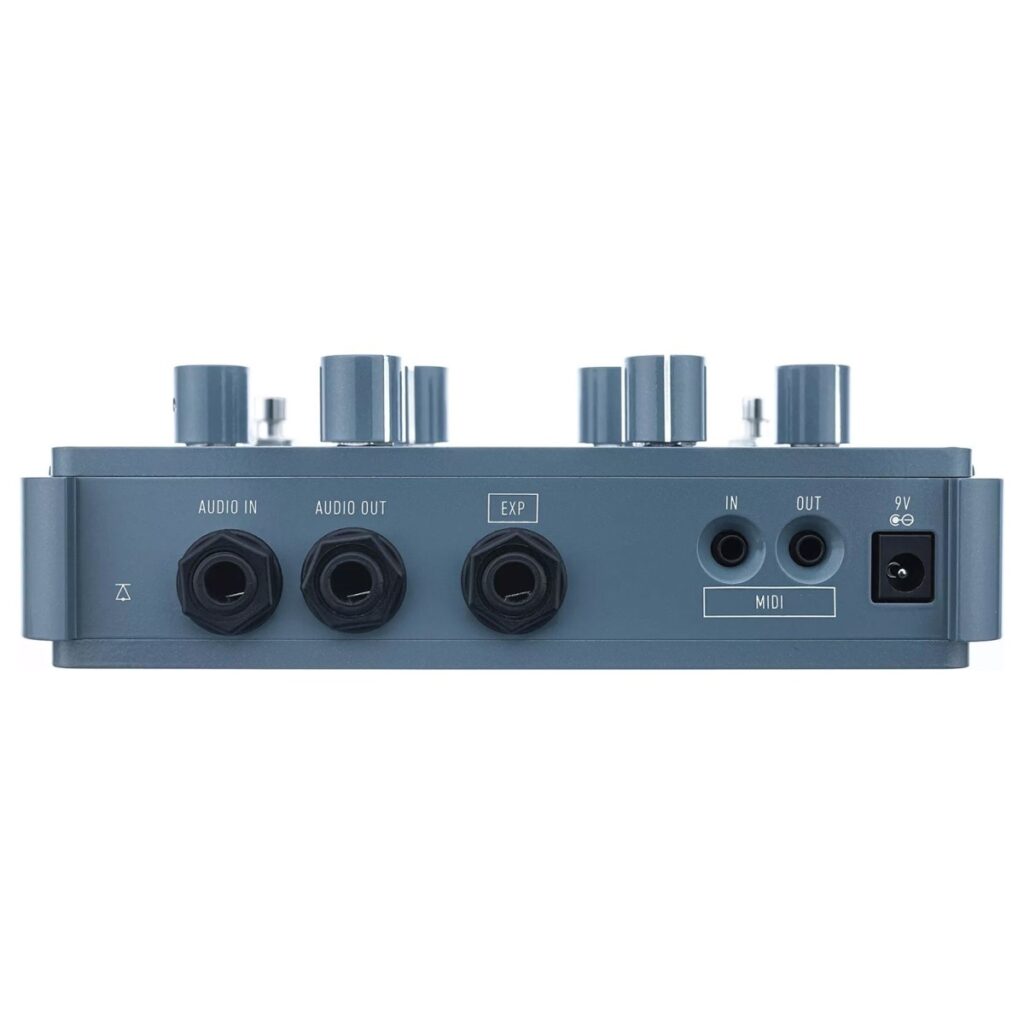
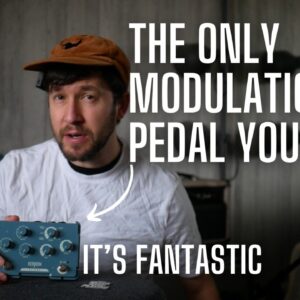
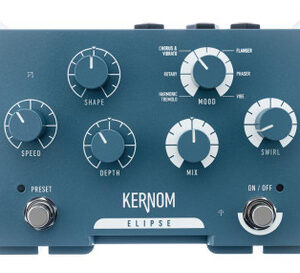
The Kernom Elipse Multi Modulation is a forward-thinking modulation pedal that blends analogue-style warmth with powerful digital control. Designed for both live performance and studio work it delivers a wide range of classic modulation effects while giving you the ability to shape and combine them in real time. From subtle movement and texture to bold swirling tones it adapts easily to different rigs and playing styles making it a highly versatile addition to any setup. At the heart of the Elipse is its unique MOOD control allowing you to move seamlessly between modulation types and create entirely new hybrid sounds. Full MIDI integration onboard preset switching and expression pedal support make it ideal for players who want both hands-on control and deep programmability. From syncing with a DAW to performing live it offers a flexible modern approach to modulation without sacrificing immediacy or feel.
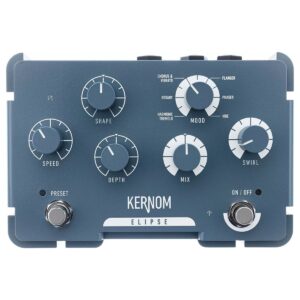
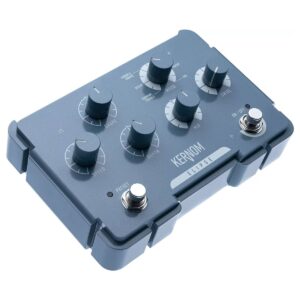
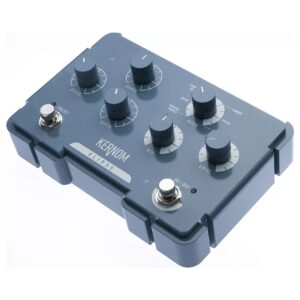
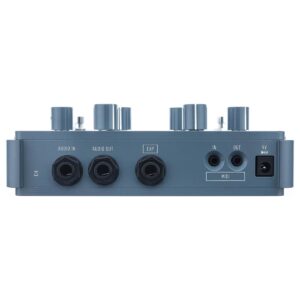
Kernom Elipse Multi Modulation
This is a New Kernom Elipse Multi Modulation from Kernom, listed in Modulation Pedals on Just Pedals. Read More below.
As an affiliate partner, we may earn a small commission when you buy through our links — at no extra cost to you.

Brand
Kernom
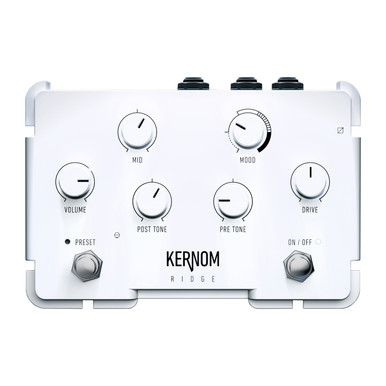
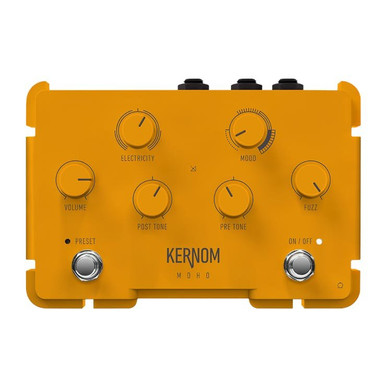
In the current JustPedals catalogue, Kernom is represented by Overdrive Pedals, Fuzz Pedals and Modulation Pedals. Current listings include Moho Fuzz, Ridge Overdrive and Elipse Multi Modulation. That makes the range relevant to players looking for drive, gain and clipping, plus modulation and movement. Check each model for its exact circuit or processing platform, controls, power requirements and connections, particularly where the catalogue includes both pedals and supporting gear.
Category
Modulation Pedals
Modulation pedals vary pitch, time, amplitude or phase to create movement around the dry sound. Chorus, flanger, phaser, tremolo, vibrato and rotary-style effects all sit in this broad group, but their controls and signal behaviour differ. Rate sets speed; depth, feedback, waveform, mix and stereo routing determine intensity and space. Decide whether the pedal should sit before or after drive and ambience, then check headroom, tap or MIDI control, mono compatibility and whether the effect leaves the dry signal intact.
Tags
Analogue
Analogue products use continuous audio circuitry for some or all of the signal path, so clipping, filtering or modulation arises from physical components rather than sampled algorithms. The label does not guarantee a particular tone; component choice, headroom, bias, noise and the surrounding gain stages still matter. Check whether the switching, presets, control section or cabinet stage is digital when the exact signal path is important.
Digital
Digital products use conversion and processing to create, store or control the effect. This can provide presets, complex routing, repeatable algorithms, USB, MIDI and firmware features, but conversion, latency, power requirements and clocking depend on the design. Check the input and output levels, sample or impulse-response support, bypass behaviour and current draw when combining a digital unit with analogue pedals or a direct recording setup.
Hybrid
Hybrid products combine analogue audio circuitry with digital control, conversion or processing. The useful question is which part of the signal path stays analogue and which functions—such as presets, filtering, modulation or USB—are handled digitally. This can provide hands-on response with modern recall, but latency, power and bypass behaviour vary. Check the signal path and routing rather than assuming the label describes the entire product.
MIDI
MIDI sends, receives or responds to Musical Instrument Digital Interface messages rather than carrying instrument audio itself. Program changes can recall presets, continuous controllers can move parameters and MIDI clock or transport messages can synchronise timing. Check the connector or USB method, channel and message support, clock direction, latency and whether the device needs a separate MIDI host or adapter. MIDI control is powerful, but compatibility depends on the exact messages each product understands.
Presets
Preset-capable products can store and recall effect settings, signal paths or control assignments. The useful differences are the number of locations, whether footswitches or MIDI can recall them, what parameters are saved, how quickly they change and whether trails continue between settings. Check editing, backup, firmware, expression and USB requirements, and confirm that the preset system covers the parameters you need rather than assuming every control is recalled.
Others Just Ordered :
- Mooer Meta FX – Review
- MOOER META FX Review: 3 Effects in 1—but Here’s the Problem

- I Wasn’t Expecting To Be Impressed – But What Is The Mooer Meta FX?

- Mooer // META FX Stereo Multi-Effect Platform (Demo)

- A NEW GENERATION OF PEDALS IS HERE – Mooer Meta FX Reverb Review

- Mooer META FX | All the REVERBS from subtle to WILD!