Brand
JOYO Technology is a Shenzhen music-gear company whose range goes well beyond stompboxes. Its official catalogue covers guitar and bass amplifiers, acoustic and busking amps, effects, power supplies, interfaces, wireless systems and accessories. JOYO also says it develops acoustic-core technology and has applied for utility patents. JustPedals listings include the JF-21 Splinter distortion and JF-319 Green Legend overdrive, alongside mini amps and power adapters. That breadth matters when comparing products under the JOYO name: some are effects, while others support the rest of a guitar or bass rig.
Category
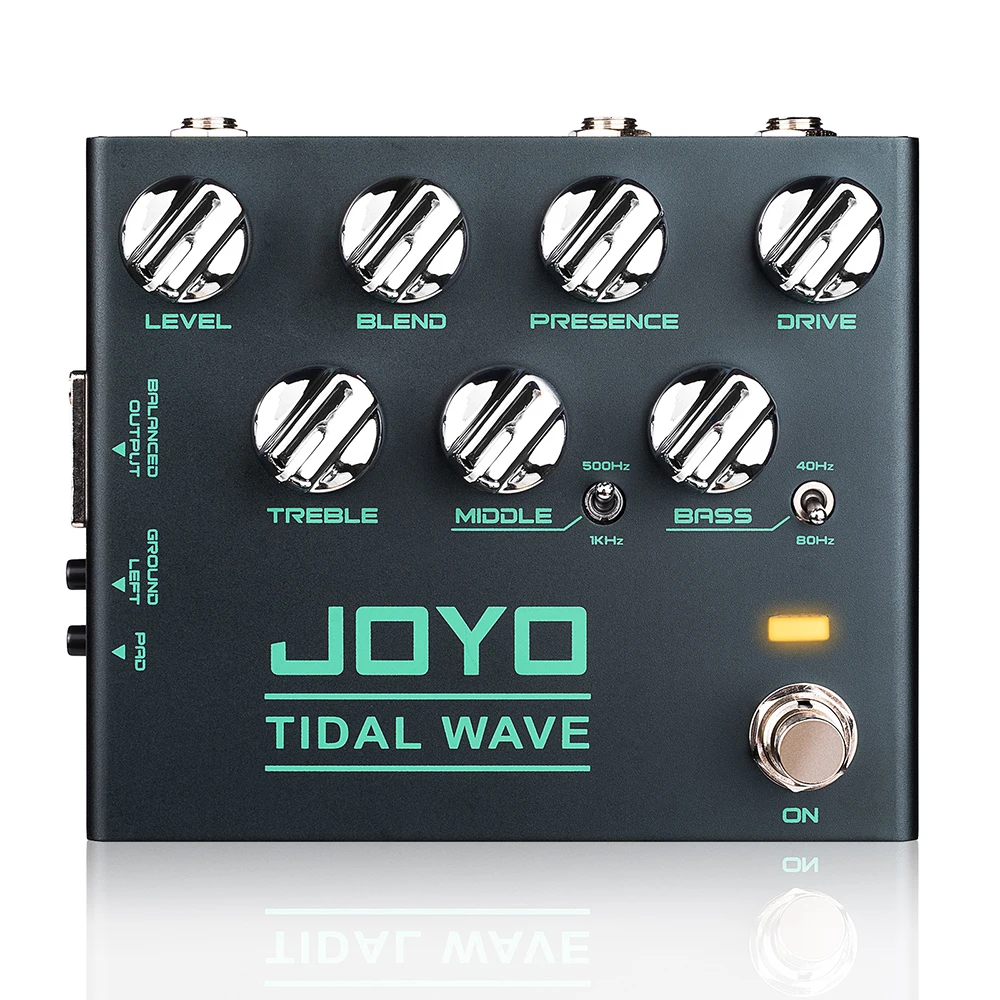
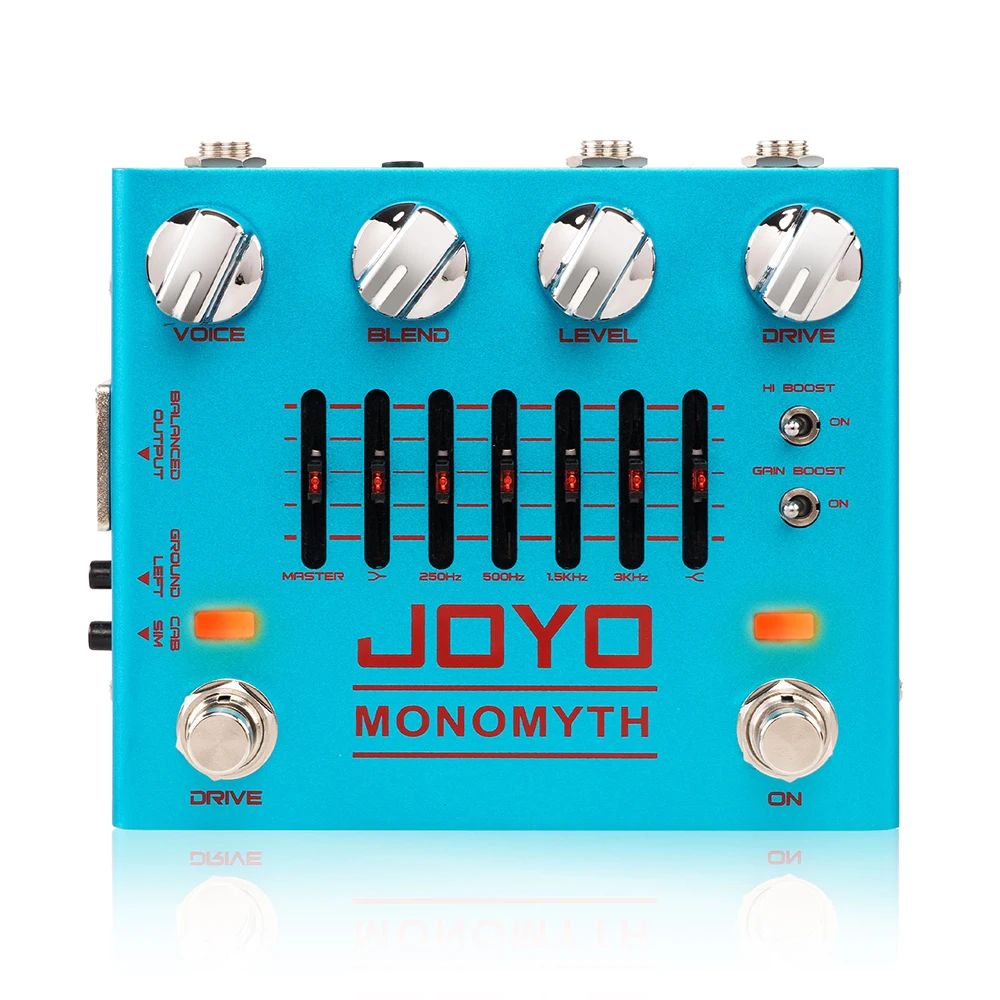
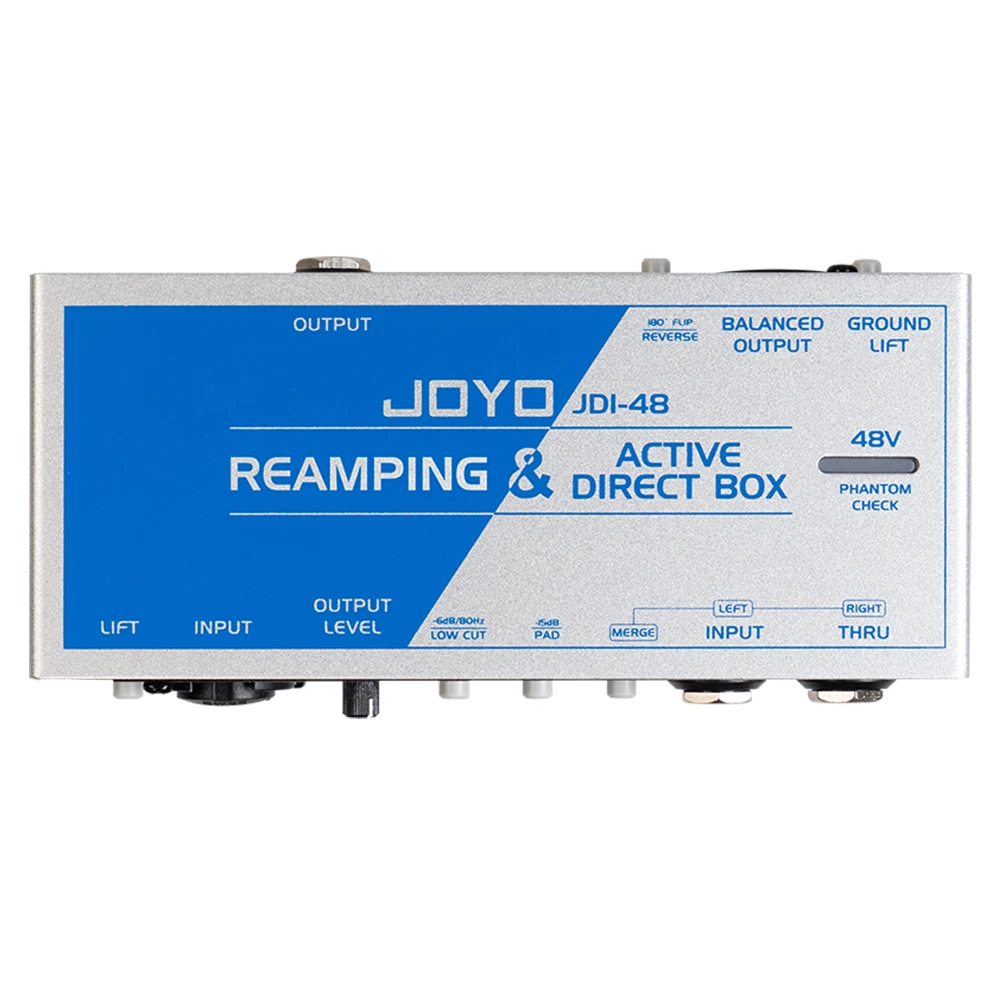
A preamp brings an instrument signal to a controlled level and shapes its impedance, gain and frequency balance before amplification or recording. A DI converts the signal for a balanced, low-impedance connection and may include ground lift, pad and transformer isolation. Combined units can add drive, cabinet filtering, effects loops and parallel outputs while keeping the direct path stable.
Tags
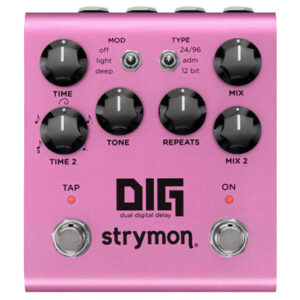
Creates one or more time-separated copies of the signal. Delay time sets their spacing, feedback determines how many repeats continue, and filtering, modulation or saturation decides whether successive echoes remain clean, darken, wobble or break apart.
Converts the signal or control process into numerical data for algorithmic processing. Digital designs can provide precise timing, long memory, complex routing and repeatable presets; sample rate, conversion, internal resolution and latency influence fidelity and response.
Convolves the signal with an impulse response, a captured measurement of a cabinet, speaker, microphone, room or other linear system. File length, sample rate, latency, storage and routing determine the detail of the captured response and how flexibly it can be combined.
Records audio into a repeating cycle and permits new layers to be overdubbed over it. Maximum loop time, track count, undo depth, storage and synchronisation define how the layers can be built, corrected and aligned.