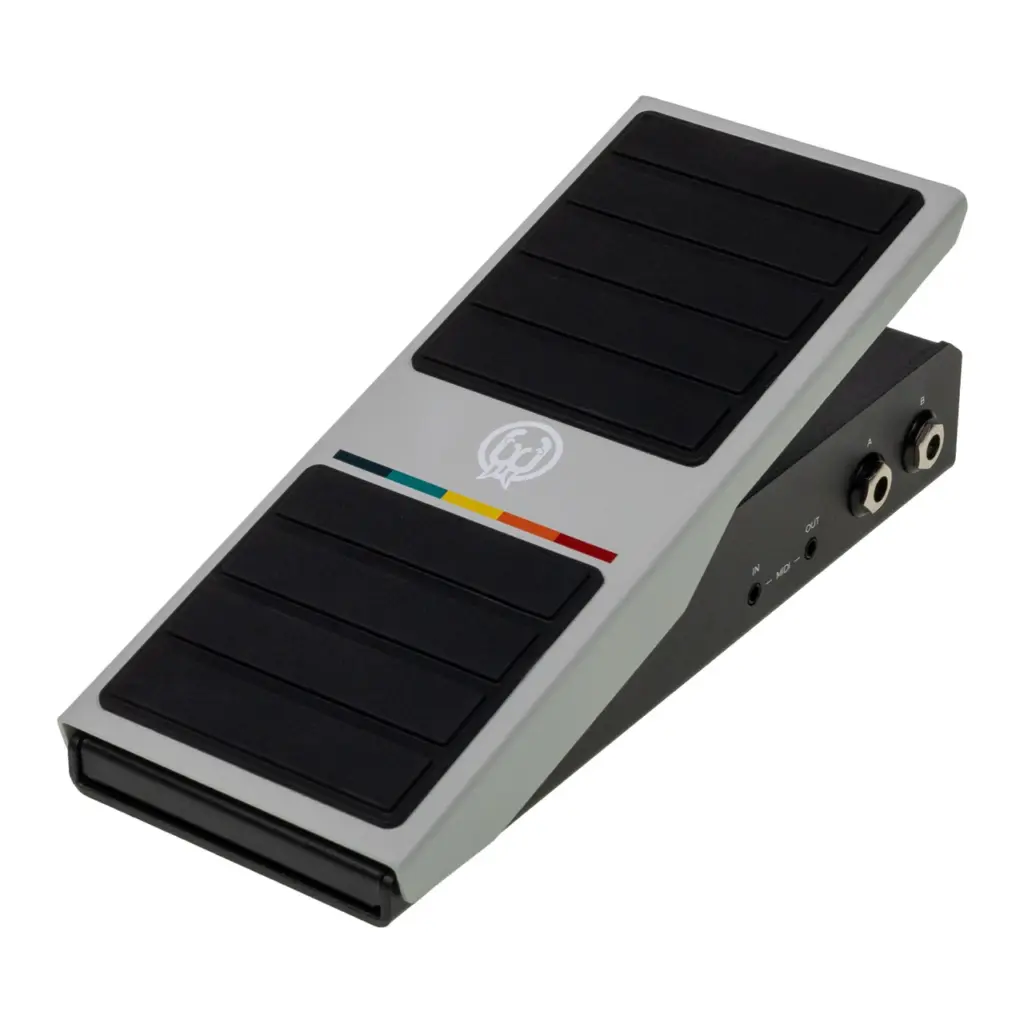



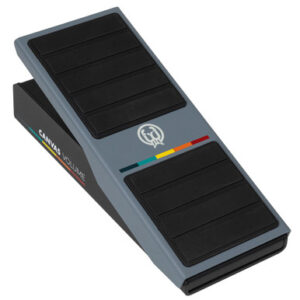
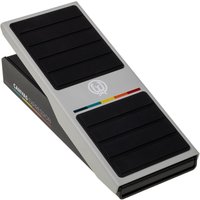
Walrus Audio Canvas Expression is a next generation expression pedal designed to be the central control hub for modern rigs. With two fully independent outputs that can each act as expression, switch, or control voltage, plus deep MIDI control over USB-C and ⅛” TRS, it replaces multiple single-purpose controllers with one compact, highly configurable unit. Whether you are morphing delay repeats, sweeping filter cut-offs, switching presets mid-song, driving modular synths or automating plug-in parameters in your DAW, Canvas Expression adapts to the gear you already own. Automatic wiring detection, adjustable tapers and treadle feel, and an intuitive web editor make it quick to set up and easy to reconfigure as your rig evolves. Dual Independent Outputs At the heart of Canvas Expression are Jack A and Jack B, which can be configured completely independently. Each output can operate as a traditional expression output, a programmable switch output, or a control voltage source, so you can control two totally different devices at once from a single treadle. From pedals and amps to synths and modular systems, it lets you streamline your board without sacrificing control. Universal Expression Compatibility Canvas Expression is designed to work with a wide range of expression-enabled hardware. It supports TRS, RTS and TS resistance modes, and uses automatic wiring detection to remove the guesswork. Adjustable tapers and forward or reverse sweep direction let you dial in exactly how the pedal responds underfoot, so your swells, sweeps and fades feel natural with any connected device. MIDI Command Centre Beyond analogue control, Canvas Expression becomes a powerful MIDI controller. It can send up to 16 independently assignable MIDI messages over both USB-C and TRS MIDI, including Control Change and Program Change commands. Use the dedicated web editor to assign smooth, high resolution parameter sweeps or instant preset jumps across pedals, processors, DAWs, virtual instruments and plug-ins, all from one pedal. Fine Tuned Feel and Fast Setup Canvas Expression is built to integrate quickly and stay out of your way once configured. Onboard controls and the Canvas web app make it simple to adjust switch behaviour, TS resistance values, global settings and more, while firmware updates keep it current. A straightforward treadle tension adjustment lets you choose a lighter or firmer sweep to suit your playing style, from subtle ambience control to aggressive filter rides. Key Features Dual Independent Outputs – Jack A and Jack B can each be set as expression, switch, or control voltage outputs, allowing you to control two completely different devices at the same time. This flexibility means one pedal can cover jobs that would normally require multiple dedicated controllers. Universal Expression Compatibility – Support for TRS, RTS and TS resistance modes, combined with automatic wiring detection, ensures quick, reliable setup with a wide variety of pedals and devices. Adjustable tapers and sweep direction let you tailor the response so every movement of the treadle translates musically. Programmable Switch and CV Control – Each output can be assigned as a switch output with momentary or latching operation, selectable heel, middle or toe activation points, and forward or reverse triggering. Alternatively, generate control voltage in selectable ranges such as 0–5 V or 0–3.3 V, ideal for Eurorack, desktop synths and CV enabled effects. Deep MIDI Integration with Web Editor – Send up to 16 MIDI messages over USB-C and TRS, including CC and PC, with high resolution 14 bit USB MIDI support. The Canvas Expression web editor lets you configure MIDI assignments, switch behaviour, TS resistance values, global settings and firmware updates in seconds, making it easy to integrate into both hardware and software based setups. SpecificationsControl Modes Dual independent outputs (Jack A and Jack B) Expression output mode Switch output mode Control Volt…



Walrus Audio Canvas Expression Pedal
This is a New Walrus Audio Canvas Expression Pedal from Walrus Audio its found in our Expression Pedals on the Just Pedals menu. Read More below.
As an affiliate partner, we may earn a small commission when you buy through our links — at no extra cost to you.
Related videos

Brand
Walrus Audio
Walrus Audio describes itself as a collective of artists, musicians and engineers, bringing circuit design together with distinctive pedal artwork. The company says its effects are hand-built and manufactured in the USA. JustPedals listings illustrate the variety: ARP-87 multi-function delay, Slö ambient reverb, Julia analog chorus and vibrato, and Polychrome flanger. Some models focus on direct, compact controls, while others provide broader modulation or atmospheric textures. Compare each model’s modes, stereo connections and control options; the artwork is a signature of the brand, while the circuit determines how it fits a rig.
Category
Expression Pedals
An expression pedal converts foot movement into a control signal rather than processing audio directly. It can sweep parameters such as delay time, modulation depth, pitch or volume on compatible equipment. Potentiometer value, wiring polarity, connector type and minimum-range controls must match the receiving device; some models provide multiple outputs or programmable MIDI control instead of a passive resistance.
Tags
MIDI
Sends, receives or responds to Musical Instrument Digital Interface messages rather than carrying the instrument audio itself. Program changes recall presets, continuous controllers move parameters, and MIDI clock or transport messages synchronise timing between devices.
Presets
Stores complete groups of parameter values for later recall. The number of locations, switching time, spillover behaviour and whether presets include routing, expression and MIDI assignments determine how completely one sound can change into another.
USB
Provides a Universal Serial Bus connection for power, audio, MIDI, firmware or editing data. The supported USB class and connector do not by themselves show its purpose; channel count, sample format, host compatibility and power demand define the actual function.
Others Just Ordered :
- I Love A Happy Accident… – Animals Pedal

- Animals Pedal Vintage Van Driving is Very Fun Overdrive
- Animals Pedal Sunday Afternoon Is Infinity Bender
- Ninevolt Pedals | Bath Time Reverb (Animals Pedal)
- This Fuzz Pedal Makes No Sense… But It Sounds Incredible

- ANIME Pedals | Animals Pedal Custom Illustrated Series