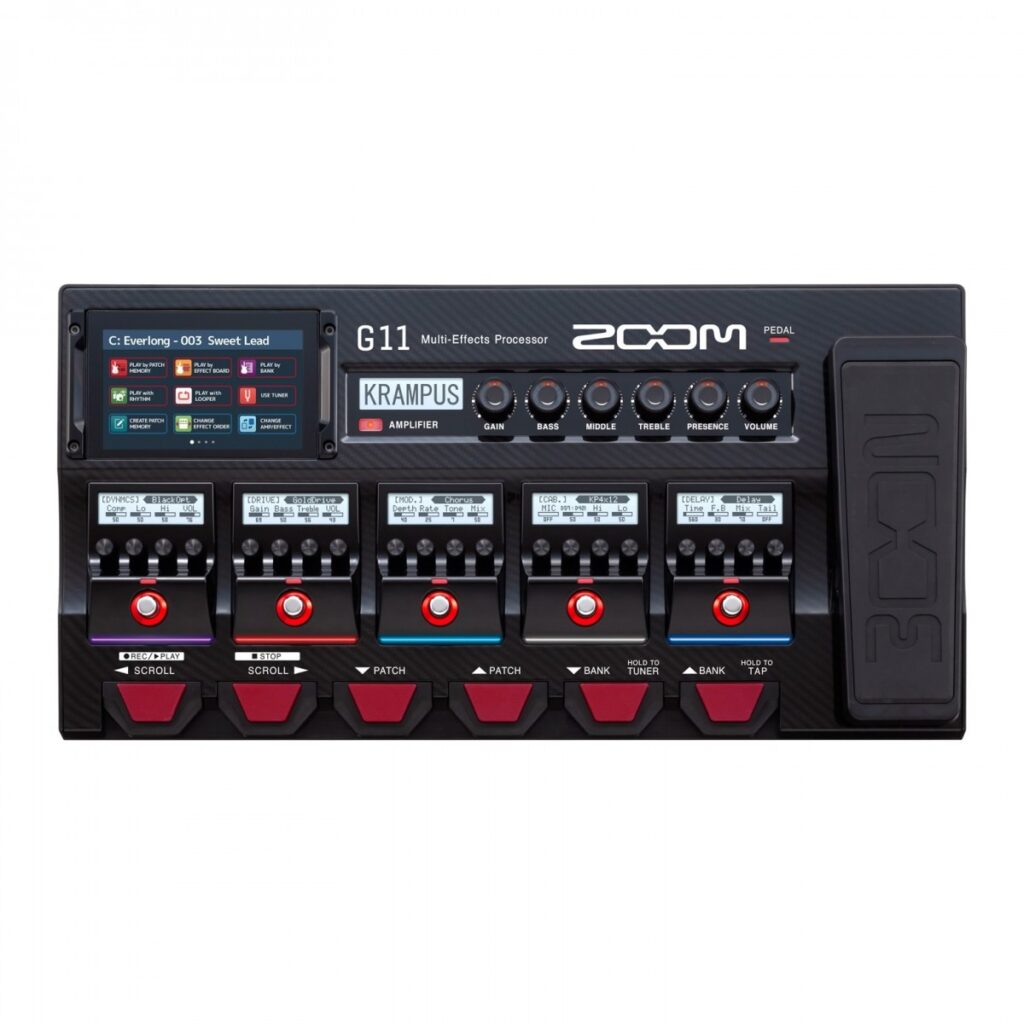
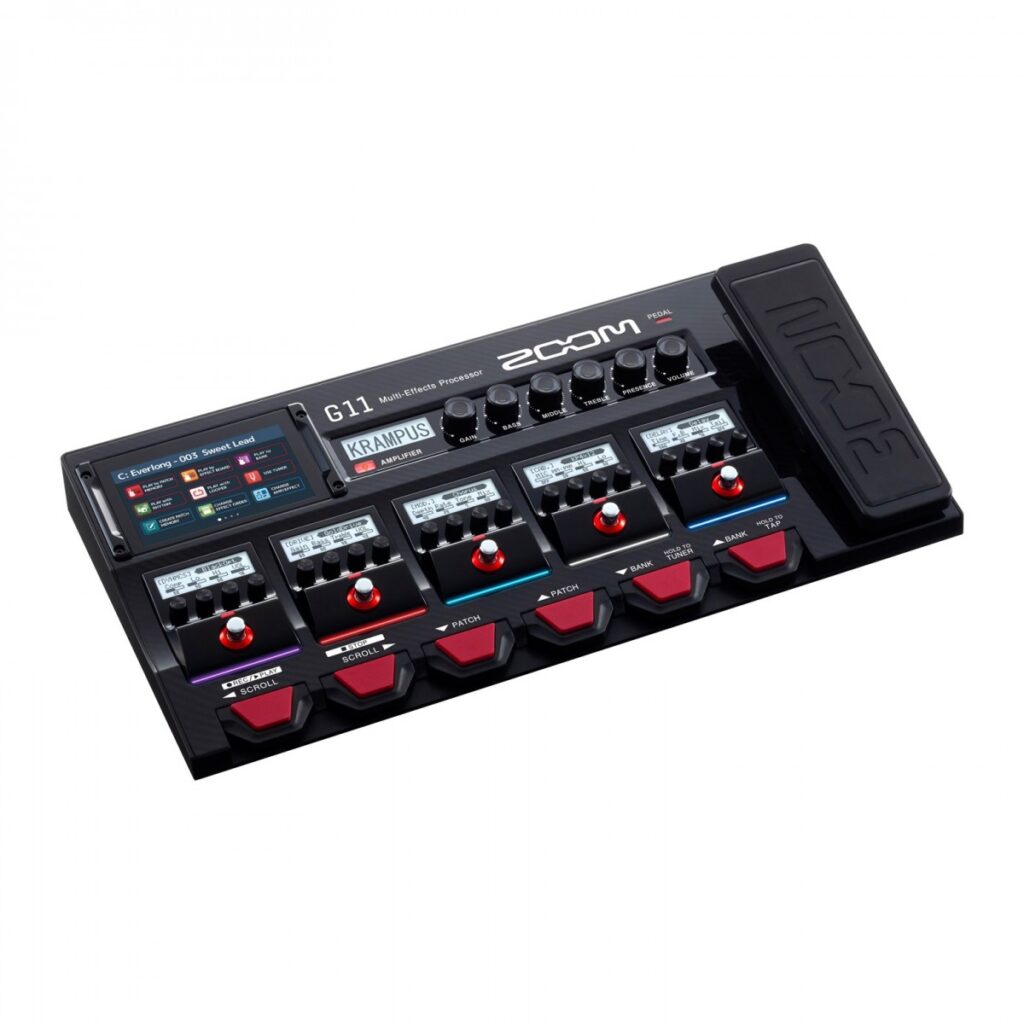
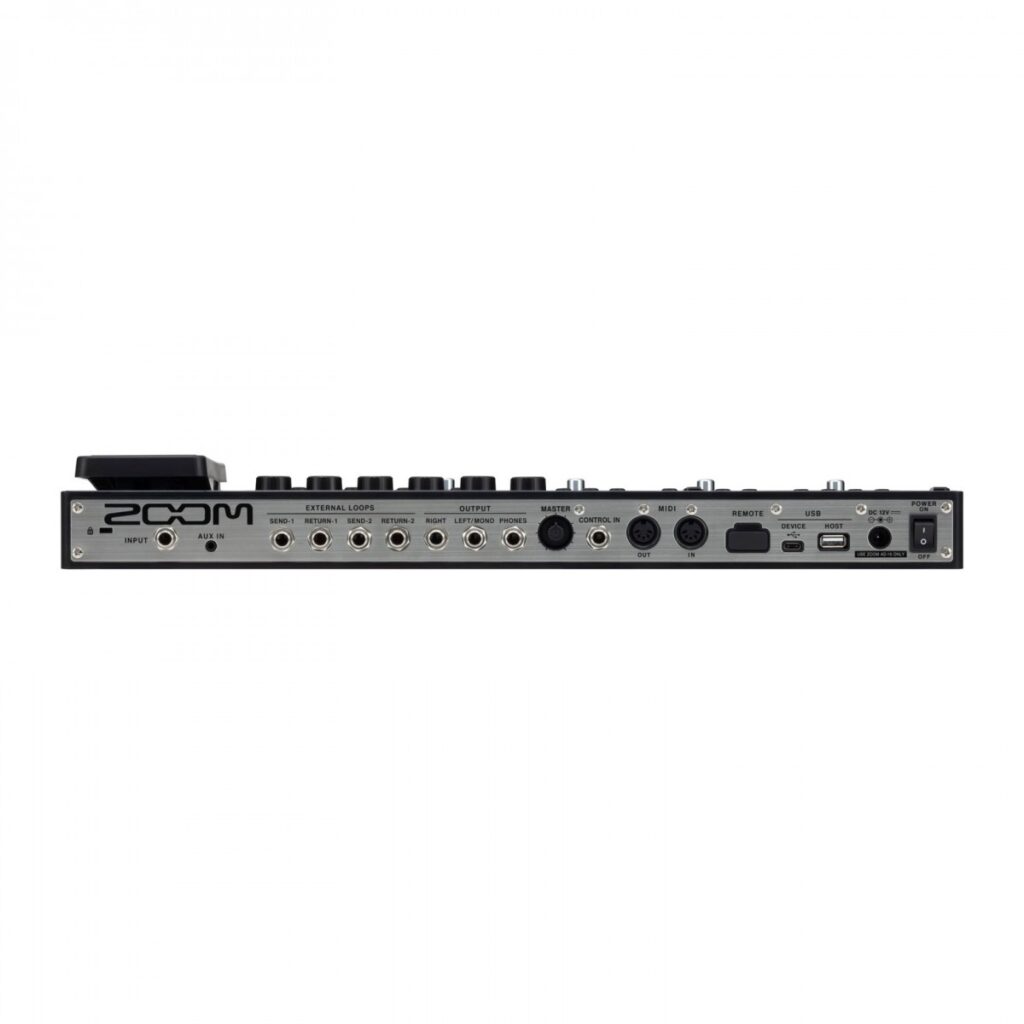
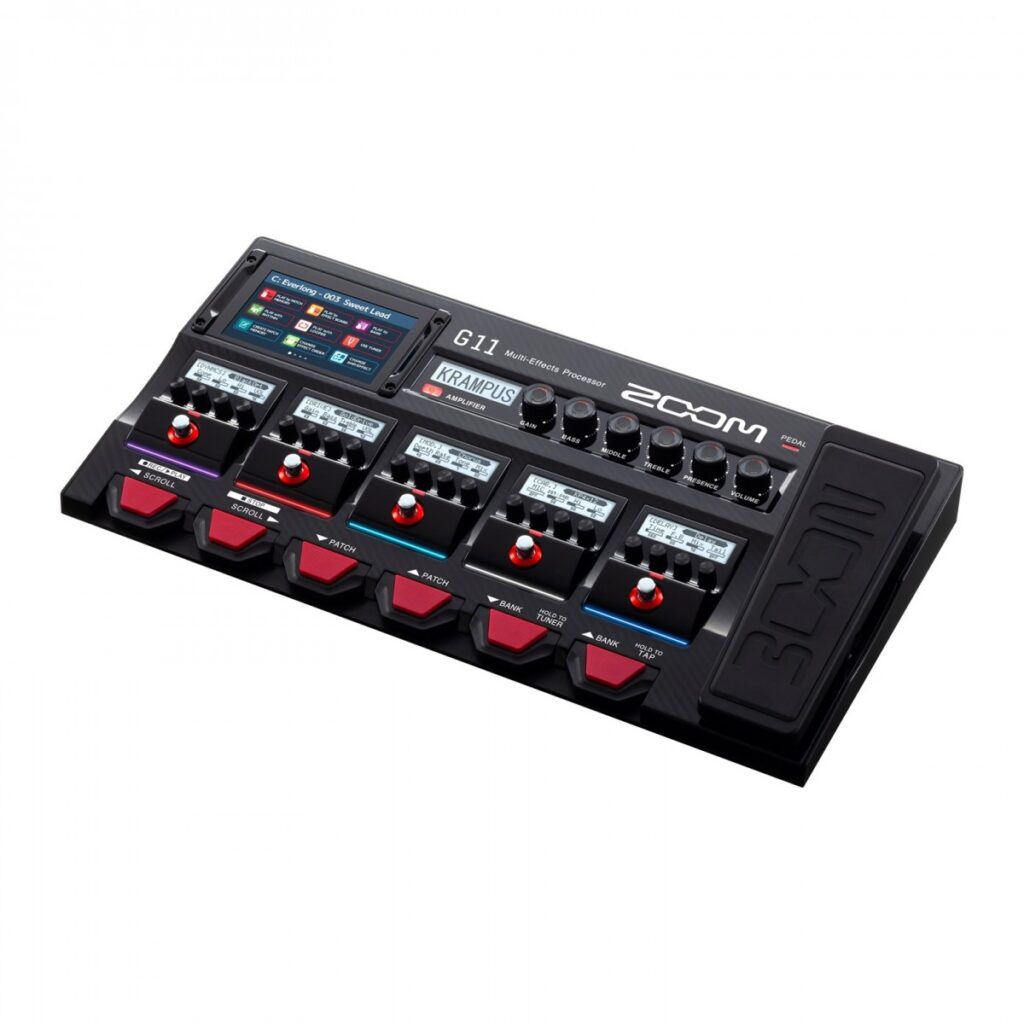
The Zoom G11 Multi Effects Processor is more than just a pedalboard; this flagship multi-effects processor provided endless creative potential. Boasting 22 meticulously recreated cabinet emulations and 70 pre-loaded full impulse response data; so you can tap into any sound and style you can think of. The G11 also features brand new distortion and modulation effects providing an infinite number of tonal variations. Navigating between settings effects and cab emulations is made easy thanks to the crisp 5-inc colour touchscreen. You can drag and drop different effects and functions to achieve the sound you desire with minimal effort. The pedalboard also features classic stompbox-style control for hands-free operation. One of the most unique features of the G11 is the onboard five-minute looper – perfect for solo musicians. Its a revolutionary tool for live performance allowing you to stack multiple layers together to create full songs. You can incorporate external mono/stereo effects or build parallel audio chains using the MIDI connectivity for send effects. Not only is it a powerful multi-effects processor the Zoom G11 also doubles up as a versatile audio interface allowing you to record directly into your favourite DAW (digital audio workstation) via the USB connection.
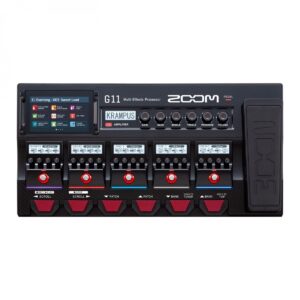
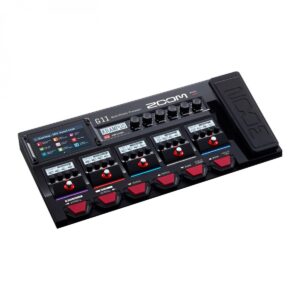
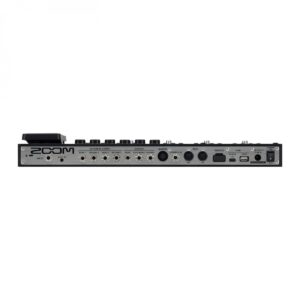
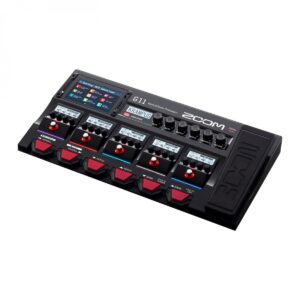
Zoom G11 Multi Effects Processor
This is the Zoom G11 Multi Effects Processor from Zoom, listed in Multi-Effects Pedals on Just Pedals. Read More below.
As an affiliate partner, we may earn a small commission when you buy through our links — at no extra cost to you.
Related videos
Brand
Zoom
Category
Multi-Effects Pedals
A multi-effects processor combines several effect algorithms and signal-routing stages in one unit. Its sound depends not only on the individual models but on their order, parallel or serial routing, processing resolution and available control. Preset structure, switching gaps, foot control, expression assignment, amp or cabinet modelling, USB audio and MIDI determine how completely the processor can replace separate pedals.
Tags
Digital
Converts the signal or control process into numerical data for algorithmic processing. Digital designs can provide precise timing, long memory, complex routing and repeatable presets; sample rate, conversion, internal resolution and latency influence fidelity and response.
IR Loader
Convolves the signal with an impulse response, a captured measurement of a cabinet, speaker, microphone, room or other linear system. File length, sample rate, latency, storage and routing determine the detail of the captured response and how flexibly it can be combined.
MIDI
Sends, receives or responds to Musical Instrument Digital Interface messages rather than carrying the instrument audio itself. Program changes recall presets, continuous controllers move parameters, and MIDI clock or transport messages synchronise timing between devices.
Stereo
Processes, creates or passes two audio channels. True stereo preserves separate left and right inputs, while mono-to-stereo effects generate spatial differences internally; routing, phase behaviour and whether trails remain stereo determine the resulting image. Some outputs sum to mono when only one socket is connected, which can change level or modulation depth.
USB
Provides a Universal Serial Bus connection for power, audio, MIDI, firmware or editing data. The supported USB class and connector do not by themselves show its purpose; channel count, sample format, host compatibility and power demand define the actual function.
Others Just Ordered :
- Electro-Harmonix PICO DEEP FREEZE Sound Retainer / Sustainer (EHX Demo by JON SKIBIC)
- Electro-Harmonix SPRUCE GOOSE Overdrive (EHX Demo by TOM BURDA)
- Electro-Harmonix Octavix Octave Fuzz Pedal (Demo by Bill Ruppert)

- Electro-Harmonix Superego+ Synth Engine / Multi-Effect Pedal (Demo by Bill Ruppert)
- EHX Pico Series! Classic Pedals In a Micro Format!

- Electro Harmonix Pedals You Have Never Heard Of