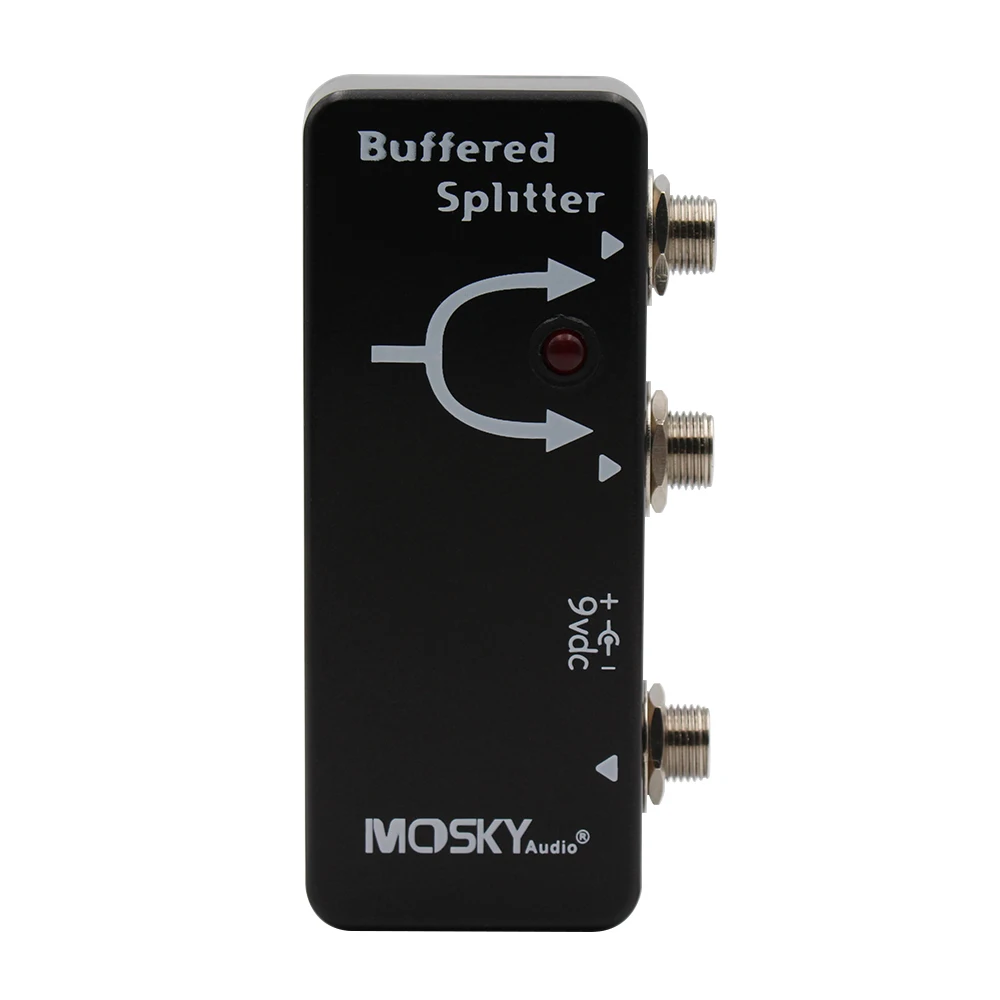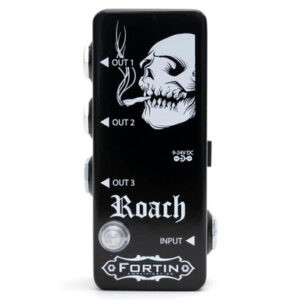
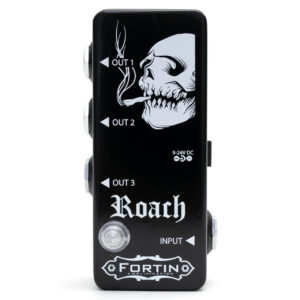
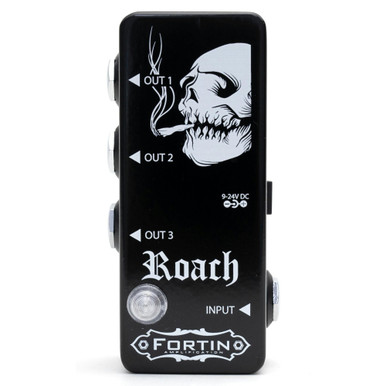
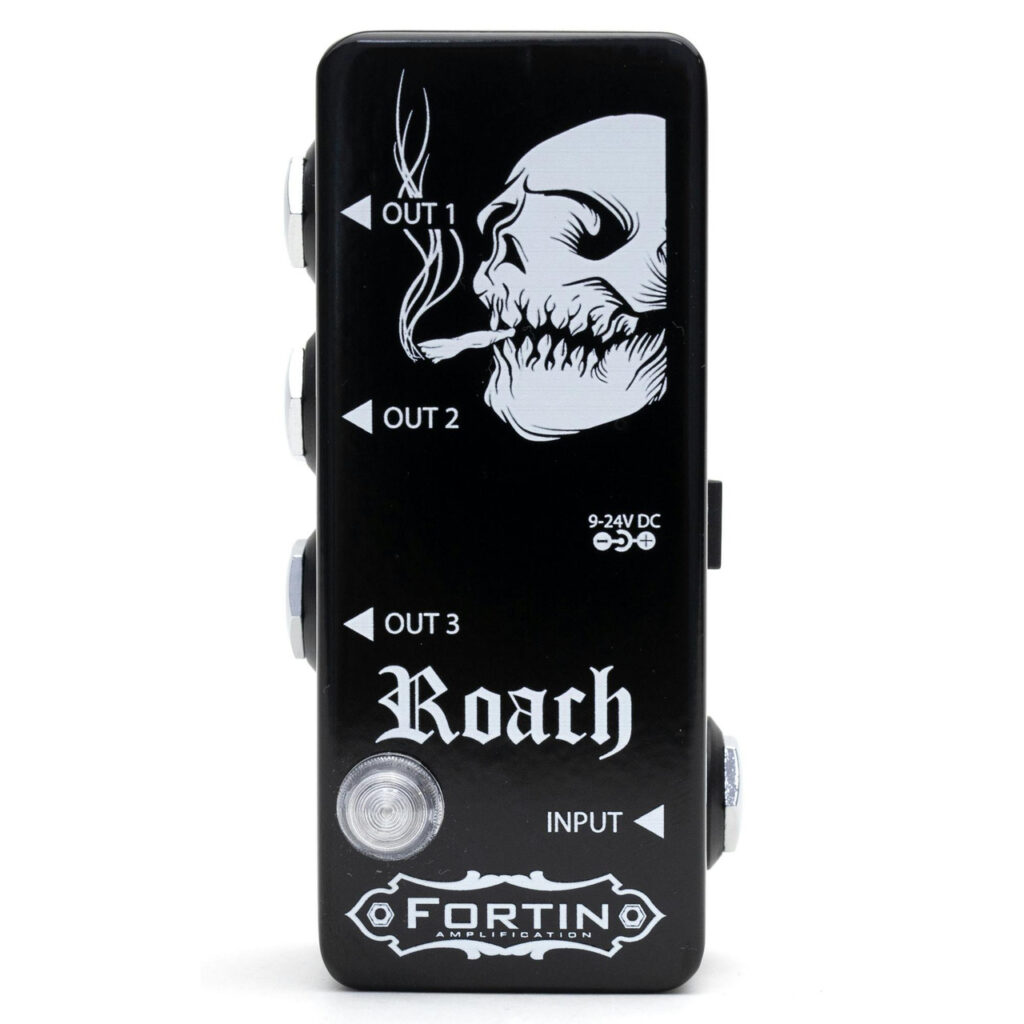
Fortin Amplification Roach 3-Way Buffered Splitter Pedal

£129.99

This is a New Fortin Amplification Roach 3-Way Buffered Splitter Pedal from Fortin is in our Specialist Effects Pedals category on Just Pedals. Read More below.

View Just
more

About Fortin Amplification

Fortin Amplification is a familiar name among guitarists that really "know" about tone. Alongside its custom handbuilt amp offerings, the company also produces a number of premium guitar pedals using only the finest components available.

Here's what Fortin Amplification says about the Roach 3-Way Splitter Pedal:

The ROACH is a mini sized 3-way splitter discrete Class-A buffered outputs. Due to its size, only powers via the DC inlet and has a  wide acceptance, 9-24vdc. MOSFET input protects if the wrong orientation adaptor is connected, no more damage internally. LED is clear high-bright green. Proudly made in North America.

Specifications

  • Pedal size (W/D/H): 3.642″(92.51mm) x 1.516″(38.51mm) X 1.220″(30.99mm)
  • Shipping Weight: 250g
  • DC Adapter (not included): 9-24VDC, Center Pin Negative (Regulated) 
  • Power supply only, no battery operation
  • Current draw: @9VDC ~ 4mA
  • Input ~1M / Output ~10K min. load
  • Frequency response: 20hz to 20khz
  • Max output: +9dBm(9VDC), +18dBm(24VDC)
Brand

Fortin

In the current JustPedals catalogue, Fortin is represented by Noise Gate Pedals, Boost Pedals and Preamp & DI Pedals. Current listings include Fuzz, Zuul Blackout and Zuul+ Noise Gate. That makes the range relevant to players looking for drive, gain and clipping, plus modelling, direct rigs and multi-effects. Check each model for its exact circuit or processing platform, controls, power requirements and connections, particularly where the catalogue includes both pedals and supporting gear.

Category

Specialist Effects Pedals

Specialist effects alter the signal in ways that do not sit cleanly inside one established family. They may use granular processing, frequency shifting, resonators, freeze or sustain, bit reduction, ring modulation, feedback networks or combinations of several techniques. The relevant distinction is the underlying process, its tracking or latency, and how completely the dry signal can be blended or replaced.