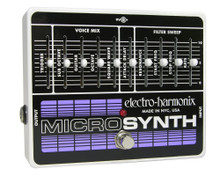
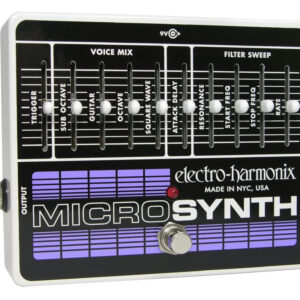
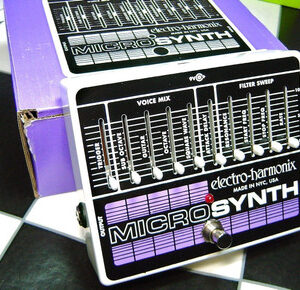
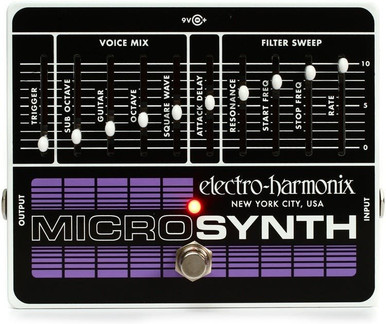
Electro Harmonix Micro Synthesizer Pedal

£279.00

This is a New Electro Harmonix Micro Synthesizer Pedal from Electro Harmonix is in our Synth Pedals category on Just Pedals. Read More below.

View Just
more
and

ELECTRO HARMONIX MICRO SYNTHESIZER

Analog synth for guitar From the classic vintage sounds of the great early Moog synthesizer to wild custom creations, the Micro Synthesizer for Guitar lets the player create those fat analog synthesizer sounds heard on records by everyone from George Clinton to the Police to the Chemical Brothers.

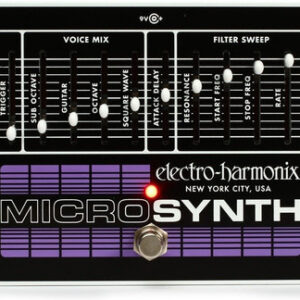
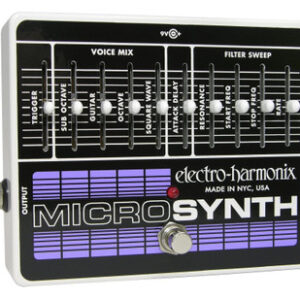
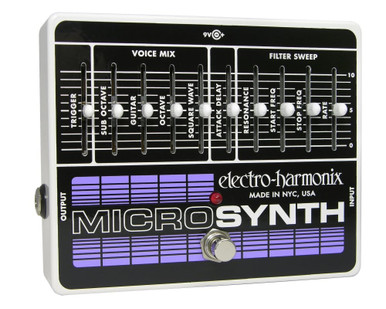
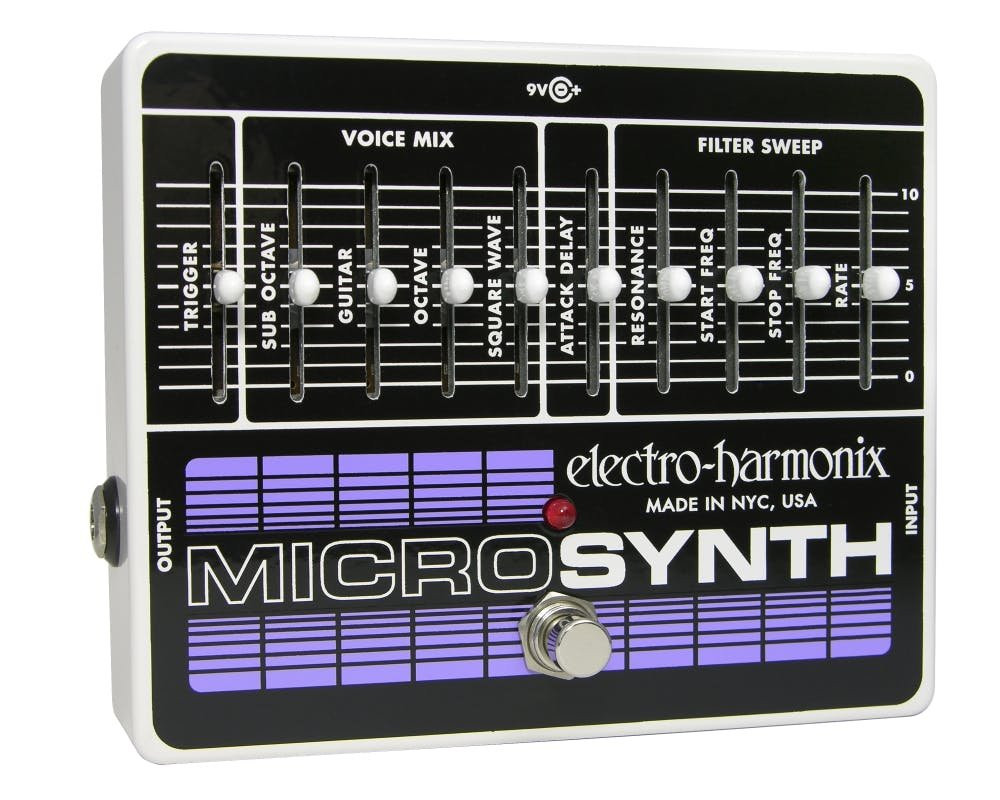
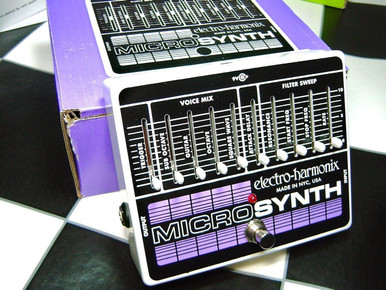
The compact layout of ten slider controls lets the sonically adventurous guitarist dial in a virtually limitless array of analog synthesizer sounds.

The reissue of the vintage Electro-Harmonix Guitar Micro Synth pedal lets you produce analog synth sounds with your guitar.

10 slider controls shape your sound. 4 independent and mixable voices are modified by a filter section, enabling you to produce and control an almost limitless variety of colors, including resonant filter sweeps.

You’ll agree, the Electro-Harmonix Guitar Micro Synth is a classic.

  • Power Supply is included

Related videos

Brand

Electro Harmonix

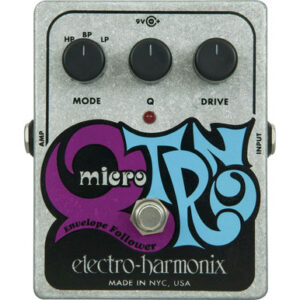
Founded by Mike Matthews in New York City in 1968, Electro-Harmonix became known for inventive effects that brought new sounds within reach of guitarists. Its first product was the LPB-1 Linear Power Booster; the company’s long-running catalogue ranges from fuzz and overdrive to delay, modulation, octave and experimental processing. JustPedals listings include the Small Clone chorus, Small Stone phaser, Memory Boy delay, POG 2 octave generator and Micro Q-Tron envelope filter. Check the exact version and power requirements when comparing EHX models, since familiar names often span different generations and formats.

Category

Synth Pedals

A synth pedal analyses an instrument signal and uses it to control generated oscillators, filters and envelopes. Unlike ordinary distortion, the output may replace the original waveform with a distinctly electronic voice. Tracking mode, pitch range, envelope response, filter movement, polyphony and dry blend determine how accurately the synthesis follows playing dynamics and whether the result behaves as bass, lead, pad or texture.

Tags

Analogue

The signal is shaped by continuously varying electronic circuitry rather than being converted into a digital effect algorithm. Component choice, operating voltage and circuit tolerances influence headroom, noise, clipping texture and the small variations in response between designs.