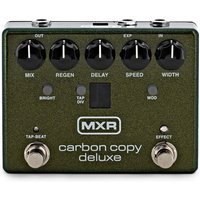
MXR Carbon Copy Deluxe

£249.00

This is the MXR Carbon Copy Deluxe from MXR, listed in Specialist Effects Pedals on Just Pedals. Read More below.

View Just
more
and ,

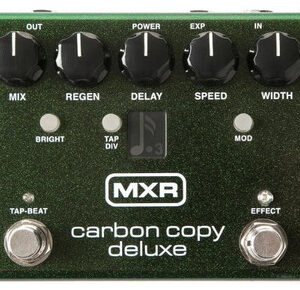
The Carbon Copy Deluxe is the delay that we’ve all been waiting for! The Carbon Copy is already a firm favourite in the guitar pedal world and this Deluxe version just gives you that much more control over your delays and repeats.

Control and then some

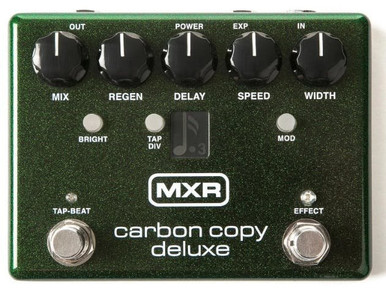
Not only do you get those lush, analogue delay repeats but you also have plenty of control over how those repeats come out. With a bright switch for more top-end (if you want the delays to cut through the mix) and a modulation switch which adds a chorusy tone to your repeats. This gives it that true 60s and 70s delay vibe.

The Carbon Copy Deluxe also has a subdivision control which means you can split the repeats into dotted 8th, 8th, 16th notes or even triplets.

Tap Tempo

A big problem that smaller delay pedals tend to have is that there’s no space for a tap tempo. But this double switch carbon copy deluxe has a tap tempo on-board which means you can easily get your guitar in-sync with the song you’re playing at the time.

  • Analog delay guitar effects pedal with up to 1.2s of delay
  • Tap tempo functionality makes synchronizing your delays to a song’s tempo effortless
  • Tap division feature with 4 subdivisions: dotted 8th, 8th, triplet, and 16th and an easy-to-read status display
  • Bright switch toggles between the original Carbon Copy’s darker tone and the Bright version’s more articulate sound
  • Mod function with top-mounted Speed and Width controls adds shimmering beauty to your tone
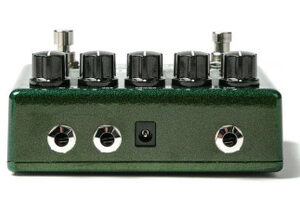
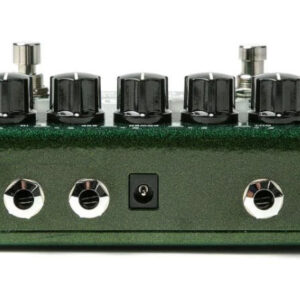
  • Expression jack for external control of various functions
  • Programmable presets allow for quick changes during a performance
  • True-bypass switching preserves your guitar’s tone

Specifications

  • Pedal Type: Delay, Modulation
  • Analogue/Digital: Analogue
  • Maximum Delay Time: 1.2 seconds
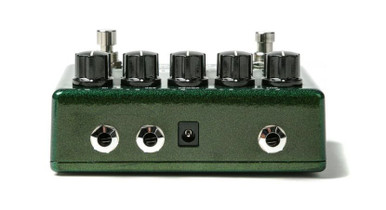
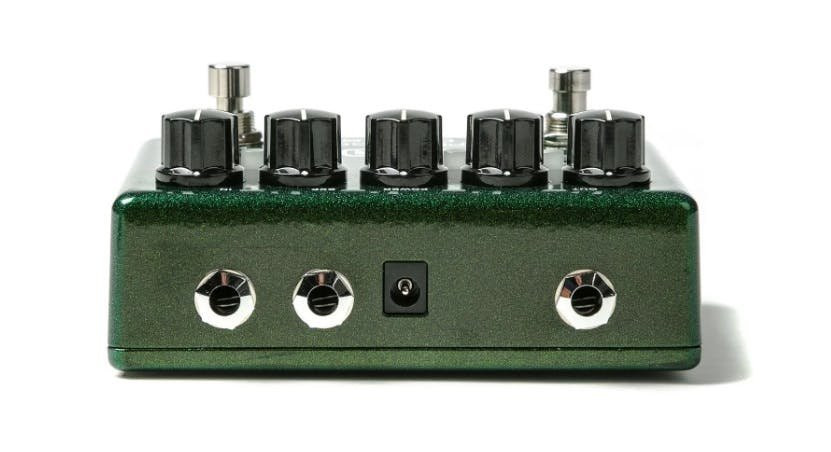
  • Inputs: 1 x 1/4″
  • Outputs: 1 x 1/4″
  • Other I/O: 1 x 1/4″ (expression)
  • Power Source: 9V DC power supply required (sold separately)
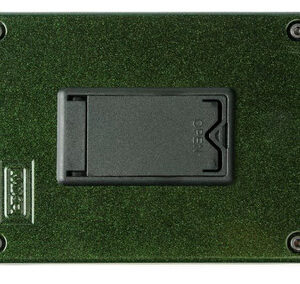
  • Batteries: 1 x 9V


Related videos

Brand

MXR

MXR is a renowned manufacturer of guitar effects pedals and audio electronics, recognized for their classic designs and high-quality sound. Established in the 1970s, MXR has played a significant role in shaping the landscape of effects pedals, producing iconic units that have become staples in countless musicians’ rigs. The company’s pedals are celebrated for their rugged construction, intuitive controls, and versatile tones, making them popular among guitarists and bassists across genres.

MXR’s product lineup encompasses a wide range of effects categories, including distortion, delay, modulation, and more. Some of their most notable pedals include the Phase 90 phaser, the Dyna Comp compressor, and the Carbon Copy analog delay, all of which have earned legendary status among players for their distinctive sound and reliability. With a legacy of innovation and a commitment to quality, MXR continues to be a respected name in the world of guitar effects, inspiring musicians to explore new sonic possibilities and express themselves creatively.

Category

Specialist Effects Pedals

Specialist effects alter the signal in ways that do not sit cleanly inside one established family. They may use granular processing, frequency shifting, resonators, freeze or sustain, bit reduction, ring modulation, feedback networks or combinations of several techniques. The relevant distinction is the underlying process, its tracking or latency, and how completely the dry signal can be blended or replaced.

Tags

Analogue

The signal is shaped by continuously varying electronic circuitry rather than being converted into a digital effect algorithm. Component choice, operating voltage and circuit tolerances influence headroom, noise, clipping texture and the small variations in response between designs.

Tap Tempo

Measures repeated foot taps and converts their interval into an effect rate or delay time. Subdivisions translate that pulse into dotted, triplet or other rhythmic values, while averaging and range limits influence how quickly and accurately the tempo settles.