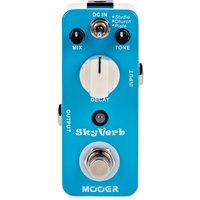
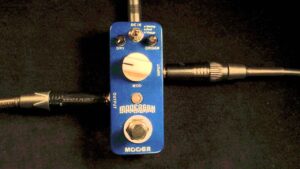
The Mooer MRV2 SkyVerb Digital Reverb Pedal is loaded with a 32 bit fixed point DSP chip that provides high quality speed and flexibility. The SkyVerb Pedal is based on another highly popular sky reverb pedal – and its extremely versatile with its choice of three reverb modes so that you can find the one that suits your style. The MRV2 SkyVerbs modes consist of Studio for a warmer and more natural effect; Church which delivers an emptier and smoother reverb; and Plate which produces a shiny and complex sound. To shape the reverb even further there are simple controls including Mix Tone Decay and Mode. Finally the tiny compact housing will easily squeeze onto even the busiest of pedalboards. If you want to sound big SkyVerb is the way to go.
Mooer MRV2 SkyVerb Digital Reverb Pedal
This is a New Mooer MRV2 SkyVerb Digital Reverb Pedal from Mooer Audio its found in our Reverb Pedals on the Just Pedals menu. Read More below.
As an affiliate partner, we may earn a small commission when you buy through our links — at no extra cost to you.
Related videos
Brand
Mooer Audio
In the current JustPedals catalogue, Mooer Audio is represented by Multi-Effects Pedals, Looper Pedals and Wah & Filter Pedals. Current listings include Baby Bomb 30, ABY and X2 Preamp. That makes the range relevant to players looking for drive, gain and clipping, plus time-based effects and ambience. Check each model for its exact circuit or processing platform, controls, power requirements and connections, particularly where the catalogue includes both pedals and supporting gear.
Category
Reverb Pedals
Reverb creates the dense pattern of reflections heard after sound enters a physical or imagined space. Room, hall, plate and spring models differ in reflection density, frequency decay and modulation, while ambient algorithms extend or transform the tail beyond natural acoustics. Decay, pre-delay, damping, diffusion and wet/dry balance define the apparent size, surface and distance of that space.
Tags
Digital
Converts the signal or control process into numerical data for algorithmic processing. Digital designs can provide precise timing, long memory, complex routing and repeatable presets; sample rate, conversion, internal resolution and latency influence fidelity and response.
Others Just Ordered :
- I Love A Happy Accident… – Animals Pedal

- Animals Pedal Vintage Van Driving is Very Fun Overdrive
- Animals Pedal Sunday Afternoon Is Infinity Bender

- Ninevolt Pedals | Bath Time Reverb (Animals Pedal)
- This Fuzz Pedal Makes No Sense… But It Sounds Incredible

- ANIME Pedals | Animals Pedal Custom Illustrated Series