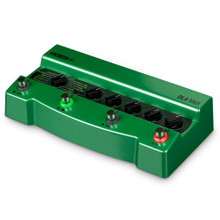
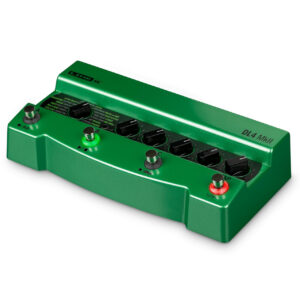
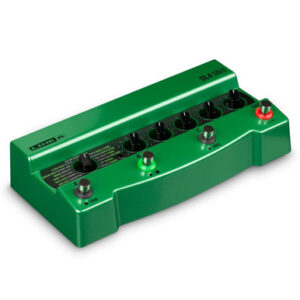
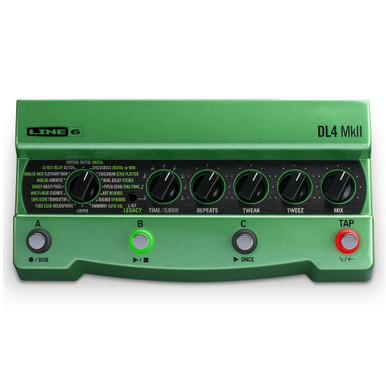
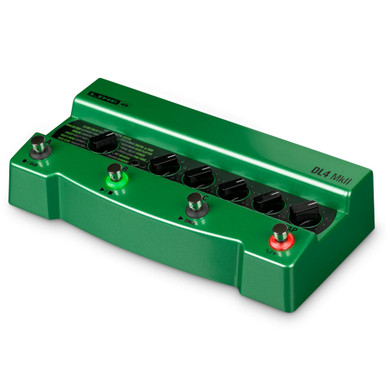
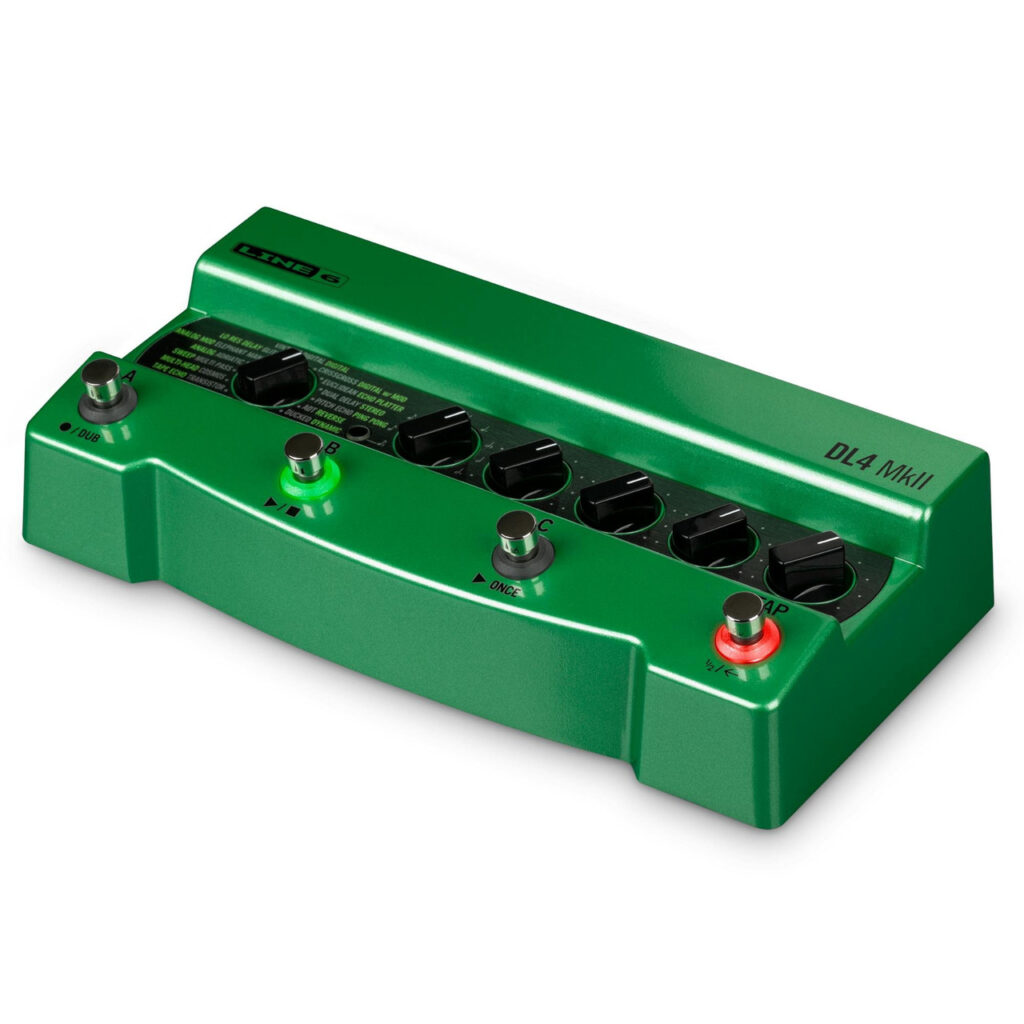
Line 6 DL4 MKII Delay Modeller Pedal

£184.99

This is the Line 6 DL4 MKII Delay Modeller Pedal from Line 6, listed in Amp & Cab Simulator Pedals on Just Pedals. Read More below.

View Just
more
and , , , ,

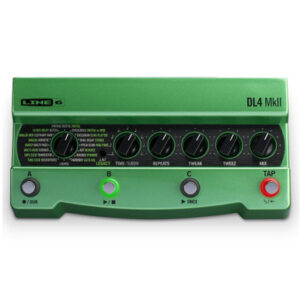
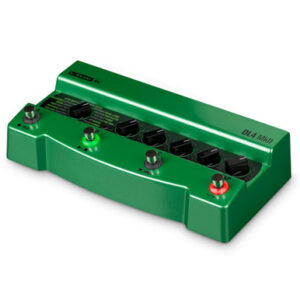
The DL4 MkII is an updated version of Line 6’s classic DL4 Delay Modeller pedal. Offering all the sounds and functionality of the original, the MkII has been rehoused in a smaller, lighter chassis and loaded with a bunch of new features!

Key Features

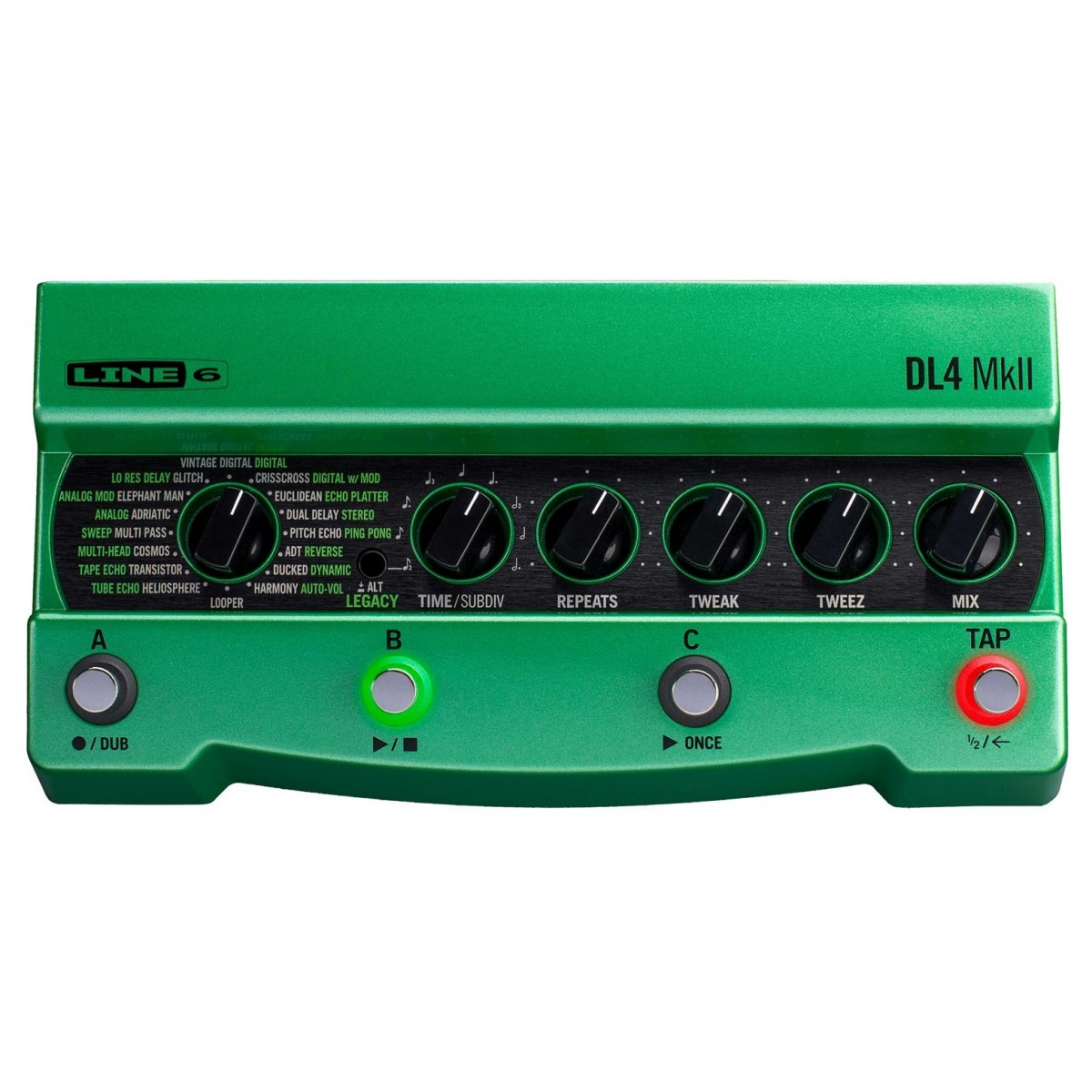
  • Identical knob and footswitch layout as the original DL4
  • 30 Delay options: 15 MkII plus 15 Legacy DL4 
  • 2 Loopers—mono/stereo and pre/post signal path options 
  • Up to 240 seconds of looping time, or several hours (with optional microSD card) 
  • XLR dynamic microphone input for vocal processing and looping 
  • MIDI In, Out/Thru DIN connectors—receives PC and CC messages 
  • 128 Presets via MIDI, with footswitch control of up to six 
  • Switchable true, buffered, or DSP bypass 
  • Input for optional expression pedal or two additional footswitches

A Massive Array of Sound

Boasting an incredible array of sounds, from tube driven tape loop echoes (complete with adjustable wow and flutter), to 24 bit squeaky clean digital delays, the DL4 MkII is an all-encompassing delay modeller that will have you covered whatever style you play! With 30 delay options on hand, including 15 brand new models drawn from Line 6’s HX® family of effects processors, the DL4 MkII gives you access to some of the most sought after delay pedals of all time. Between the EP-1 Tube and EP-3 Solid State Echoplex units to the Space Echo and Deluxe Memory Man, the DL4 MkII may just be the last delay pedal you ever need!

Loop, MIDI, Integrate Easily Onto Your Pedalboard

The DL4 MkII is completely programmable over all aspects of the sound, making it a valuable tool both in the studio and on stage. Incredibly simple to use and amazingly powerful, the DL4 MkII includes 2 loopers with up to 240 seconds of looping time, which can be increased with an optional mircoSD card. With full MIDI connectivity, the DL4 MkII works seamlessly with pedalboard switching systems for complete rig flexibility and the addition of an XLR dynamic microphone input allows for vocal processing and looping too!
Related videos

Brand

Line 6

Line 6 is a leading manufacturer of digital modeling amplifiers, effects pedals, audio interfaces, and guitar processors, known for their innovative technology and versatility. Founded in 1996 by Marcus Ryle and Michel Doidic, Line 6 has been at the forefront of digital audio technology, pioneering products that have revolutionized the way musicians create and perform.

Line 6’s product lineup includes a wide range of guitar amplifiers and effects pedals that utilize digital modeling technology to emulate the sounds of classic analog gear, as well as create entirely new tones and effects. Their flagship amplifier series, such as the Line 6 Helix and Line 6 POD, offer a comprehensive range of amp models, effects, and signal processing capabilities in a single unit, providing guitarists with a vast palette of tones to explore.

In addition to amplifiers and effects pedals, Line 6 produces audio interfaces, wireless systems, and software applications designed to streamline the music production process and enhance the performance experience for musicians. Their wireless guitar systems, like the Line 6 Relay series, offer reliable and interference-free performance, while their software applications, such as Line 6 Edit and Helix Native, provide powerful tools for editing and managing tones.

With a commitment to innovation, quality, and versatility, Line 6 continues to be a trusted name in the music industry, providing musicians with cutting-edge technology and inspiring tools to express their creativity and achieve their musical goals.

Category

Amp & Cab Simulator Pedals

Amp and cabinet simulators reproduce the gain stages, tone stack, power-amp response, loudspeaker colour and microphone character of a recorded amplifier chain. Analogue circuits, digital models and impulse responses approach this in different ways. The important distinctions are the available amp and cabinet types, editable microphone or room settings, latency, output routing, preset recall and whether speaker simulation can be bypassed for a real amplifier.

Tags

Digital

Converts the signal or control process into numerical data for algorithmic processing. Digital designs can provide precise timing, long memory, complex routing and repeatable presets; sample rate, conversion, internal resolution and latency influence fidelity and response.

MIDI

Sends, receives or responds to Musical Instrument Digital Interface messages rather than carrying the instrument audio itself. Program changes recall presets, continuous controllers move parameters, and MIDI clock or transport messages synchronise timing between devices.

Presets

Stores complete groups of parameter values for later recall. The number of locations, switching time, spillover behaviour and whether presets include routing, expression and MIDI assignments determine how completely one sound can change into another.

Stereo

Processes, creates or passes two audio channels. True stereo preserves separate left and right inputs, while mono-to-stereo effects generate spatial differences internally; routing, phase behaviour and whether trails remain stereo determine the resulting image. Some outputs sum to mono when only one socket is connected, which can change level or modulation depth.

Vocal

Designed for microphone-level signals and the frequency, dynamics and feedback behaviour of the human voice. Input gain, balanced connections, phantom power and pitch tracking may be provided so effects respond correctly before the signal reaches a mixer or PA.