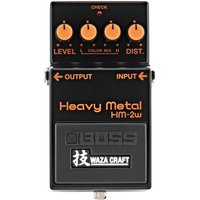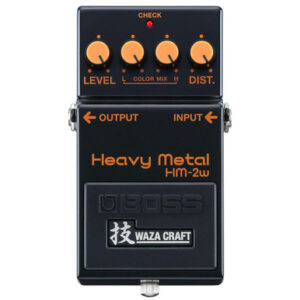
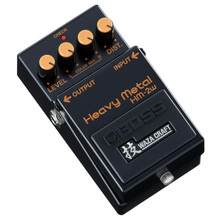

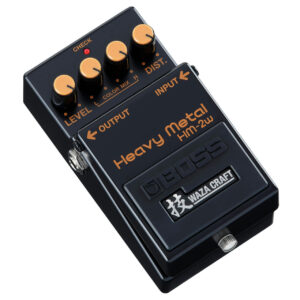
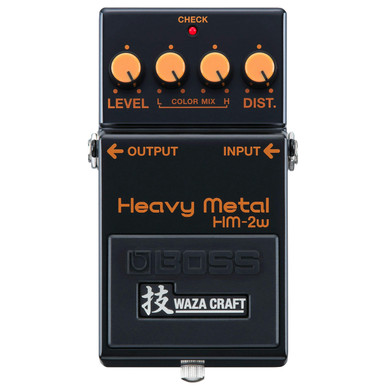
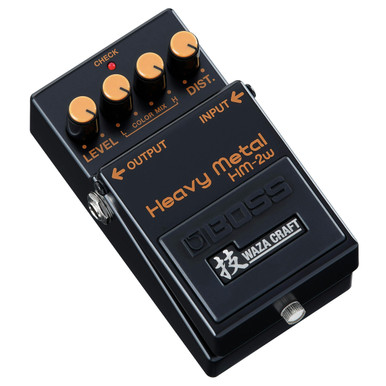
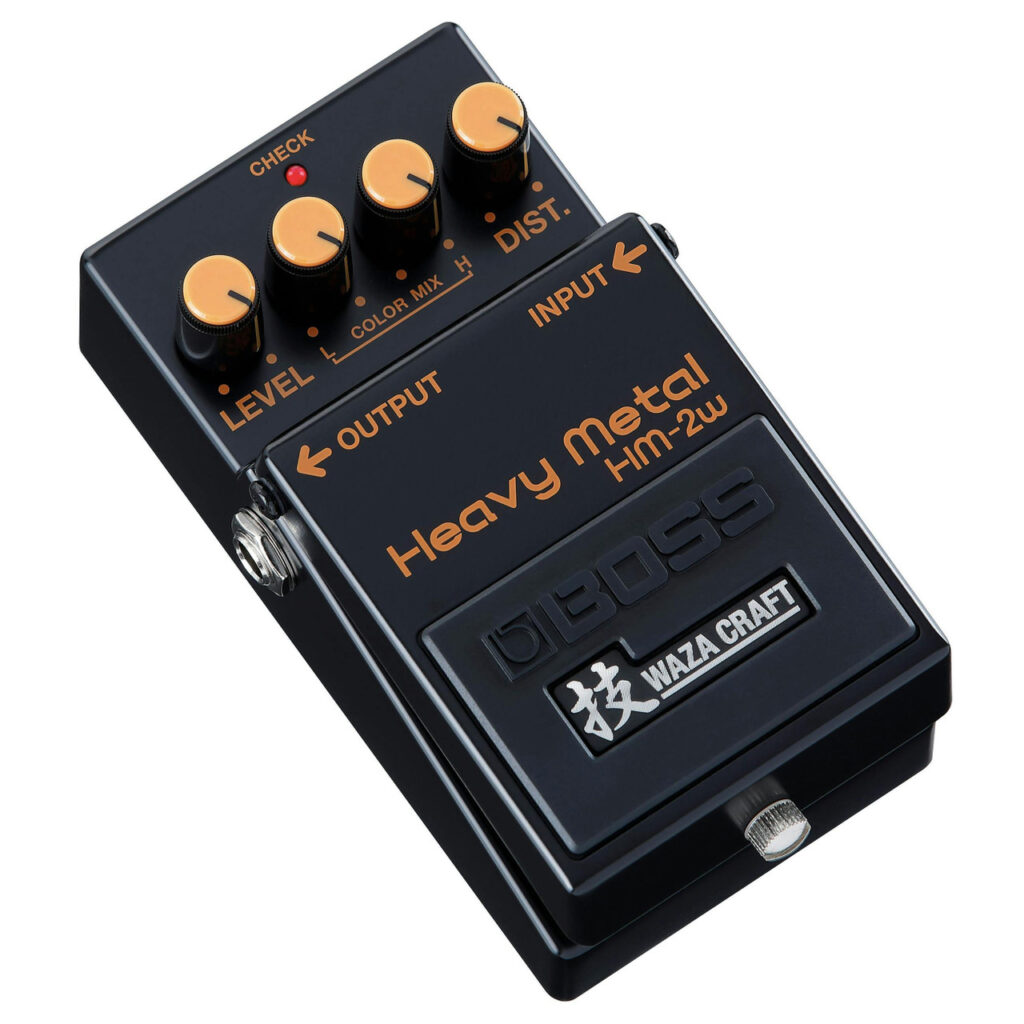
The HM-2 Heavy Metal is one of the most revered Boss distortion pedals. Produced between 1983 and 1991, the HM-2 became synonymous with the Swedish death metal scene thanks to its signature "chainsaw" high-gain tone — famously achieved by maxing-out all of the unit's controls. While defining the sound of that extreme genre, the Boss Heavy Metal still found favour with shoegazers and even mainstream rockers who made use of the milder sides of the pedal's personality — testament to its overall versatility.
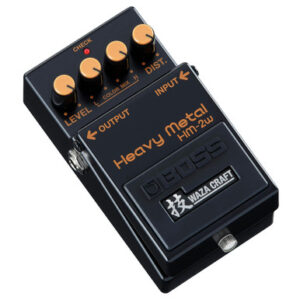
Hardcore HM-2 fans have been requesting a reissue for years, especially with originals becoming more scarce. Boss has now answered their prayers, and the legendary stompbox has been brought back to life 30 years later in a special Waza Craft edition — the HM-2W. Dishing out the searing all-analogue voice of the original, the Boss HM-2W Heavy Metal has undergone some modern tweaks for enhanced performance.
Key Features
- Waza Craft Edition — Supercharged version of the HM-2, made in Japan for the ultimate Boss tone experience.
- Authentic HM-2 Aesthetic — Iconic orange-on-black livery evokes plenty of high-octane nostalgia!
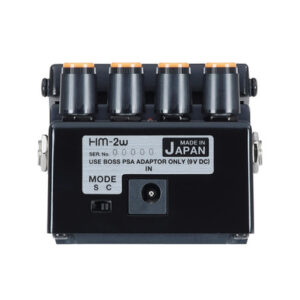
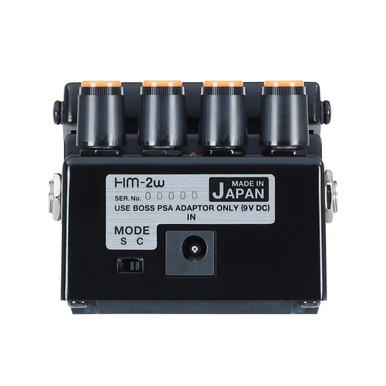
- Standard Mode — Delivers the original HM-2 sound with lower noise and maximized level.
- Custom Mode — Offers a more aggressive tone variation with special Waza Craft tuning.
- Premium Buffer — Ensures a clean and clear guitar signal when the unit is bypassed.
- Renowned Boss Build Quality — Boss pedals have a reputation for being built like tanks, and the HM-2W is no exception!
- 5-Year Warranty — As standard, all Boss compacts receive a five-year manufacturer warranty.
A Death Metal Staple
The original Boss HM-2 is regarded as one of the first "amp-in-a-box" pedals brought to market, designed to emulate the sound of early ’80s British amp stacks pushed to their limits. Funnily enough, the HM-2 experienced its biggest popularity spike towards the end of its production run, when seminal Swedish death metal bands widely adopted the unit to form the mid-focused and saturated guitar tones that ferociously cut through in their recordings.
Over the years, players have coveted this distinctive sound more and more. The pedal’s vast influence led to ongoing calls for Boss to resurrect it, which indeed they have, but the HM-2W is much more that just a "fan service" stompbox!
Standard Mode: The Original HM-2 Sound
The HM-2W's Standard mode replicates the response and tonal characteristics of the original HM-2 pedal — with 100% authenticity. Boss made some thoughtful refinements without affecting the sound though; including reducing the noise floor and expanding the maximum level by 3 dB. The premium Waza Craft buffer improves the integrity of your signal when the unit is bypassed too.
Custom Mode: More Aggression!
The HM-2W’s Custom mode offers a similar sonic experience to the Standard setting, but with just a little bit more of everything. The drive stage pumps out extra gain and includes more of the fundamental guitar sound for increased attack and sharpness. In addition, the low and high-mid characteristics have been tweaked to provide improved fullness and definition.
Specifications
- Bypass: Buffered
- Voltage: 9V (Via Battery or External PSU)
- Current Draw: 30 mA
- Dimensions: 73 (W) x 129 (D) x 59 (H) mm
- Weight: 440g