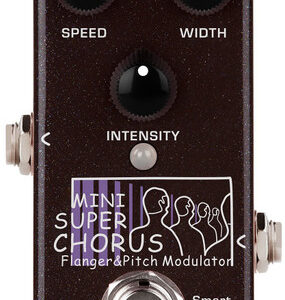
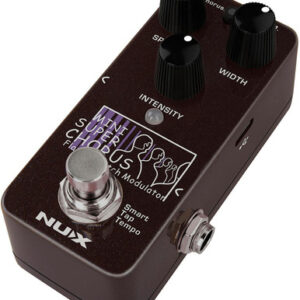
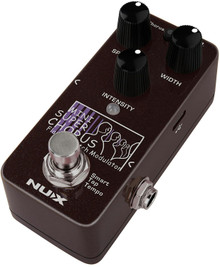
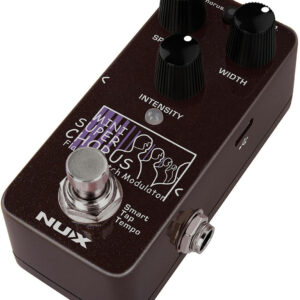
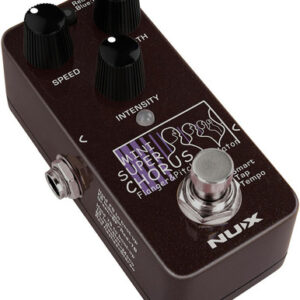
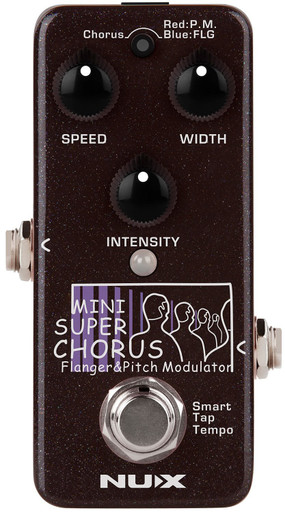
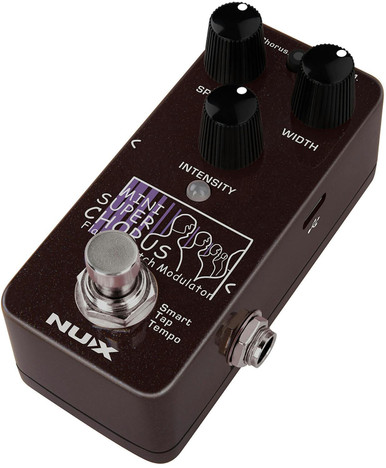
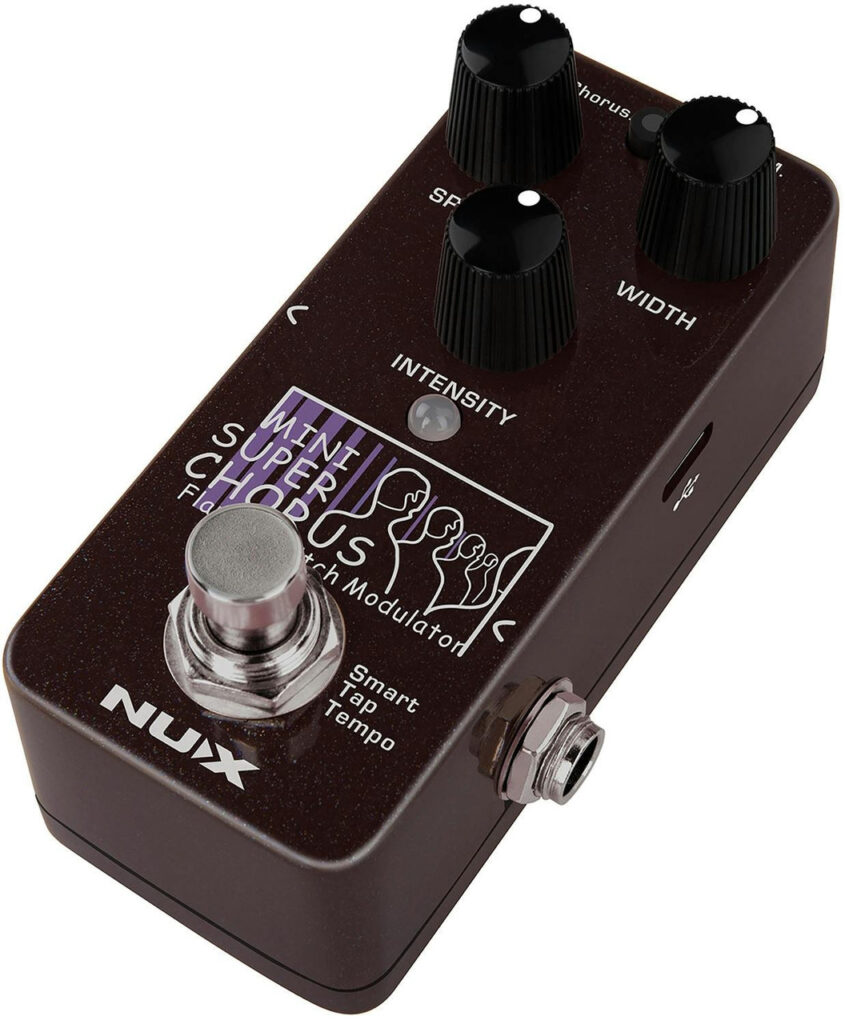
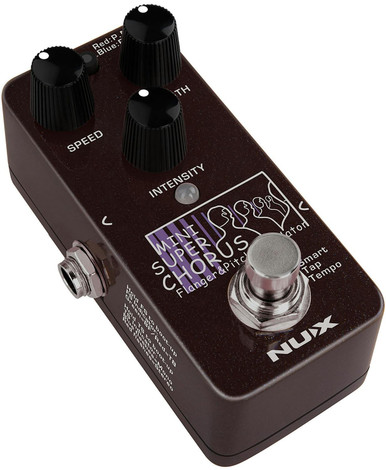
NUX NCH-5 Mini Super Chorus-Flange Pedal

£59.99

This is a New NUX NCH-5 Mini Super Chorus-Flange Pedal from NUX is in our Chorus Pedals category on Just Pedals. Read More below.

View Just
more
and

The Mini Chorus Effect Pedal offers three different modes, including Chorus, Flanger, and Pitch Modulation, each providing a distinct sound.

Chorus mode thickens the sound by modulating a short delay effect, creating a swirling, ethereal tone. Flanger mode tightens this effect by shortening the delay and regenerating it for rotating and tubular jet sounds. Pitch Modulation mode provides a lighter chorus effect by slightly varying the pitch and mixing it back with the dry signal.

Specifications

  • Modes: Chorus, Flanger, Pitch Mod
  • Controls: Speed, Width, Intensity
  • Footswitch: Tap Tempo
  • Bypass: Buffered or True Selectable
  • Power: 9V DC Adaptor (Not Included)
Related videos

Brand

NUX

NUX made its industry debut in 2006 and is one of the brands owned by Cherub Technology. Its official catalogue ranges from analogue and digital stompboxes to multi-effects, amplifiers, wireless systems, drums, keyboards and recording gear. Cherub lists company locations in Guangdong, China, as well as overseas offices; that identifies the company base, not the factory for every NUX product. JustPedals listings include the NBP-5 Melvin Lee Davis bass preamp, NAI-5 Optima Air acoustic simulator and NDR-5 Atlantic delay and reverb. The range rewards model-by-model comparisons of signal path, presets and instrument-specific features.

Category

Chorus Pedals

Chorus mixes the dry signal with one or more short, continuously modulated delays. The small pitch and timing movement between the paths creates width, shimmer and the impression of several instruments playing together. Rate controls the modulation speed, depth controls its excursion, and delay or mix settings determine whether the result is subtle thickening, a liquid wobble or a broad stereo image.

Tags

Tap Tempo

Measures repeated foot taps and converts their interval into an effect rate or delay time. Subdivisions translate that pulse into dotted, triplet or other rhythmic values, while averaging and range limits influence how quickly and accurately the tempo settles.