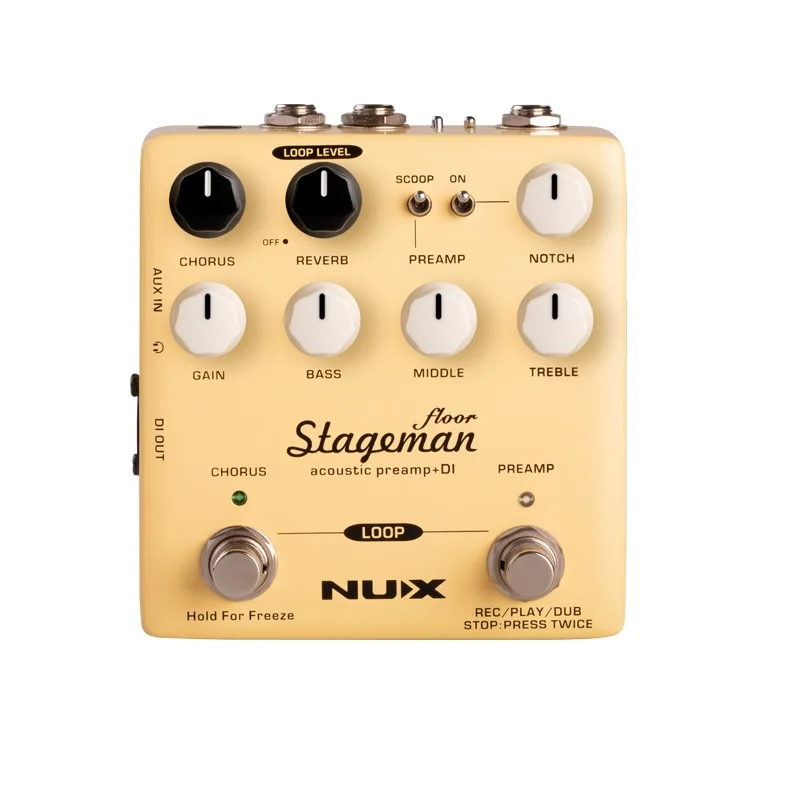
The Nux NAP-5 Stageman Floor Acoustic Preamp DI Pedal is proving to be a quality product at a great price, you can order Guitar Pedals direct from Nux. Check the price, NUX NAP-5 Stageman Floor Acoustic Preamp DI Guitar Effect Pedal Chorus Reverb Freeze 60s Loop for Guitar Violin Mandolin Banjo
Nux NAP-5 Stageman Floor Acoustic Preamp DI Pedal
£129.39
The Nux NAP-5 Stageman Floor Acoustic Preamp DI Pedal is proving to be a quality product at a great price, you can order Guitar Pedals direct from Nux. Check the price, NUX NAP-5 Stageman Floor Acoustic Preamp DI Guitar Effect Pedal Chorus Reverb Freeze 60s Loop for Guitar Violin Mandolin Banjo Just Related Gear : NUX NAP-5 Stageman Floor Acoustic Preamp & DI Nux-Stageman NAP-5 Floor Pedal Digital Looper Function Highly NUX NAP-5 Stageman Floor Acoustic Preamp
View Just NUX
As an affiliate partner, we may earn a small commission when you buy through our links — at no extra cost to you.
Related videos
Brand
NUX
NUX made its industry debut in 2006 and is one of the brands owned by Cherub Technology. Its official catalogue ranges from analogue and digital stompboxes to multi-effects, amplifiers, wireless systems, drums, keyboards and recording gear. Cherub lists company locations in Guangdong, China, as well as overseas offices; that identifies the company base, not the factory for every NUX product. JustPedals listings include the NBP-5 Melvin Lee Davis bass preamp, NAI-5 Optima Air acoustic simulator and NDR-5 Atlantic delay and reverb. The range rewards model-by-model comparisons of signal path, presets and instrument-specific features.
Category
Guitar Pedals
Guitar pedals are compact devices placed in the signal path to change level, tone, dynamics, pitch, time, modulation or routing. This broad category includes simple analogue effects, digital processors, switching and utility products, so the most important differences are the circuit function and connection method. Check whether a model expects instrument or line level, how it is powered, whether it preserves bass or stereo information, and how its bypass behaves with the rest of the board.
Tags
Chorus
Adds one or more slightly delayed voices whose delay time is continuously modulated. Their small pitch and timing differences thicken the source and create shimmer or stereo width; modulation rate, depth, base delay and mix determine how subtle or liquid the movement becomes.
Looper
Records audio into a repeating cycle and permits new layers to be overdubbed over it. Maximum loop time, track count, undo depth, storage and synchronisation define how the layers can be built, corrected and aligned.
Preamp
Preamp products raise and shape an instrument signal before it reaches an amplifier, recorder, mixer or power stage. They may add EQ, gain, instrument-specific voicing, balanced outputs, cabinet filtering or a direct path. Check input impedance, headroom, noise, output level and whether the unit expects an effects return, interface, PA or real cabinet. A preamp can be an always-on foundation or a complete direct rig, but the routing should be confirmed first.
Reverb
Builds a dense tail of reflections around the original sound. Early reflections establish apparent distance and size, while decay, diffusion, damping and modulation shape the density, brightness and movement of the later field. Pre-delay separates the dry attack from the ambience, and mix controls their relative level.
Others Just Ordered :
- I Love A Happy Accident… – Animals Pedal
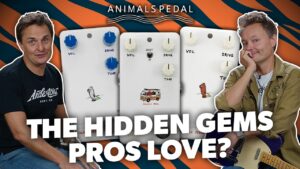
- Animals Pedal Vintage Van Driving is Very Fun Overdrive
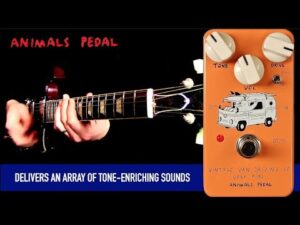
- Animals Pedal Sunday Afternoon Is Infinity Bender
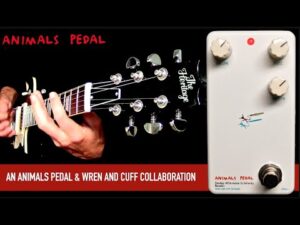
- Ninevolt Pedals | Bath Time Reverb (Animals Pedal)
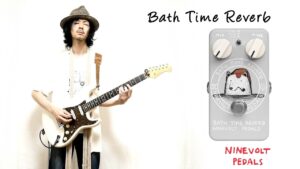
- This Fuzz Pedal Makes No Sense… But It Sounds Incredible

- ANIME Pedals | Animals Pedal Custom Illustrated Series