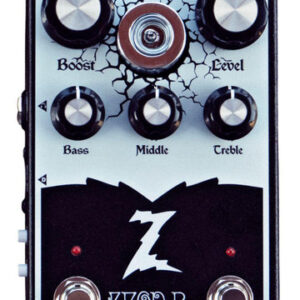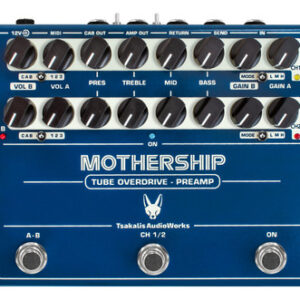

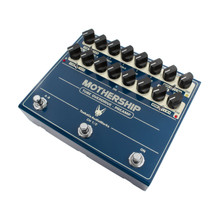
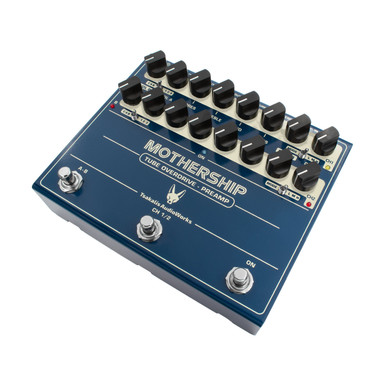

Allow JustPedals to introduce the Tsakalis AudioWorks MOTHERSHIP Dual Channel Tube Overdrive Preamp with Cab Sim and MIDI Control
Here’s what Tsakalis Audioworks say about the Tsakalis AudioWorks MOTHERSHIP Dual Channel Tube Overdrive Preamp with Cab Sim and MIDI Control:
“Seamlessly blending the authentic analogue warmth of real tubes with a highly configurable cabinet simulator, plus flexible outputs and control options, the MOTHERSHIP – Real Tube Preamp stands out as possibly the most highly featured and flexible front end for any guitar rig currently available.
The MOTHERSHIP is a complete solution for authentic vintage and modern genuine tube amp tones, in a user-friendly and lightweight, yet rugged package that is designed to slot in easily into any setup.”
Main Features
- Dual Channel Tube Preamp with Overdrive
- 2 ECC83s (12AX7) preamp tubes run at 240 V internally – for incredible headroom and genuine tube-amp feel and dynamics
- 2 independent channels capable of producing everything from sparkling cleans to tight heavy distorted tones
- 2 individual Gain/Volume sections for each channel selectable via a dedicated footswitch – 4 tones on tap at any time
- Individual 4-band EQ per channel (Bass, Mid, Treble, Presence)
- 3 gain stages per channel selectable via the MODE toggle switch
- 3 user-selectable cabinet simulations per channel selectable via the CAB toggle switch
- Serial effects loop – active even when in bypass mode – for looping in e.g. time-based effects between preamp and Cab Sim
- Dedicated TRS cabinet simulation output with ground lift – active even when in bypass mode
- Dedicated output for connecting to the front of an amp or a power amp, selectable by toggle switch
- Full MIDI compatibility – 128 user-customizable and programmable MIDI presets
- USB port for uploading Cab Sims to the six slots (three per channel) – choose from the free Tsakalis Audioworks online library of
- 70+ selected high-quality cab simulations with a latency of less than 1.2 ms
- Multifunction Latching or Momentary function footswitches
- Integrated input buffer – only active when in bypass mode
- Handmade in Athens, Greece
- Powered by (included) 12 V DC power adapter
- (2.1 mm, center -, 700 mA current draw)
Both channels on the MOTHERSHIP are identical, yet highly configurable. Featuring three gain modes (High, Medium and Low) on each channel, along with a toggle switch for selecting between your three chosen speaker simulations, the MOTHERSHIP can conjure up a multitude of both iconic, familiar and unique tones easily and intuitively. Each channel also features two master gain controls along with two master volumes, allowing four different voices to be instantly recalled, either by pressing the relevant footswitch or via MIDI command.
Demonstrating its prowess as a fully comprehensive plug and play device, the MOTHERSHIP also features over 70 free custom cabinet simulations to choose from (when connected to Tsakalis’ own TAW Editor app via USB), separate dedicated simultaneous outputs for both the cabinet simulator and a “dry” output for your amp of choice, MIDI control of channel, A/B selection and bypass and also a serial mono FX loop for added tonal versatility.
Fully Featured All-Analog Real Tube Preamp Design
The MOTHERSHIP represents the perfect “amp-in-a-box” pedal, seamlessly blending a beautifully designed, real tube front end with a highly flexible cabinet modelling solution. However, it also shines as a genuine tube overdrive pedal when connected to the front of your amplifier, or when running it as the tone-defining preamp section of your setup, directly into your power amp. It can also do both of these things simultaneously.