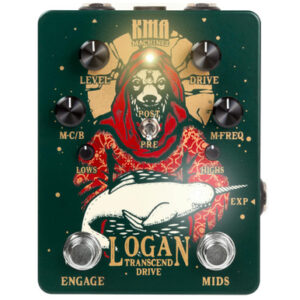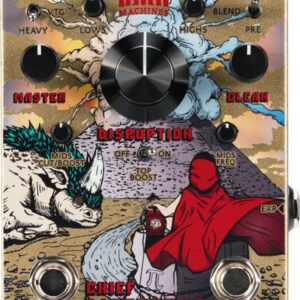
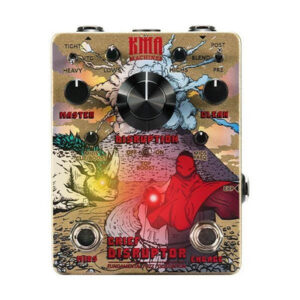
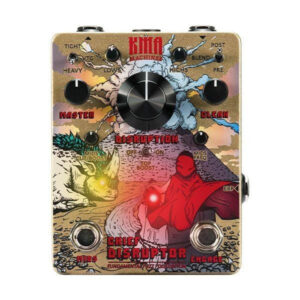
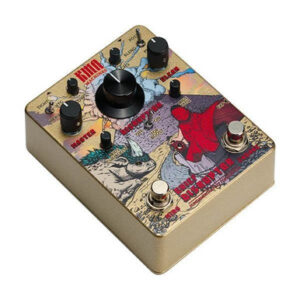
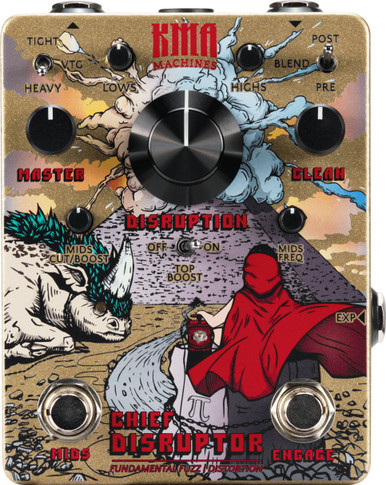
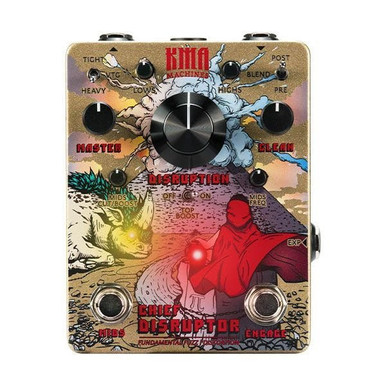
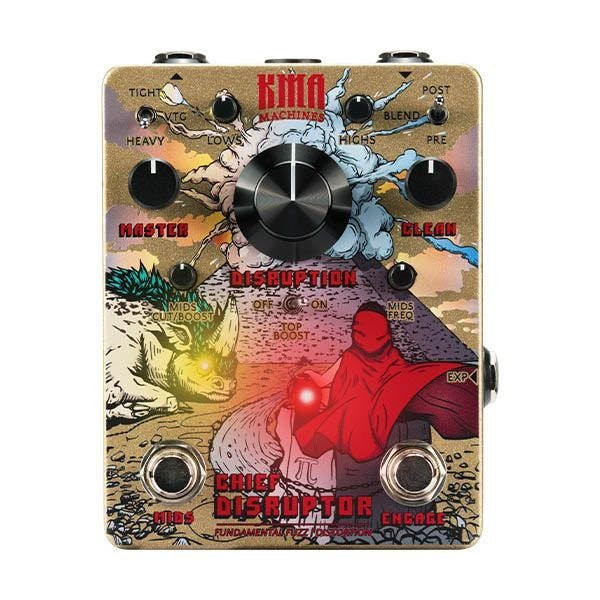
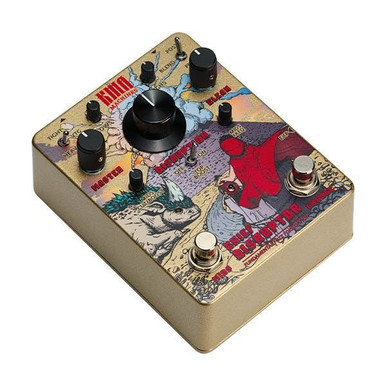
KMA Machines Chief Disruptor Fundamental Fuzz/Distortion

£175.00

On the Menu for January 2026 are the KMA Machines Guitar Pedals. These are fresh in, hand picked by the chef, & cooked to perfection. A tasty number we can deliver straight to your door, serving orders quickly and securely. For more info on KMA Machines New Guitar Pedals, please read on for full details, demos, videos, reviews & to order online


Spread the love

Description

Spread the love

The KMA Machines Guitar Pedals are fresh in for Jan. The Just Pedals Chef is dishing up hot gear all over the UK, served straight to your door, quickly and securely, For more info on tasty KMA Machines New Guitar Pedals, please read on for full details, ingredients, reviews and where to order in the UK.

Here's what KMA say about the Chief Disruptor Fuzz/Distortion 

“Gazing from afar at the downfall of archaic sonic structures, a hooded being sat calmly on the cornerstone of legacy. For generations, instead of asking what the present actually screamed for, people had been blinded by the achievements of the past. That was before the CHIEF DISRUPTOR came along! All it took was the push of a single handle to tear down the ancient landmarks for good, not even passing a flinch as the explosion happened. Instead, a feeling of hope began to saturate the entire being, manifesting in an endlessly sustaining smile on their face. It’s finally time for a new era of crushing tones. It’s time for the age of the CHIEF DISRUPTOR!”

Welcome to a new era of the most iconic fuzz/distortion sound the world has ever known. You know, that epically huge and super saturated tone (some might call it big and muffy) that has defined the signature sound of so many artists and countless records in the past few decades. It's arguably one of the pedals with the biggest impact on the entire industry, which has seen it modified over and over and over again. So much that you think it's all been done, right? Oh boy do we have a surprise for you here! Holding three different Gain Modes, a pre- or post-EQ Clean Blend, active Bass and Treble controls, a foot-switchable and expression-controllable parametric Mid-EQ as well as a switchable top-boost for even more raspy, grinding bite, CHIEF DISRUPTOR is the most flexible, beautifully balanced and LOUDEST muff-style pedal you'll ever hear!

Features

  • Fuzz/Distortion Pedal with Switchable Mid EQ/Boost 
  • The ultimate ‘muff-style’ drive, with stacked topology
  • 3 distinctive gain structures: Vintage (dynamic), Tight (more focussed), Heavy (sustaining and thick)
  • Pre or Post Clean Blend, for a tight low end
  • Active Bass and Treble EQ
  • Separate Mid EQ, with footswitch and frequency control 
  • Top-Boost, for more crunchy harmonics
  • External Expression control, allows for filter or pseudo-phase tones
  • Internal controls for Mid Q and Top Boost Level
  • Relay-based soft-switching
  • Made in Berlin, Germany 
  • Power by opt. 9 V PSU
  • (9 V DC, centre -, 2.1 mm, >160 mA max. current draw)

Over the years, different muff drives had different levels of gain, so we derived three major distinctive gain structures all based on what we consider to be the best versions. The Vintage Mode (VTG) will give you every shade of discrete overdrive, while the Tight Mode will give a more focused and modern tone with less bass and super crisp harmonics. Heavy Mode is the essence of what we all love about muffs. Heavy, sustaining and crazy thick fuzzy distortion, with bone-shaking lows and chewy mids. Just crank the Disruption (Gain) Control and you'll know exactly what we’re talking about here.
 
Tonal shaping was one of the true weak points of classic muff pedals and something we absolutely knew we had to remedy. We’ve opened the gates to more modern tonal flexibility through our active Bass and Treble controls, which let you boost or cut highs and lows with up to 15 dB, while our parametric Mid-EQ with adjustable centre-frequency and level boost/cut allows you to fine tune the mids with extreme precision, for everything from classic scooped fuzz tones, modern mid-focused dirt tones and all the way to cocked-wah saturation. 

You can take complete hands-free control of the Mid-EQ frequency via an expression-pedal. This lets you make instant tone changes on the fly, as well as unleash fast and quacky wah-like sounds or slow and enveloping phaser-like sweeps. If you feel like the filter needs to be more resonant for screaming synth-like sweeps or needs to be subtler, then you can adjust the Q of the Mid-EQ via an internal trimpot. The mids can also be turned on and off via the relay-based soft-switch, allowing you to kick in the mids for soaring solos, cutting chords or when you want to get filter freaky. 
Having super saturated mids and lows can sometimes result in a perceived loss of highs. To fix this, just engage the Top-Boost to give your high-mids a big push for more crunchy harmonics and bite to cut through any band mix.  We’ve tweaked the Top Boost to our personal taste, but if you feel like it’s either too loud or not loud enough, you can also adjust the Top Boost Level via an internal trimpot. 

We carefully balanced the gain control to achieve total control of even the slightest harmonic nuances. So, whether you’re looking for low gain drive, crunchy medium gain rhythm tones, singing or saturated lead sounds or skull-crushing doom tones, the Disruption control can and will cover all of them! 

A lot of gain rules! But gain also means compression, and the more we compress our sound, the more our instrument will lose definition. Yes, bass players, synth slingers and extended range guitar rockers, we hear you!  To preserve your precious core tone the CHIEF DISRUPTOR sports a clean blend control and a toggle switch to define the insert position. Insert your dry signal before the EQ section for a more cohesive sound or place it post-EQ to keep your dry signal completely unaffected. 
Last but not least, we always felt the original muff pedals (and clones) lacked output, hence we implemented our stacked headroom topology to keep the EQs from getting saggy when cranked, all which results in the tightest, most punchy and LOUDEST muff-style tone on the market. 

Go forth and empower your creative side, with tone that has true vision to inspire. If you are ready for a change in distortion history, then it’s time to follow the CHIEF DISRUPTOR!

Ingredient Allergy Warning : Product may contain nuts.

Additional information

Weight0.5 kg

Brand

KMA Machines

Category

KMA Machines

Tags

Distortion

Distortion pedals take your clean guitar signal and transform it into something bigger, bolder, and full of attitude. By clipping the waveform, they add sustain, bite, and aggression, creating that thick, compressed tone that’s powered rock music for decades. From the growling crunch of classic hard rock to the tight, saturated roar of modern metal, distortion is all about energy and presence. It gives every note weight and authority, pushing your amp to its limits and beyond.

There are countless flavours of distortion, each with its own texture and edge. Some sound smooth and creamy, others raw and gnarly like tearing fabric. It’s the sonic equivalent of turning up the heat until the sound cooks — rich, sizzling, and perfectly seasoned to taste. Whether used for rhythm muscle or soaring leads, a good distortion pedal doesn’t just add volume; it adds personality, grit, and that unmistakable sense of power under your fingers.

EQ

While Ed Sheeran primarily relies on the natural sound of his acoustic guitar and vocals, he occasionally uses EQ (Equalization) to shape and enhance his tone during live performances or in the studio. EQ pedals or onboard preamps can allow him to adjust the frequency response of his guitar signal to suit the acoustics of different venues or to achieve specific tonal characteristics. Here’s how EQ might be utilized in Ed Sheeran’s setup:

1. **Tonal Shaping**: EQ can be used to adjust the balance of frequencies in the guitar signal, allowing Ed Sheeran to shape his tone to his liking. For example, he might boost the midrange frequencies to bring out the warmth and presence of his acoustic guitar, or cut certain frequencies to reduce any harshness or mud in the sound.

2. **Feedback Control**: In a live setting, EQ can help control feedback by notching out problematic frequencies that might cause the guitar signal to feed back through the amplification system. This can be particularly useful when performing in venues with challenging acoustics or high volume levels.

3. **Room Correction**: In situations where the venue’s acoustics are less than ideal, EQ can be used to compensate for any deficiencies in the sound. By adjusting the EQ settings, Ed Sheeran can tailor the guitar tone to sound more balanced and natural, regardless of the room’s acoustic properties.

4. **Matching Gear**: EQ can also be used to match the tone of Ed Sheeran’s guitar to the sound of other instruments or equipment in his setup. For example, he might adjust the EQ to complement the tonal characteristics of his vocal microphone or to blend seamlessly with backing tracks or other instruments.

Overall, while EQ may not be a central component of Ed Sheeran’s guitar effects setup, it can still play a valuable role in shaping his tone and ensuring that he achieves the desired sound in different performance environments. Whether used subtly for tonal shaping or more aggressively for feedback control, EQ allows Ed Sheeran to tailor his guitar tone to suit his musical vision and performance needs.

Expression

Expression pedals allow real-time control over specific parameters on compatible guitar pedals, such as volume, delay time, modulation depth, or filter sweep. Used with an expression input, they let players shape effects dynamically with their foot, adding movement and performance control that cannot be achieved with fixed knob settings.

Filter

Fuzz

A fuzz pedal is one of the earliest and most aggressive forms of distortion, turning your clean guitar signal into a thick, saturated wall of sound. It works by clipping the waveform almost flat, creating a compressed, gritty tone full of harmonic overtones. The result is raw, unruly, and unmistakable — from the sputtering breakup of vintage germanium circuits to the searing sustain of modern silicon designs. Fuzz pedals react strongly to your guitar’s volume and pickup choice, making them dynamic tools for expressive players.

Whether you’re chasing the classic tones of Hendrix and the Smashing Pumpkins or exploring heavy, experimental textures, fuzz remains a favourite for its personality and unpredictability. It can sound smooth and sustaining, or wild and velcro-like, depending on how it’s set up. A good fuzz pedal cuts through the mix while adding thickness and attitude, turning any riff or lead line into something bold and unmistakably alive.

Guitar Pedals

Your pedal is like a signature dish for your sound — a flavour-packed creation that transforms the bland ingredients of your guitar into something unforgettable. Each one adds its own seasoning, texture, and heat, turning a simple meal into a feast of tone.

These tasty little boxes sit in a row, like plates on a buffet, letting you mix and match flavours as you play. With one tap of your foot, you can swap sweet for spicy, subtle for smoky, and serve up something completely new. From the comfort food of warm overdrive to the fiery kick of fuzz, from smooth jazz sauce to heavy-metal spice, pedals give players a full menu of options to express their taste.  And just like with food, once you’ve tried one dish, you’ll want to sample them all.

Collecting, trading, and discovering new flavours soon becomes part of the joy of being a tone-loving gourmet geek with a guitar.

New

This is brand new, fresh in, and a UK warranty is included. New Gear always comes from trusted UK music retailers.

Overdrive

Like a golden layer of melted cheese — warm, gooey, and just put it all over. It adds just the right amount of richness and grit, turning a clean signal into something smooth and savoury. Designed to mimic the natural breakup of a tube amp pushed to its sweet spot, overdrive delivers the flavour of classic rock and blues in every bite. From creamy mid-gain warmth to crisp edge-of-breakup sparkle, it’s the comfort food of guitar tone — simple, satisfying, and endlessly versatile. Whether it’s a mild crunch or a full-bodied roar, overdrive is where good taste begins.

Phaser

A phaser is a type of guitar effects pedal that creates a swirling, sweeping sound by modulating the phase of the audio signal. It works by splitting the incoming signal into two paths, shifting the phase of one path, and then recombining them. This creates peaks and troughs in the frequency spectrum, resulting in a distinctive, “phasing” effect characterized by moving notches in the frequency response.

Here’s how a phaser pedal typically works and some common features:

1. **Rate**: The rate control adjusts the speed at which the phase-shifting effect oscillates. Increasing the rate produces faster modulation, creating a more pronounced swirling effect, while decreasing the rate slows down the modulation for a smoother, more subtle effect.

2. **Depth**: The depth control adjusts the intensity or depth of the phase-shifting effect. Higher depth settings result in more pronounced peaks and troughs in the frequency response, while lower settings produce a more subtle modulation.

3. **Feedback (or Regeneration)**: Some phaser pedals feature a feedback control that determines the amount of modulated signal fed back into the effect. Increasing the feedback creates more pronounced peaks and troughs in the frequency spectrum, resulting in a more intense and resonant phasing effect.

4. **Stages**: Phasers typically have multiple stages (usually four, six, or eight), each of which contributes to the overall phase-shifting effect. More stages generally result in a more complex and textured phasing sound.

5. **Sweep (or Manual)**: The sweep control adjusts the center frequency of the phase-shifting effect. This allows you to focus the phasing effect on specific frequency ranges, altering the tonal character of the modulation.

6. **Resonance (or Feedback)**: Some phaser pedals feature a resonance control that emphasizes the peaks and troughs in the frequency response, creating a more pronounced and resonant effect. This control can add richness and depth to the phasing sound.

Phaser pedals are commonly used in various music genres, including rock, funk, and psychedelic music, to add movement, depth, and texture to guitar tones. They can be used to create swirling, swirling effects on rhythm parts, add dynamics to lead lines, or create atmospheric textures for ambient music. Overall, phaser pedals offer guitarists a versatile tool for shaping their tone and adding expressive modulation effects to their playing.

Wah

Wah refers to an expressive filter effect that sweeps through a range of frequencies, creating a vocal-like “wah” sound. Controlled in real time with a foot-operated treadle, it allows players to emphasise different parts of the frequency spectrum as they play. Wah pedals are commonly used for lead guitar, funk rhythm work, and expressive solos, responding closely to picking dynamics and foot movement.