Brand
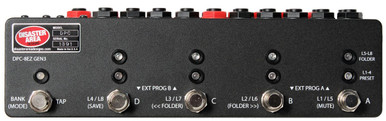
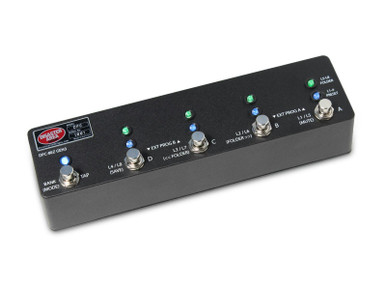
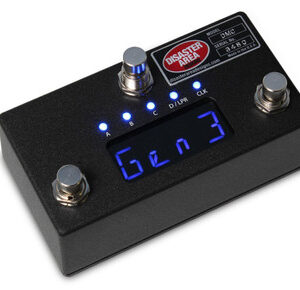
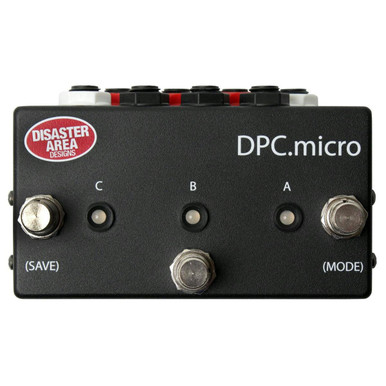
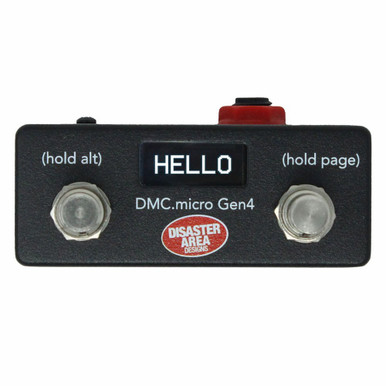
Disaster Area Designs specialise in advanced MIDI controllers and switching systems that make complex pedalboards easier to manage. Their gear lets players control multiple effects, switch presets instantly, and streamline live setups with precision and reliability. Built for modern digital rigs as well as traditional stompboxes, Disaster Area products are perfect for guitarists who want seamless control, reduced tap-dancing, and a more organised, professional workflow on stage or in the studio.
Category
Tags
A buffer pedal protects your tone when your signal has a long journey to travel. As cables and multiple pedals build up, high frequencies can fade and your sound can lose clarity. A buffer restores strength and sparkle, keeping your signal full, punchy, and consistent from guitar to amp.
Use a buffer at the start of a large pedalboard, after vintage true-bypass chains, or anywhere your tone feels dull or weak. It doesn’t add gain or colour — it simply preserves what you already have, making sure your core sound arrives exactly as it should.
A chorus pedal thickens and widens your tone by subtly duplicating your signal and shifting it slightly out of tune and time. The result is movement — shimmering cleans, liquid arpeggios, and that unmistakable 80s swirl that makes single notes feel fuller and chords sound expansive. From gentle sparkle to deep, watery modulation, chorus adds dimension without overwhelming your core sound.
Use it to bring life to clean passages, soften driven tones, or create spacious textures that sit beautifully in a band mix. Whether you’re after subtle depth or bold, warbling character, a chorus pedal is a simple way to make your guitar sound bigger, richer, and more immersive.
A fuzz pedal is one of the earliest and most aggressive forms of distortion, turning your clean guitar signal into a thick, saturated wall of sound. It works by clipping the waveform almost flat, creating a compressed, gritty tone full of harmonic overtones. The result is raw, unruly, and unmistakable — from the sputtering breakup of vintage germanium circuits to the searing sustain of modern silicon designs. Fuzz pedals react strongly to your guitar’s volume and pickup choice, making them dynamic tools for expressive players.
Whether you’re chasing the classic tones of Hendrix and the Smashing Pumpkins or exploring heavy, experimental textures, fuzz remains a favourite for its personality and unpredictability. It can sound smooth and sustaining, or wild and velcro-like, depending on how it’s set up. A good fuzz pedal cuts through the mix while adding thickness and attitude, turning any riff or lead line into something bold and unmistakably alive.
A looper pedal records and plays back sections of your playing, allowing you to layer sounds and build full arrangements on your own. By capturing short or long phrases, you can create rhythm parts, harmonies, or entire backing tracks in real time. Most loopers offer basic controls for record, overdub, and playback, while advanced models include multiple tracks, tempo syncing, and memory storage for saving your loops.
Loopers are invaluable for practice, songwriting, and live performance. They help you explore ideas, refine timing, and experiment with textures — from solo acoustic performances to complex ambient soundscapes. A good looper pedal becomes an instrument in itself, letting you improvise, arrange, and perform with creativity and freedom, turning one guitar into an entire band.
MIDI pedals use the Musical Instrument Digital Interface standard to communicate with other guitar pedals, effects units, and hardware. They allow control over presets, parameters, and switching across multiple devices from a single controller. MIDI integration makes it possible to build complex, synchronised pedal setups while keeping control simple and consistent.
This is brand new, fresh in, and a UK warranty is included. New Gear always comes from trusted UK music retailers.
A tuner is an essential pedal or device that helps keep your guitar perfectly in tune by detecting the pitch of each string and showing whether it’s sharp or flat. Tuners come in many forms, from simple clip-on units to advanced pedalboard models with bright displays and muting options for silent tuning on stage. They ensure accurate pitch, stable tone, and a more professional sound, making them one of the most important tools for any guitarist.
A vibe pedal delivers that unmistakable swirling, pulsing modulation inspired by classic late-60s tones. It blends elements of chorus and phase into a deep, throbby movement that feels organic and three-dimensional under your fingers. From subtle shimmer to full psychedelic swirl, vibe adds motion without losing the core of your sound.
Use it to bring warmth and texture to clean chords, add movement to sustained leads, or capture that rich, expressive wobble heard on countless vintage recordings. Smooth, hypnotic, and full of character, a vibe pedal turns simple phrases into something far more atmospheric and alive.
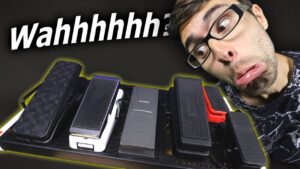
Wah refers to an expressive filter effect that sweeps through a range of frequencies, creating a vocal-like “wah” sound. Controlled in real time with a foot-operated treadle, it allows players to emphasise different parts of the frequency spectrum as they play. Wah pedals are commonly used for lead guitar, funk rhythm work, and expressive solos, responding closely to picking dynamics and foot movement.