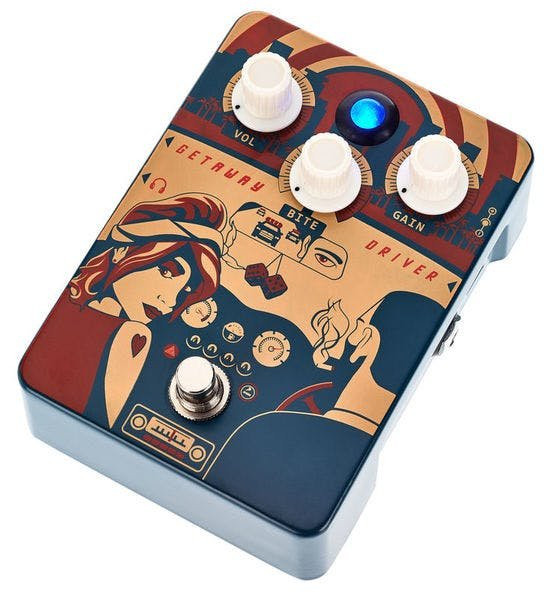
Orange Getaway Driver Pedal

£129.99

Also available on — Andertons, Amazon, eBay & Reverb

Fresh on the menu for 2026 are the Orange Guitar Pedals, freshly added and carefully selected. These New units are available to order online with fast, secure delivery from trusted UK retailers. Read on for full details, specifications, demos, videos, reviews, and the best places to buy the Orange Guitar Pedals today.


Description

Fresh on the menu for 2026 are the Orange Guitar Pedals, freshly added and carefully selected. These New units are available to order online with fast, secure delivery from trusted UK retailers. Read on for full details, specifications, demos, videos, reviews, and the best places to buy the Orange Guitar Pedals today.

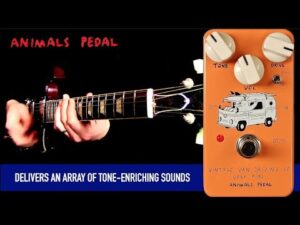
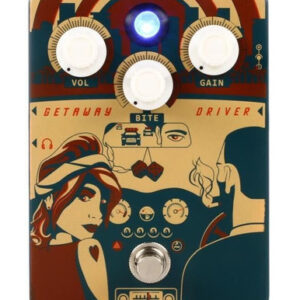
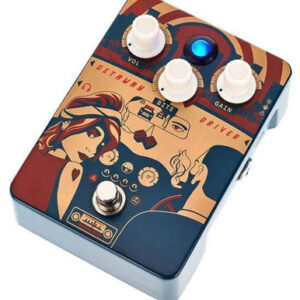
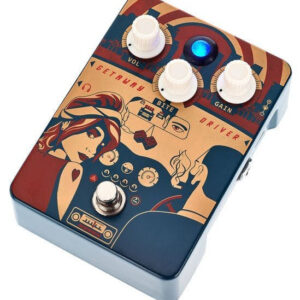
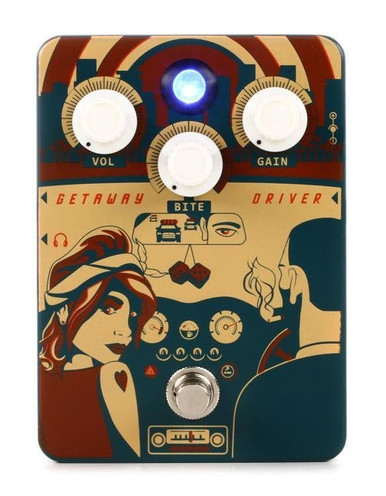
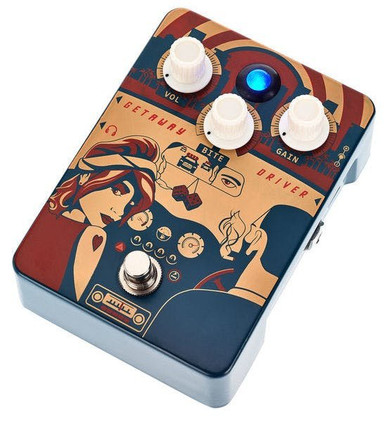
The Getaway Driver is an amp-in-a-box type pedal with just three dials – Volume, Bite (tone) and Gain. While the pedal adds its vintage vibe on all amplifiers, it really excels when used with the amplifier’s clean channel, even ones with a bright cap. It also makes a great clean boost, with low Gain and high Volume pushing amps over the edge into classic overdrive.

The gain structure is produced using single-ended JFET circuitry running in Class A, just like a valve amp. The input buffer, output buffer and Cab Sim are handled using op-amps, using a charge pump to give 18v of headroom.

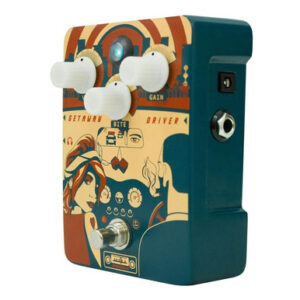
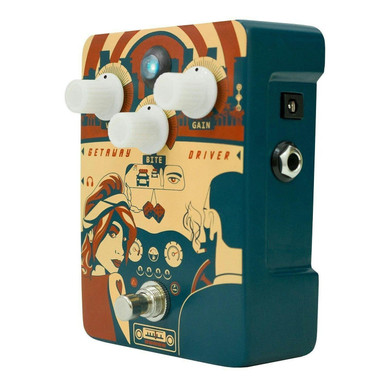
The pedal features the same transparent, buffered output used on the Orange Two Stroke and Kongpressor pedals. While the second output is a buffered Cab Sim/headphone amp which can also work into a PA (via a DI box) or directly into a recording interface. The first output is transparent when bypassed, however, when using the second output, the Cab Sim remains engaged. This means that the Getaway Driver can be used as just a Cab Sim on its own if needed.

The voicing and gain structure of this pedal is based on a cranked modded ’70s valve amp. The gain structure JFETs are running single-ended Class A. Running at 9 Volts, the pedal will have the character of EL84 valves, whereas 12 Volts will give an EL34 flavour. Use a regulated 9-12V DC centre-negative power supply.

’70S Amp In A Box
It sounds like a ’70s amp cranked in a box. It’s voiced on multiple vintage amplifiers, such as a 1972 ‘Pics Only’ Orange Amplifier modified by our technical director, Ade Emsley.

Cab Sim Output
Connect the pedal direct into an audio interface, the PA (via a DI) or just to your headphones. It is modelled on a G12H30 which is a 30 Watt Celestion speaker used in our 1970s Orange cabs. If you’re using this output, it’s actually still active when you’re bypassing the pedal allowing you to use other pedals (such as fuzz and distortion), amplifier preamps (via their FX send) with the Cab Sim only.

Internal Button
There’s a button inside the getaway driver that when pushed in, tames the top end to make it better for clean channels with treble bleed caps on the volume which is helpful for amplifiers such as the Orange Rockerverb. It compensates so it doesn’t overcook the top end. By default, this button is pressed in.

Specifications

  • Controls (left to right): volume, bite (tone), gain
  • Current draw: 9v: 30ma
  • 12v: 40ma
  • Stomp functions: bypass (first output), cab sim only bypass (second output)
  • Unboxed dimensions (w x l x h): 9.5 × 6.5 × 13cm (3.7 x 2.6 x 5.1)
  • Unboxed weight: 482g (1.06lbs)
  • Boxed dimensions (w x l x h): 11.4cm x 14.8cm x 8cm
  • Boxed weight: 680g (1.49lb)

 

Additional information

Weight 1 kg

Brand

Orange

Orange Amplification is instantly recognisable for its bold styling and unmistakable British tone. Known for thick, harmonically rich overdrive and warm, rounded cleans, the brand’s amps and pedals deliver character in spades. From classic valve stacks to compact lunchbox heads and stompboxes, Orange balances vintage flavour with modern reliability.

Choose Orange when you want punch, personality, and a sound that fills the room. Whether it’s crunchy rock rhythms, fuzzy vintage grind, or solid clean headroom that takes pedals beautifully, their gear brings attitude and depth to any setup.

Category

Guitar Pedals

Tags

Boost

A boost pedal does one simple thing brilliantly — it makes your signal louder, stronger, and more alive. Whether you’re pushing a valve amp into natural breakup, lifting a solo above the band, or adding a touch more presence to your core tone, a clean boost gives you extra headroom without changing your character.

Use it at the front of your chain to drive other pedals harder, or after your gain stages to raise volume without adding distortion. Subtle or powerful, transparent or slightly coloured, a boost is one of the most useful tools on any pedalboard — small box, big difference.

Buffer

A buffer pedal protects your tone when your signal has a long journey to travel. As cables and multiple pedals build up, high frequencies can fade and your sound can lose clarity. A buffer restores strength and sparkle, keeping your signal full, punchy, and consistent from guitar to amp.

Use a buffer at the start of a large pedalboard, after vintage true-bypass chains, or anywhere your tone feels dull or weak. It doesn’t add gain or colour — it simply preserves what you already have, making sure your core sound arrives exactly as it should.

Cab Sim

A cab sim pedal recreates the sound of a miked guitar speaker cabinet, allowing you to run direct without losing that crucial speaker character. While amp sims shape the amplifier tone, a cab sim captures the warmth, roll-off, and natural resonance of a real cabinet and speaker. Plug straight into a PA, recording interface, or headphones and still get a finished, mix-ready sound.

Use a cab sim for silent stages, late-night recording, or streamlined boards where carrying a cabinet simply isn’t practical. It’s the final seasoning in a direct rig — smoothing harsh highs, tightening the low end, and delivering that authentic “amp in the room” feel without the actual room.

DI

A DI pedal (Direct Injection) lets you send your signal straight to a mixing desk or audio interface with clarity and confidence. It converts your instrument’s output into a balanced signal, reducing noise and allowing for longer cable runs without losing quality. Whether you’re playing live or recording, a good DI keeps your tone clean, controlled, and stage-ready.

Use a DI to go direct at a gig, split your signal between amp and PA, or capture a pure track in the studio. It’s a practical, dependable tool that ensures what leaves your pedalboard arrives exactly as intended — solid, noise-free, and ready for the mix.

Distortion

Distortion pedals take your clean guitar signal and transform it into something bigger, bolder, and full of attitude. By clipping the waveform, they add sustain, bite, and aggression, creating that thick, compressed tone that’s powered rock music for decades. From the growling crunch of classic hard rock to the tight, saturated roar of modern metal, distortion is all about energy and presence. It gives every note weight and authority, pushing your amp to its limits and beyond.

There are countless flavours of distortion, each with its own texture and edge. Some sound smooth and creamy, others raw and gnarly like tearing fabric. It’s the sonic equivalent of turning up the heat until the sound cooks — rich, sizzling, and perfectly seasoned to taste. Whether used for rhythm muscle or soaring leads, a good distortion pedal doesn’t just add volume; it adds personality, grit, and that unmistakable sense of power under your fingers.

Fuzz

A fuzz pedal is one of the earliest and most aggressive forms of distortion, turning your clean guitar signal into a thick, saturated wall of sound. It works by clipping the waveform almost flat, creating a compressed, gritty tone full of harmonic overtones. The result is raw, unruly, and unmistakable — from the sputtering breakup of vintage germanium circuits to the searing sustain of modern silicon designs. Fuzz pedals react strongly to your guitar’s volume and pickup choice, making them dynamic tools for expressive players.

Whether you’re chasing the classic tones of Hendrix and the Smashing Pumpkins or exploring heavy, experimental textures, fuzz remains a favourite for its personality and unpredictability. It can sound smooth and sustaining, or wild and velcro-like, depending on how it’s set up. A good fuzz pedal cuts through the mix while adding thickness and attitude, turning any riff or lead line into something bold and unmistakably alive.

New

This is brand new, fresh in, and a UK warranty is included. New Gear always comes from trusted UK music retailers.

Overdrive

Like a golden layer of melted cheese — warm, gooey, and just put it all over. It adds just the right amount of richness and grit, turning a clean signal into something smooth and savoury. Designed to mimic the natural breakup of a tube amp pushed to its sweet spot, overdrive delivers the flavour of classic rock and blues in every bite. From creamy mid-gain warmth to crisp edge-of-breakup sparkle, it’s the comfort food of guitar tone — simple, satisfying, and endlessly versatile. Whether it’s a mild crunch or a full-bodied roar, overdrive is where good taste begins.

used

Used pedals bring character, value, and often a bit of history to your board. Whether it’s a well-loved classic or a recent release looking for its next home, a used pedal offers the same core tone at a more accessible price. Fully tested and described clearly, it’s a chance to grab great gear without paying brand-new money.

Go used to explore different sounds, track down discontinued favourites, or build your setup more affordably. Sometimes a pedal with a few marks on the casing still delivers flawless tone — and might even have a story or two behind it.

Vibe

A vibe pedal delivers that unmistakable swirling, pulsing modulation inspired by classic late-60s tones. It blends elements of chorus and phase into a deep, throbby movement that feels organic and three-dimensional under your fingers. From subtle shimmer to full psychedelic swirl, vibe adds motion without losing the core of your sound.

Use it to bring warmth and texture to clean chords, add movement to sustained leads, or capture that rich, expressive wobble heard on countless vintage recordings. Smooth, hypnotic, and full of character, a vibe pedal turns simple phrases into something far more atmospheric and alive.

Volume

Volume pedals control the output level of a guitar signal using a foot-operated treadle. They allow smooth volume swells, dynamic control during playing, and easy muting between songs. Volume pedals can be placed at different points in the signal chain to either control overall loudness or adjust gain and drive behaviour when positioned before distortion or overdrive pedals.