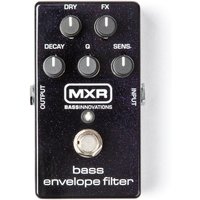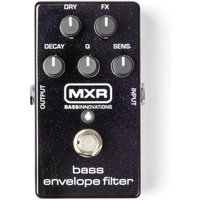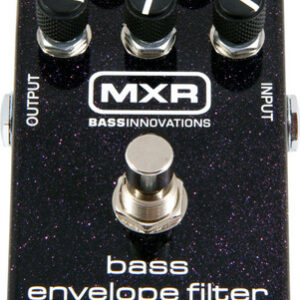
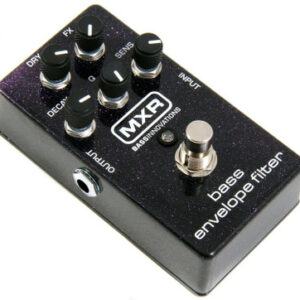
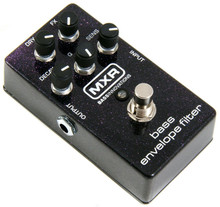
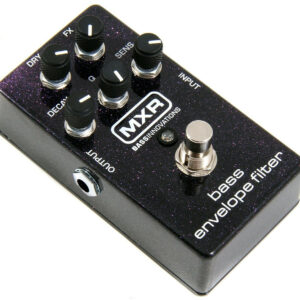
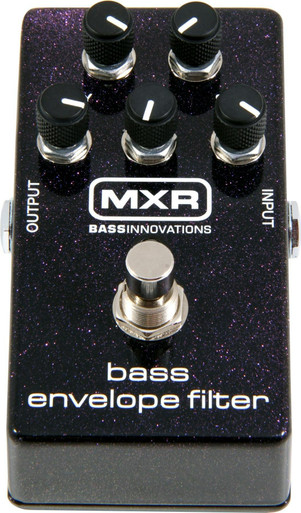
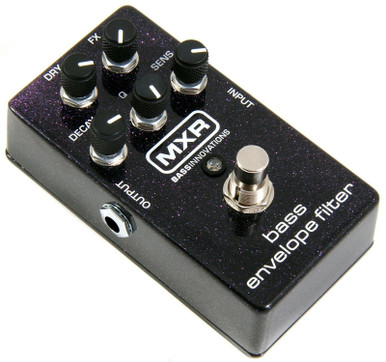
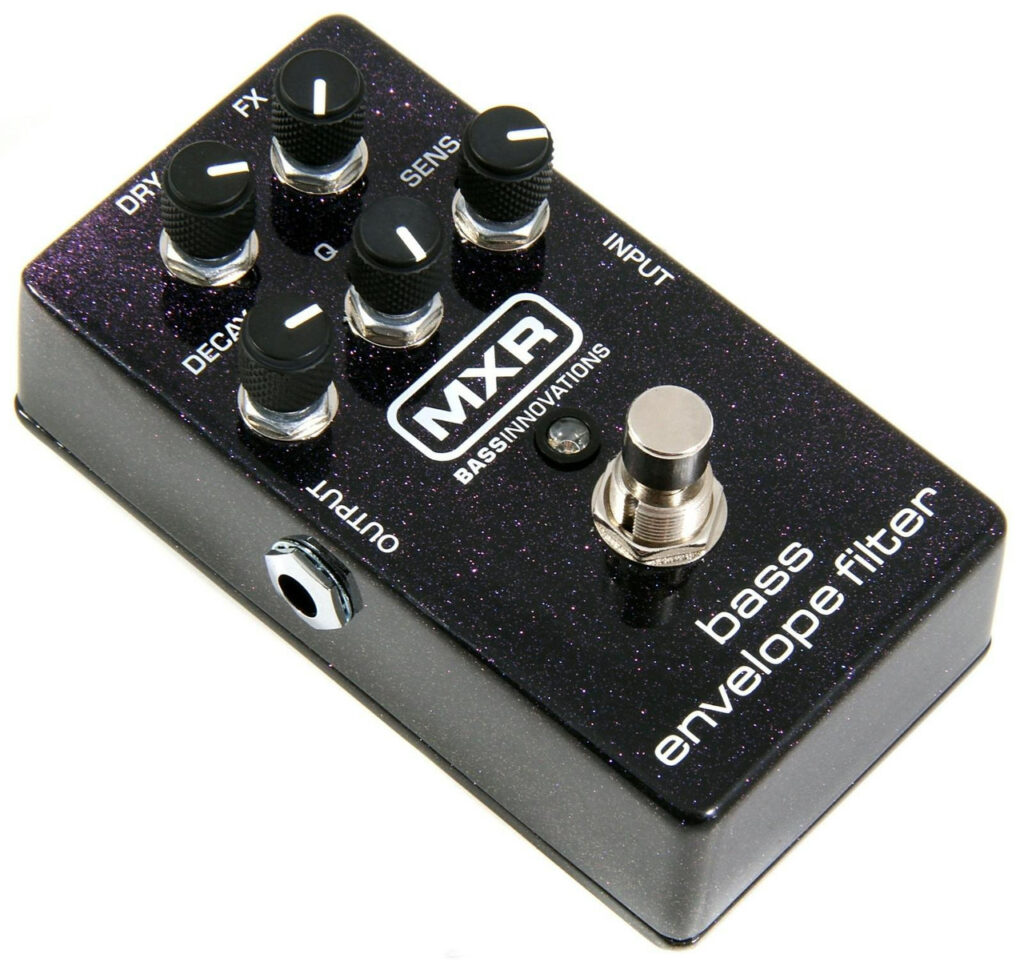
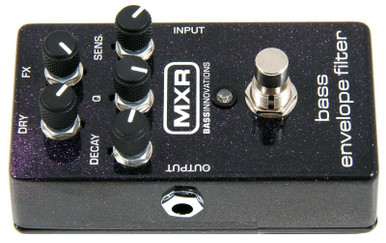
MXR M82 Bass Envelope Filter Pedal

£179.99

This is a New MXR M82 Bass Envelope Filter Pedal from MXR, listed in Wah & Filter Pedals on Just Pedals. Read More below.

View Just
more
and , , ,

It's time to funk things up!

Achieve classic analogue envelope filter sounds at the tap of your toe! The M82 Bass Envelope Filter Pedal from MXR is a usefull addition to your pedal collection, not only for its dynamic sound, but for its size – it's so small and refuses to take up room on your board! Customis your sound and call in just the right amount of filtering easily via its simple-to-use Dry and Effect controls.

You're all set for some serious funkiness once you've dialed in the amount of sensitivity for your level of attack and because the MXR M82 Bass Envelope Filter Pedal runs as true bypass, your tone will always remain intact when you bypass it.

Key Features:

  • Analog envelope filter
  • True Bypass
  • 9-volt operation or optional power supply
  • Metalic, Gillter finish
     

Specifications: 

  • Type: Filter
  • Inputs: 1 x Instrument
  • Outputs: 1 x 1/4"
  • Power Supply Included: No
  • Batteries: 1 x 9V
  • Height: 2.5"
  • Depth: 5.5"
  • Width: 4.5"
  • Weight: 0.84 lbs.

What Jim Dunlop say about the MXR Bass Octave Deluxe pedal:

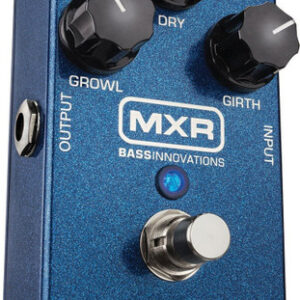
The M288 Bass Octave Deluxe is a dual-voice octave pedal that offers analog tone, true bypass, and a variety of tonal options. MXR's 18 volt Constant Headroom Technology™ provides high headroom and superior tracking. Use the Dry knob to mix in your direct signal, and hit the Mid+ switch to add up to +14dB of internally adjustable mid frequencies (400Hz or 850Hz). Finally, mix in two separately controlled octave voices—Growl (for throaty tone) and Girth (for deep tone).

Power: Dunlop ECB003 AC Adapter or Single 9 volt battery
Related videos

Brand

MXR

In the current JustPedals catalogue, MXR is represented by Overdrive Pedals, Compressor Pedals and Chorus Pedals. Current listings include Bass Synth, M300 Reverb and M307 Layers. That makes the range relevant to players looking for drive, gain and clipping, plus time-based effects and ambience. Check each model for its exact circuit or processing platform, controls, power requirements and connections, particularly where the catalogue includes both pedals and supporting gear.

Category

Wah & Filter Pedals

Wah and filter pedals move or emphasise a frequency range to create a vocal sweep, resonant peak, cocked-wah tone or envelope-controlled response. A treadle wah is controlled by foot position; an auto-filter follows playing dynamics or a control source. Sweep range, resonance, Q, bias, input loading and bypass all change the feel. Check whether the circuit prefers to see the guitar directly, how it handles bass or synth signals and where it should sit around fuzz, overdrive and modulation.

Tags

Analogue

Analogue products use continuous audio circuitry for some or all of the signal path, so clipping, filtering or modulation arises from physical components rather than sampled algorithms. The label does not guarantee a particular tone; component choice, headroom, bias, noise and the surrounding gain stages still matter. Check whether the switching, presets, control section or cabinet stage is digital when the exact signal path is important.

Bass

Bass products are designed or voiced to retain low-frequency information and usable headroom with bass guitar or other low-register sources. Controls may centre on clean blend, low-end EQ, compression, crossover points or drive character. A guitar pedal can sometimes work well on bass, but it may remove the fundamental or compress the transient. Check the frequency response, input impedance, output level and dry-signal path with the intended tuning and amplifier.

True Bypass

True bypass removes the effect circuit from the audio path when bypassed, usually by mechanical, relay or switching circuitry. This can preserve the direct signal but does not automatically solve long-cable loading, and it may create a pop or leave no buffer for the rest of the board. Check the actual switching method, trails or spillover, input and output loading and the number of other true-bypass pedals in the chain.

Vocal

Vocal products process a microphone signal with harmony, reverb, delay, doubling, pitch correction, distortion or tone shaping. Microphone type, phantom-power handling, input gain, footswitch control and balanced output are as important as the effect list. Check key or scale settings, monitoring, feedback control, dry-signal routing and the intended PA or interface connection before using a vocal effect on stage.