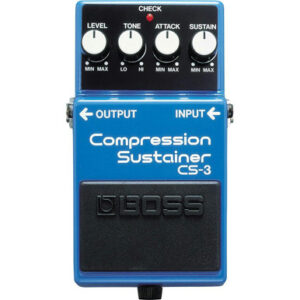
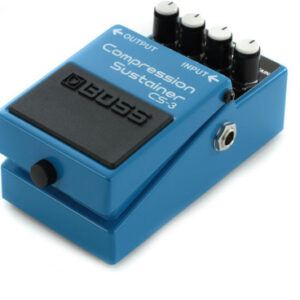
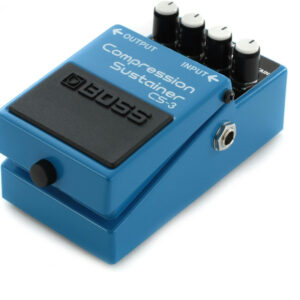
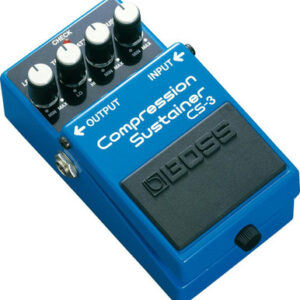
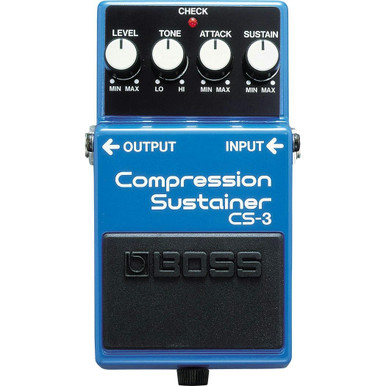
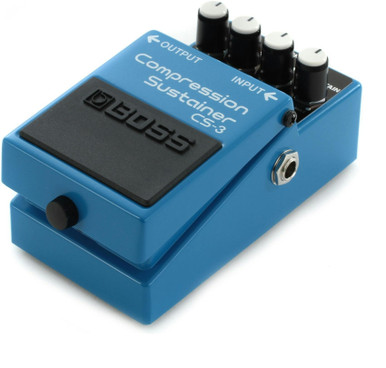
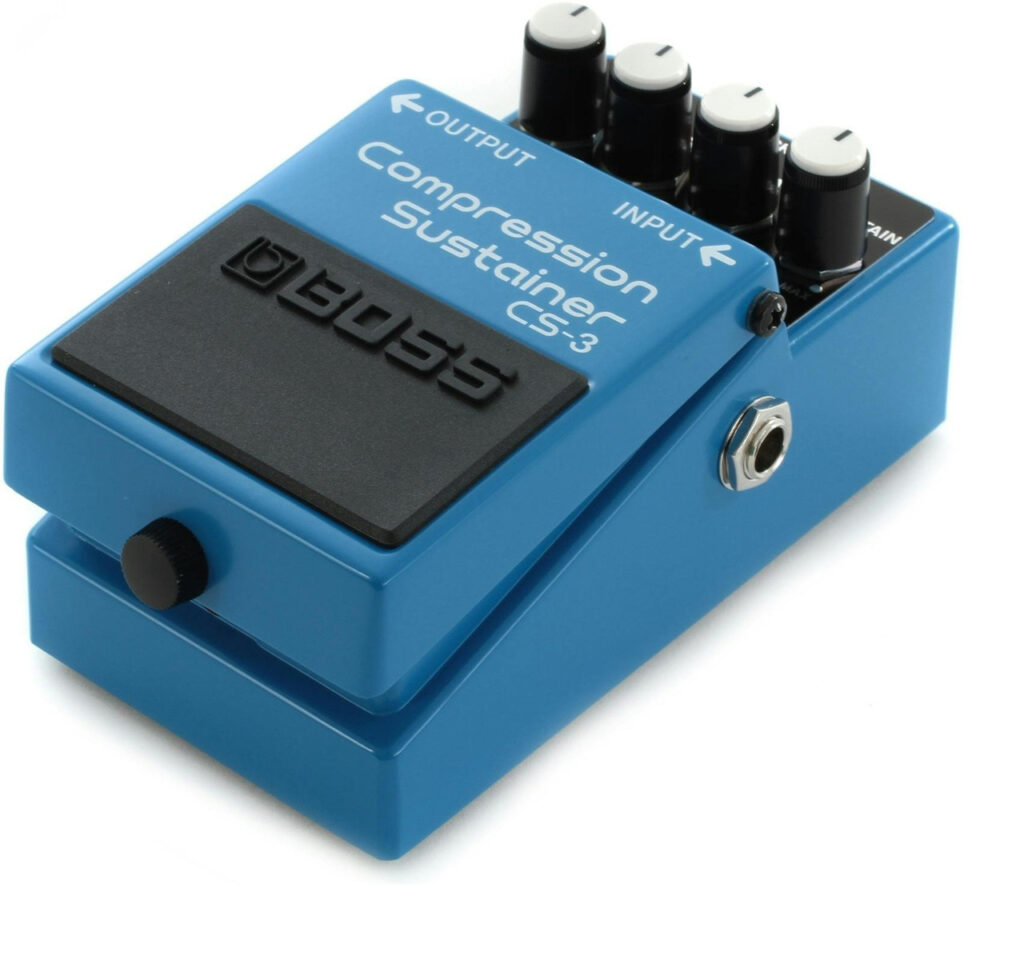
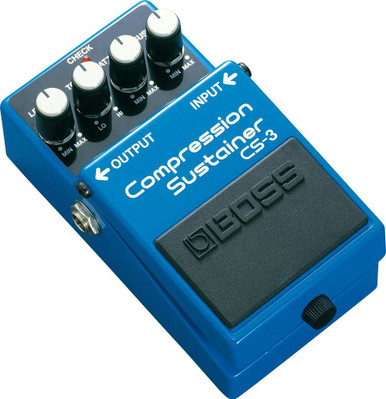
Boss CS-3 Compression Sustainer Pedal

£109.99

This is a New Boss CS-3 Compression Sustainer Pedal from Boss, listed in Compressor Pedals on Just Pedals. Read More below.

View Just
more

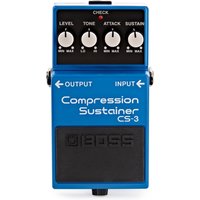
The Boss CS-3 compresses high-input signals while boosting low-input signals, giving you smooth sustain without degrading the quality of the original sound. A range of effects from gentle compression to squeezed sounds is at your command. Designed for outstanding low-noise performance, the CS-3 also provides EQ for precise sonic control.

Renowned Boss build quality

Boss pedals have a reputation for being built like tanks. You can be sure that however much you drop it, kick it, throw it and jump on it, it'll still come back for more. These pedals constantly survive the rigours of rock 'n' roll touring, and that's why they're seen at the feet of top touring pros everywhere.

Reliability really can be affordable to all. Boss are so sure their compact pedals last the test of time, they cover them with a full five year warranty.

Key Features

  • Compact compression/sustainer pedal with high-quality circuitry
  • Compresses loud signals and boosts softer signals for a smooth overall sound
  • Onboard Level, Tone, Attack and Sustain controls for precise tonal shaping
  • Low-noise design for super-quiet operation
  • BOSS five-year warranty

Related videos

Brand

Boss

BOSS began in Osaka in 1973 as MEG Electronics, a company dedicated to effects. Its first BOSS-branded effect was the CE-1 Chorus Ensemble in 1976; the OD-1, SP-1 and PH-1 launched the compact-effects series in 1977. The JustPedals catalogue includes familiar overdrives and distortions such as the OD-3, SD-1, BD-2, DS-1 and MT-2 Metal Zone, as well as utility items such as the PCS-20A cable. BOSS now spans compact pedals, multi-effects, loopers, tuners and controllers. Manufacturing origin should be checked by model rather than inferred from the brand’s Japanese history.

Category

Compressor Pedals

Compression reduces the difference between louder and quieter parts of the signal. It can restrain peaks, lift decaying notes and make picking feel more even, but strong settings also change the attack and add audible sustain or pumping. Threshold, ratio, attack, release and blend determine when gain reduction begins, how firmly it acts and how much natural transient detail remains.