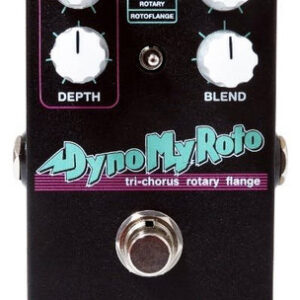
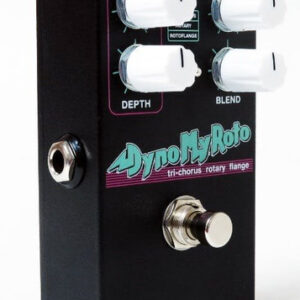
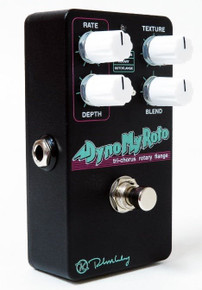
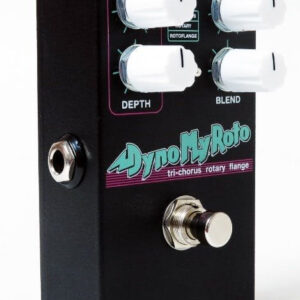
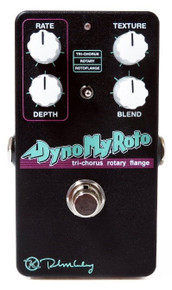
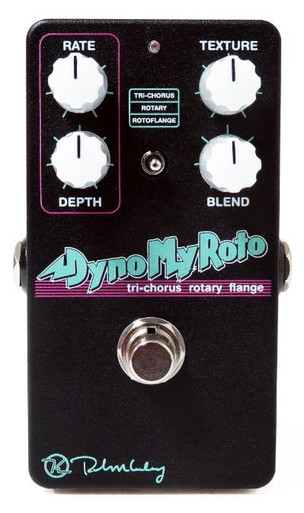
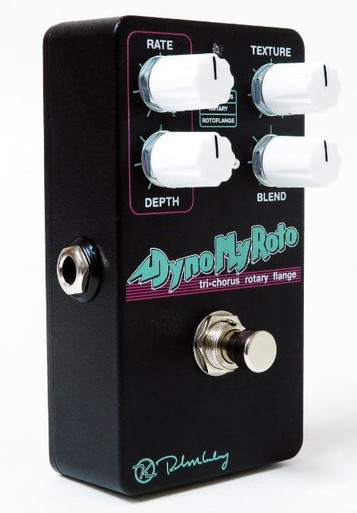
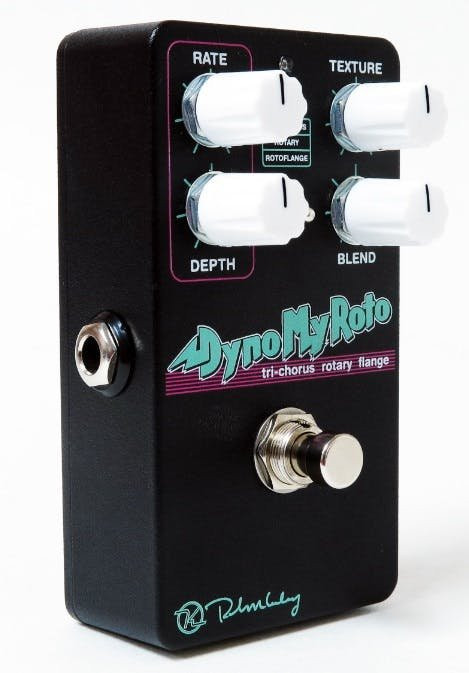
Keeley Dyno My Roto Tri-Chorus,Rotary,Rotary Flanger Pedal

£199.99

Allow JustPedals to introduce the Keeley Dyno My Roto Tri-Chorus,Rotary,Rotary Flanger Pedal The Dyno My Roto sounds amazing on bass as well as guitar 80s heavy tri-chorus and roto sounds. On a distorted or clean signal, you’ll be able to wash yur guitar sound in thick modulation. Marry it with delay for true floyd-esque sounds or dial […]


Description

Allow JustPedals to introduce the Keeley Dyno My Roto Tri-Chorus,Rotary,Rotary Flanger Pedal

The Dyno My Roto sounds amazing on bass as well as guitar 80s heavy tri-chorus and roto sounds.

On a distorted or clean signal, you’ll be able to wash yur guitar sound in thick modulation. Marry it with delay for true floyd-esque sounds or dial down the blend knob to add a smidge of modulation.

Control knobs:

  • Rate – How fast the chorus modulates.
  • Depth – The overall depth of the rotary sound.
  • Texture- Affects the grit of the flange/ chorus and will go from clean chorus to a slightly harder hitting chorus sound.
  • Blend – Allows you to dial in your effected signal over the dry guitar signal.

Toggle modes:

  • Tri-Chorus
  • Rotary
  • Rotary Flange

Related videos

Brand

Keeley

Category

Chorus Pedals

Flanger Pedals

Tags

Chorus

A chorus pedal thickens and widens your tone by subtly duplicating your signal and shifting it slightly out of tune and time. The result is movement — shimmering cleans, liquid arpeggios, and that unmistakable 80s swirl that makes single notes feel fuller and chords sound expansive. From gentle sparkle to deep, watery modulation, chorus adds dimension without overwhelming your core sound.

Use it to bring life to clean passages, soften driven tones, or create spacious textures that sit beautifully in a band mix. Whether you’re after subtle depth or bold, warbling character, a chorus pedal is a simple way to make your guitar sound bigger, richer, and more immersive.

Chorus Pedals

Flanger

A flanger is a type of guitar effects pedal used to create a swirling, whooshing sound by modulating the phase of an audio signal. It works by combining the original signal with a slightly delayed and modulated version of itself. As the two signals interact, they create peaks and troughs in the frequency spectrum, resulting in the characteristic “jet plane” or “swooshing” sound associated with flanging.

Key features of a flanger pedal include:

1. **Rate**: Controls the speed at which the delayed signal is modulated. Higher rates produce faster modulation, while lower rates create slower, more subtle effects.

2. **Depth**: Adjusts the intensity of the modulation effect. Higher depth settings result in more pronounced sweeps, while lower settings produce a gentler effect.

3. **Manual (or Range)**: Sets the center frequency of the modulation. This control allows you to focus the effect on specific frequency ranges, altering the tonal character of the flanging.

4. **Feedback (or Regeneration)**: Determines the amount of modulated signal that is fed back into the effect. Increasing feedback can create more pronounced peaks and troughs, resulting in a more intense effect.

Flanger pedals are commonly used in various music genres, including rock, metal, and psychedelic music, to add movement, depth, and texture to guitar tones. They can be used subtly to add a touch of modulation and dimension to a guitar sound, or more prominently to create dramatic swirling effects. Overall, flanger pedals offer guitarists a versatile tool for shaping and enhancing their tone, adding a dynamic and expressive element to their playing.

Flanger Pedals